save
$150.01
Behavior Analysis and Learning 6th Edition
Behavior Analysis and Learning 6th Edition: the definitive Skinnerian textbook with full biobehavioral coverage — instant digital access.
Want to preview before you buy? Click Request Free Sample and tell us which chapter or pages you’d like to see, along with your email address. We’ll send you those pages from the eBook so you can be sure it’s the right one before buying.
- Instant download & lifetime access Available as soon as your payment is confirmed. Your download link is also sent to the email address you provide at checkout, and you can download your purchased eBook anytime from My Account → Downloads with unlimited downloads. An account is created automatically using the same email address.
- Own your eBook Receive the available PDF/EPUB file directly after purchase. No rental or temporary access — download and keep your eBook for personal use with lifetime access.
- Full refund guarantee If the eBook you receive does not match the details and description provided on the product page, contact [email protected] and we’ll issue a full refund within 24 hours.
- Secure payment through PayPal Pay securely by debit or credit card or with your PayPal account. Your card details are processed by PayPal and are never stored on our site.
$49.99$200.00
The Gap This Book Fills
Behavior analysis is one of the most rigorously empirical fields in psychology, yet students often encounter it as a fragmented collection of procedures rather than a coherent science. Behavior Analysis and Learning: A Biobehavioral Approach solves that problem by presenting the entire discipline through one consistent, evidence-based lens: B. F. Skinner’s philosophy of radical behaviorism.
The Sixth Edition goes further, grounding behavioral principles in Darwinian, neurophysiological, and biological research. Instead of forcing students to choose between behavior analysis and neuroscience, this text shows how the two reinforce one another — a critical advantage for anyone preparing for research, clinical practice, or applied behavior analysis (ABA) certification.
If you have struggled to connect what happens inside the nervous system with what organisms actually do, this book is the bridge you have been looking for. Without that bridge, students are left with two disconnected vocabularies: the language of neurons and the language of behavior. Pierce and Cheney unite them into a single, coherent science.
What Is Behavior Analysis and Learning 6th Edition? A Complete Overview
Behavior Analysis and Learning: A Biobehavioral Approach is an advanced introduction to the principles of behavior analysis and learned behavior, published in its Sixth Edition by Routledge in 2017. Written by W. David Pierce and Carl D. Cheney, the text uses a consistent Skinnerian perspective to explain how behavior is acquired, maintained, and changed.
The book covers the full range of the discipline — from basic respondent and operant conditioning to applied behavior analysis and, ultimately, cultural design. What distinguishes this text is its biobehavioral orientation: every major principle is examined in light of evolutionary theory, neurophysiology, and biological constraints on learning. The authors also address the evolutionary context of learning, showing how natural selection has shaped the mechanisms that make conditioning possible.
This is not a survey text. It is a systematic treatment that treats behavior analysis as a natural science continuous with biology — a stance that gives readers a unified framework for understanding everything from simple reflexes to complex social systems. This biobehavioral stance is what separates the Pierce and Cheney approach from purely procedural treatments of conditioning found in other textbooks.
Who Is This Book For?
This book is designed for advanced undergraduate and graduate students in psychology, behavior analysis, and behavior-based disciplines. It is especially valuable for those pursuing Board Certified Behavior Analyst (BCBA) training or doctoral study in experimental and applied behavior analysis.
Beyond students, the Sixth Edition serves practicing professionals who need a rigorous refresher on the theoretical foundations of their work. If your work involves changing behavior — in therapy rooms, classrooms, clinics, or organizations — this book gives you the conceptual tools to do it systematically.
- Graduate students in behavior analysis and ABA programs
- Advanced undergraduates in psychology, neuroscience, and education
- BCBA candidates preparing for certification examinations
- Researchers in behavioral pharmacology and behavioral neuroscience
- Faculty designing courses in learning, conditioning, and behavior theory
- Clinicians who want a principled foundation for behavioral interventions
If you are an undergraduate looking for a light overview, however, this advanced text may exceed your needs. It is written for readers who intend to engage seriously with the science of behavior.
Inside: What You Will Master
Pierce and Cheney organize the field into a logical progression from simple to complex phenomena. By the end of the book, you will command a comprehensive knowledge base that spans the entire science of behavior. Here are the core areas covered in this Sixth Edition:
- The philosophical assumptions of radical behaviorism and why they remain central to the science of behavior
- Respondent conditioning — how reflexes and emotional responses are acquired and extinguished
- Operant conditioning — how reinforcement and punishment shape voluntary behavior
- Schedules of reinforcement and their powerful, predictable effects on response rates
- Stimulus control, discrimination, and generalization — how organisms learn to respond appropriately to their environments
- The biobehavioral basis of learning, including neurophysiological mechanisms and evolutionary constraints
- Applied behavior analysis techniques for changing socially significant behavior
- Cultural design — how behavioral principles scale to groups, organizations, and societies
Each chapter builds on the previous one, so by the final sections you are ready to think about behavior at the level of entire cultures — a rare scope even among advanced texts. Moreover, the authors consistently tie each principle back to its empirical evidence, so readers never lose sight of the science behind the concepts.
Why Choose This Edition
Most learning textbooks are eclectic: a chapter on Pavlov, a chapter on Skinner, a chapter on cognitive psychology, with no unifying thread. Behavior Analysis and Learning takes the opposite approach. It commits fully to a Skinnerian framework and follows that framework wherever it leads — which is exactly what makes it superior for serious students.
Cognitive learning texts, meanwhile, often treat behavior analysis as a historical footnote rather than a living research tradition. Pierce and Cheney invert that assumption, placing radical behaviorism at the center and using biology to strengthen it. Here is how the book stacks up against the alternatives:
- Consistent theoretical lens: Unlike eclectic surveys, every chapter applies radical behaviorism, so you finish with a unified conceptual system rather than disconnected facts.
- True biobehavioral integration: While other texts mention biology as an afterthought, this book uses Darwinian and neurophysiological research as core evidence for behavioral principles.
- Advanced scope: Coverage extends from basic conditioning to cultural design, a trajectory most graduate texts never attempt.
- Empirical rigor: Principles are anchored in research findings, preparing you for the primary literature rather than just textbook summaries.
- Field-defining authorship: Pierce and Cheney are recognized scholars whose treatment of behavior analysis has shaped how the discipline is taught.
For students who intend to contribute to behavior analysis — not just pass a course — this text is the stronger foundation. Its combination of theoretical consistency, biological grounding, and advanced scope is not matched by competing titles. For instructors comparing adoptions, the Sixth Edition also offers the kind of structural clarity that makes lecture planning straightforward.
About the Author
W. David Pierce and Carl D. Cheney are established scholars of behavior analysis whose combined research and teaching careers are reflected in the depth and precision of this text. Their treatment of the subject is grounded in the experimental tradition of the field, and their commitment to a biobehavioral perspective gives the book its distinctive intellectual character.
The book is published by Routledge, one of the world’s leading academic publishers in psychology and the behavioral sciences. Routledge’s editorial standards ensure that the Sixth Edition reflects the current state of the field, not a casual revision. When you buy this edition, you are getting the same scholarly version relied upon in advanced behavior analysis courses.
The longevity of this text — now in its Sixth Edition — is itself a signal of trust. A textbook that reaches six editions has survived years of scrutiny by instructors, reviewers, and the students who have learned from it. That track record is difficult to overstate, and it is the reason this volume remains a standard reference in behavior analysis programs.
Is It Worth It?
Yes — for anyone who needs more than a superficial introduction to behavior analysis, this book is worth every dollar. Its consistent Skinnerian perspective and biobehavioral grounding make it a uniquely valuable resource for graduate study, research, and clinical practice.
The strongest argument for the book is its coherence. Most texts leave you with a list of phenomena; this one leaves you with a way of thinking. That conceptual payoff compounds over a career, whether you are designing experiments, writing behavior plans, or interpreting the latest neuroscience findings.
For instructors, the book’s logical organization makes it an ideal backbone for a graduate seminar. Each chapter is dense with primary-source references, allowing students to move directly from the textbook to the original research literature without a conceptual gap. For students preparing for comprehensive exams or certification, the book’s systematic organization doubles as an effective study structure.
Download Behavior Analysis and Learning 6th Edition Now
Your graduate training, certification goals, or research program demands a rigorous understanding of behavior principles. Behavior Analysis and Learning: A Biobehavioral Approach, Sixth Edition delivers that foundation in a single, coherent volume — from respondent conditioning to cultural design, all grounded in the biology of behavior.
This is the current Sixth Edition from Routledge, published in 2017. The digital format gives you instant access, searchable chapters, and the convenience of studying on any device — ideal for the demanding schedule of a graduate student or working professional. Whether you are preparing for BCBA certification or designing a graduate course, the eBook keeps the complete text at your fingertips.
Add to cart now and take the definitive step toward mastering the science of behavior. With Behavior Analysis and Learning: A Biobehavioral Approach, Sixth Edition, you will be ready for the research, the clinic, or the classroom.
Related products

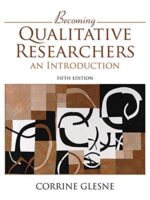
Becoming Qualitative Researchers: An Introduction (5th Edition) – Pearson eText
$34.99Master the fundamentals of qualitative research with this concise 5th edition guide—ideal for beginners. Get your copy and start your research journey today.
$85.00-
Case Study Research and Applications: Design & Methods, 6e
$19.99Master case study research with the definitive Sixth Edition of Case Study Research and Applications: Design and Methods. Order now for instant access.
$48.00 -
Generalist Social Work Practice: An Empowering Approach (8th Edition) – Pearson
$27.99Master empowerment-focused social work with this widely adopted 8th edition. Build client strengths, navigate multi-level systems, and pass your licensure exam with confidence.
$75.00 -
The Cyber Effect: A Forensic Cyberpsychologist on Technology’s Impact on Behavior, Children & Society
$5.99Get The Cyber Effect by Mary Aiken: a forensic cyberpsychologist’s groundbreaking look at how technology shapes behavior, children, and society. Order now.
$15.00 -
The Certification of Insanity: Local Origins and Imperial Consequences
$39.99The first systematic study of lunacy certification in the British Empire, examining local origins and imperial consequences through legal and archival sources.
$132.00 -
Clinical Assessment Workbook: Balancing Strengths and Differential Diagnosis 2nd Edition
$30.99Master clinical assessment with a strengths-based, DSM-5-aligned workbook. Hands-on cases and worksheets build differential diagnosis skills.
$75.00 -
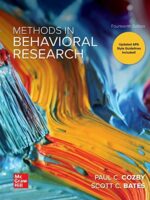
Methods in Behavioral Research 14th Edition – Cozby & Bates
$28.00Master behavioral research methods with Cozby & Bates’ 14th edition. SmartBook support, clear examples, and proven pedagogy. Get your digital copy today!
$51.00 -
The Psychology of Emotion, 5th Edition – K.T. Strongman
$25.99Get the 5th edition of The Psychology of Emotion by K.T. Strongman — a comprehensive guide to emotion theories with everyday examples. Order your digital copy today.
$74.00