
save
$53.01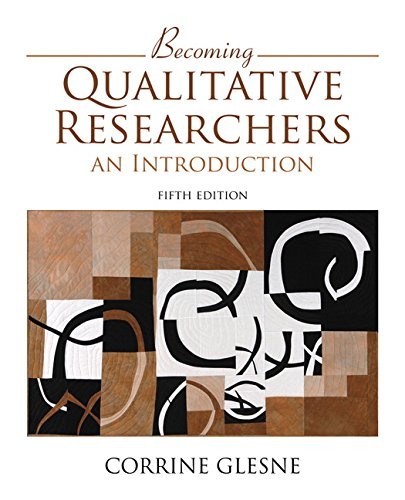
Becoming Qualitative Researchers: An Introduction (5th Edition) – Pearson eText
Master the fundamentals of qualitative research with this concise 5th edition guide—ideal for beginners. Get your copy and start your research journey today.
Want to preview before you buy? Click Request Free Sample and tell us which chapter or pages you’d like to see, along with your email address. We’ll send you those pages from the eBook so you can be sure it’s the right one before buying.
- Instant download & lifetime access Available as soon as your payment is confirmed. Your download link is also sent to the email address you provide at checkout, and you can download your purchased eBook anytime from My Account → Downloads with unlimited downloads. An account is created automatically using the same email address.
- Own your eBook Receive the available PDF/EPUB file directly after purchase. No rental or temporary access — download and keep your eBook for personal use with lifetime access.
- Full refund guarantee If the eBook you receive does not match the details and description provided on the product page, contact [email protected] and we’ll issue a full refund within 24 hours.
- Secure payment through PayPal Pay securely by debit or credit card or with your PayPal account. Your card details are processed by PayPal and are never stored on our site.
$31.99$85.00
The Gap This Book Fills
Qualitative research can feel overwhelming when you are starting out. You face a maze of theories, methods, ethical reviews, and data analysis techniques. Many introductory texts either oversimplify or drown you in abstract jargon. Becoming Qualitative Researchers: An Introduction solves exactly this problem by providing a clear, concise, and practice-oriented path from novice to competent qualitative researcher. It bridges the gap between understanding theory and actually conducting your own study.
About Becoming Qualitative Researchers: An Introduction (5th Edition) – Pearson eText
Becoming Qualitative Researchers: An Introduction (5th edition, 2016) is a concise textbook by Corrine Glesne, published by Pearson. The book offers a straightforward overview of the entire qualitative research process—from formulating a research question to writing the final narrative. It covers essential topics such as research design, literature review, ethics and institutional review boards, data collection through interviews and observation, coding and analysis, and writing up findings. The text is known for its accessible language and real-world examples that help beginners grasp complex concepts without feeling lost.
Unlike dense methodological manuals, this book invites you to think like a qualitative researcher. It emphasizes the interpretative nature of qualitative work and encourages reflexivity. The 5th edition updates reflect contemporary debates and practices in the field, making it relevant for today’s research landscape.
Key Features of This Edition
- Concise coverage of research proposals, IRB protocols, and ethical considerations
- Practical guidance on conducting interviews and observations
- Step-by-step introduction to coding and thematic analysis
- Discussion of writing strategies and representing findings
- Examples from multiple disciplines including education, sociology, and anthropology
Who Should Read This Book?
This book is ideal for graduate and upper-level undergraduate students who are new to qualitative research. It is widely used in introductory research methods courses in education, social sciences, nursing, and related fields. If you are a beginning researcher who needs a solid foundation before moving to more advanced texts, this is your starting point. It also serves as a refresher for professionals returning to academia or practitioners who want to incorporate qualitative approaches into their work.
Because the book is concise and focused, it suits independent learners and those in semester-long courses where time is limited. Instructors looking for a textbook that balances theory with practice will find it a reliable backbone for their syllabus.
Key Takeaways
By working through this book, you will gain essential skills that lay the groundwork for successful qualitative research:
- How to design a qualitative study – Formulate research questions, choose a methodology, and plan your project from start to finish.
- Navigating ethics and IRB approval – Understand informed consent, confidentiality, and the ethical dilemmas unique to qualitative inquiry.
- Collecting rich data – Master interview techniques, participant observation, and document analysis to gather meaningful information.
- Coding, analysis, and interpretation – Learn systematic approaches to organize qualitative data, identify themes, and build interpretations.
- Writing and representing findings – Develop skills to write compelling narratives that honor participant voices while contributing to scholarly knowledge.
Each chapter includes practical exercises, reflective questions, and examples from published studies that reinforce learning.
What Sets It Apart
Many qualitative research textbooks are either too long (Creswell’s Qualitative Inquiry and Research Design runs over 500 pages) or too abstract (like Denzin and Lincoln’s handbooks). Glesne’s book finds the sweet spot: it is comprehensive yet concise, making it accessible without sacrificing depth. Competitors often assume prior knowledge of social theory; this book starts from where the beginner stands.
Another advantage is the practical focus. Glesne draws on decades of teaching experience to anticipate student questions and common pitfalls. The 5th edition includes updated discussions on technology in research, visual methods, and addressing positionality—topics that newer researchers frequently encounter but that older texts neglect.
Furthermore, the book’s readable tone and use of personal vignettes help demystify the research process. Students often report feeling more confident after reading it compared to denser alternatives.
Who Wrote This Book
Corrine Glesne is a Professor Emerita at the University of Vermont, where she taught qualitative research methods for over three decades. She is also the founding director of the university’s Office of Undergraduate Research. Her expertise in mentoring novice researchers directly informs the book’s approach. Glesne has contributed numerous articles and chapters on qualitative methodology and received awards for her teaching. Pearson, the publisher, is one of the world’s leading academic publishers, known for rigorous peer review and quality educational resources. The combination of Glesne’s hands‑on experience and Pearson’s editorial standards ensures that the content is both trustworthy and pedagogically effective.
Final Assessment
Absolutely. This 5th edition remains a staple in introductory qualitative research courses for good reason. It gives you exactly what you need to understand the fundamentals without overwhelming you. The book’s structure mirrors the actual research process, so you can read it sequentially or dip into specific chapters as needed. For the price of one well‑crafted textbook, you gain a mentor that guides you through your first qualitative project.
Compared to renting or buying multiple sources, owning this book provides a permanent reference you can revisit throughout your academic career. Graduate students and early‑career researchers consistently recommend it to their peers as the “first book to read.”
Add Becoming Qualitative Researchers: An Introduction (5th Edition) – Pearson eText to Your Library
Whether you are a graduate student preparing for your thesis, a practitioner exploring qualitative methods, or an instructor seeking a reliable text, Becoming Qualitative Researchers: An Introduction is the smart investment. Download the digital edition and gain immediate access to clear explanations, practical templates, and expert guidance—all from a trusted Pearson publication. Add to cart now and take the first step toward becoming the qualitative researcher you aspire to be.
Related products

The Psychology of Emotion, 5th Edition – K.T. Strongman
$25.99Get the 5th edition of The Psychology of Emotion by K.T. Strongman — a comprehensive guide to emotion theories with everyday examples. Order your digital copy today.
$74.00-
The Cyber Effect: A Forensic Cyberpsychologist on Technology’s Impact on Behavior, Children & Society
$5.99Get The Cyber Effect by Mary Aiken: a forensic cyberpsychologist’s groundbreaking look at how technology shapes behavior, children, and society. Order now.
$15.00 -
Culture Sketches: Case Studies in Anthropology 6th Edition
$29.00Get the 6th edition of Culture Sketches: 15 ethnographic case studies that bring cultural anthropology to life—ideal for any introductory course.
$75.00 -
Ethical, Legal, and Professional Issues in Counseling, 6th Ed
$49.99Master ethical practice with the 6th edition of Ethical, Legal, and Professional Issues in Counseling. Essential for students and professionals. Order today.
$119.00 -
Theories of Development: Concepts and Applications (6th Edition) — Pearson New International Edition
$22.00Get the 6th edition of Crain’s classic text covering 24 developmental theorists. Ideal for psychology students. Order your digital copy today!
$49.00 -
Case Study Research and Applications: Design & Methods, 6e
$19.99Master case study research with the definitive Sixth Edition of Case Study Research and Applications: Design and Methods. Order now for instant access.
$48.00 -
Affirmative Counseling with LGBTQI+ People: A Comprehensive Guide
$25.99Master affirmative counseling with this comprehensive ACA guide. Build the awareness, knowledge, and skills to serve LGBTQI+ clients competently and ethically. Order now.
$64.00 -
Constitutional Law for a Changing America: Rights, Liberties, and Justice 10th Edition
$14.99Understand how political forces shape Supreme Court rulings on rights, liberties, and justice with this acclaimed 10th edition textbook by Epstein and Walker.
$29.00