save
$44.01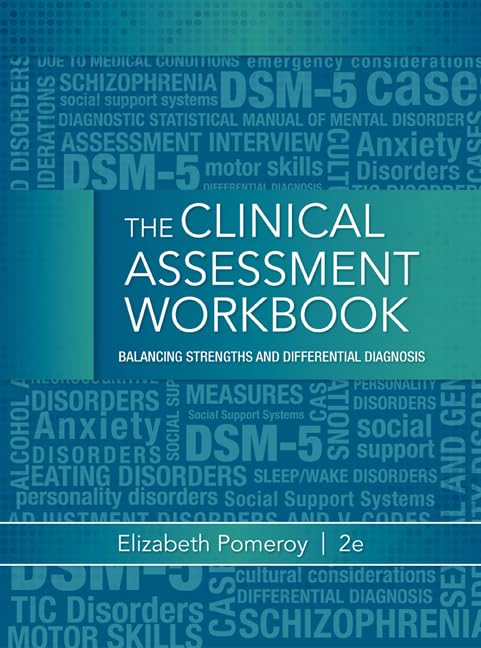
Clinical Assessment Workbook: Balancing Strengths and Differential Diagnosis 2nd Edition
Master clinical assessment with a strengths-based, DSM-5-aligned workbook. Hands-on cases and worksheets build differential diagnosis skills.
Want to preview before you buy? Click Request Free Sample and tell us which chapter or pages you’d like to see, along with your email address. We’ll send you those pages from the eBook so you can be sure it’s the right one before buying.
- Instant download & lifetime access Available as soon as your payment is confirmed. Your download link is also sent to the email address you provide at checkout, and you can download your purchased eBook anytime from My Account → Downloads with unlimited downloads. An account is created automatically using the same email address.
- Own your eBook Receive the available PDF/EPUB file directly after purchase. No rental or temporary access — download and keep your eBook for personal use with lifetime access.
- Full refund guarantee If the eBook you receive does not match the details and description provided on the product page, contact [email protected] and we’ll issue a full refund within 24 hours.
- Secure payment through PayPal Pay securely by debit or credit card or with your PayPal account. Your card details are processed by PayPal and are never stored on our site.
$30.99$75.00
The Gap This Book Fills
Clinical social workers, counselors, and mental health professionals face a persistent challenge: how to conduct thorough, accurate assessments that meet diagnostic criteria while also recognizing and building on client strengths. Without a structured framework, practitioners risk either over-pathologizing or missing critical diagnostic information. The Clinical Assessment Workbook: Balancing Strengths and Differential Diagnosis, 2nd Edition directly addresses this tension, offering a practical, hands-on approach that integrates the strengths perspective with the DSM-5 diagnostic system.
This workbook fills a crucial gap in clinical education and practice by providing a step-by-step methodology for conducting biopsychosocial assessments that honor both the client’s resilience and the clinical need for accurate differential diagnosis. It is designed to move beyond theory into applied skill development.
What Is Clinical Assessment Workbook: Balancing Strengths and Differential Diagnosis 2nd Edition? A Complete Overview
The Clinical Assessment Workbook: Balancing Strengths and Differential Diagnosis is a practical, case-based workbook authored by Elizabeth Pomeroy and published by Cengage Learning. This second edition (2015) is specifically updated to align with the DSM-5, making it an essential resource for students and professionals learning to navigate the latest diagnostic criteria.
The workbook is built around a unique dual focus: it teaches readers how to conduct a comprehensive clinical assessment that identifies client strengths and resources while also applying rigorous differential diagnosis. Through a series of detailed case studies, worksheets, and guided exercises, the book transforms abstract diagnostic concepts into actionable clinical skills. It is widely used in graduate-level social work, counseling, and psychology programs.
Is This Book Right for You?
This workbook is specifically designed for graduate students and practicing professionals in clinical social work, counseling, marriage and family therapy, and clinical psychology. It is particularly valuable for those enrolled in courses on clinical assessment, psychopathology, or diagnosis and treatment planning.
Practicing clinicians seeking to refresh their diagnostic skills or transition to DSM-5 will also find this workbook highly beneficial. Supervisors and field instructors can use the case studies and exercises as training tools. The workbook’s emphasis on integrating strengths with diagnosis makes it especially relevant for professionals working in community mental health, child welfare, school settings, and private practice.
Skills You Will Gain
Upon completing this workbook, readers will have developed a robust set of assessment competencies that are immediately applicable in clinical settings.
- Master the Biopsychosocial Assessment Framework: Learn to systematically gather and organize information across biological, psychological, and social domains to form a complete clinical picture.
- Apply Differential Diagnosis Using DSM-5: Develop the ability to distinguish between disorders with overlapping symptoms, using case examples to practice ruling in and ruling out diagnoses.
- Integrate Strengths-Based Assessment: Move beyond a deficit model by learning specific techniques to identify, document, and leverage client strengths in the assessment and treatment planning process.
- Navigate Ethical and Cultural Considerations: Understand how to conduct assessments that are culturally sensitive, ethically sound, and avoid bias in diagnostic decision-making.
- Complete Structured Assessment Tools: Gain hands-on experience with worksheets and templates that can be directly used in practice or adapted for agency settings.
- Formulate Diagnostically Informed Treatment Plans: Learn to connect assessment findings to evidence-based interventions, creating treatment plans that are both strengths-oriented and diagnosis-driven.
What Sets It Apart
While other textbooks on diagnosis provide theoretical overviews, they often fail to bridge the gap between knowing the DSM-5 criteria and applying them in real-world practice. The Clinical Assessment Workbook excels precisely where others fall short: it is a doing book, not just a reading book. Its case-study-driven format forces active engagement, making diagnostic concepts stick.
Compared to standard psychopathology texts like Abnormal Psychology by Comer or DSM-5 Essentials, this workbook offers a unique strengths-based lens. Where many resources treat assessment as a purely diagnostic exercise, Pomeroy’s approach ensures that the client’s resilience and resources are never lost in the diagnostic process. This dual focus is a significant differentiator, particularly for programs that emphasize a person-in-environment and strengths perspective.
Furthermore, the workbook’s practical worksheets and templates provide a reusable framework that students can carry into their field placements and professional careers. No other single resource combines this level of hands-on practice with a strengths-based, DSM-5-aligned curriculum.
Behind the Book
Elizabeth Pomeroy is a respected figure in clinical social work education. With decades of experience teaching assessment and diagnosis at the graduate level, she brings both academic rigor and real-world clinical insight to this workbook. Her expertise ensures that the content is not only theoretically sound but also grounded in the practical realities of clinical practice.
Cengage Learning is a leading global publisher of academic and professional resources, particularly known for its high-quality textbooks in social sciences and human services. The 2015 second edition reflects Cengage’s commitment to providing current, evidence-based educational materials that meet the needs of modern curricula. The publisher’s rigorous peer-review process and institutional adoption make this workbook a trusted resource in hundreds of universities.
Final Assessment
For any student or clinician serious about developing competent, ethical, and thorough clinical assessment skills, this workbook is an invaluable investment. It is not a book you simply read; it is a tool you use. The hands-on exercises and case studies accelerate learning far beyond what a traditional textbook can offer. The strengths-based emphasis is particularly valuable in an era where the field increasingly recognizes the importance of resilience and client empowerment.
The second edition’s alignment with DSM-5 ensures that you are learning the most current diagnostic standards. While the workbook is most effective when used as part of a structured course, it also serves as an excellent self-study guide for practicing professionals looking to sharpen their skills. If you need a practical, applied resource for mastering clinical assessment and differential diagnosis, this is the workbook to choose.
Download Clinical Assessment Workbook: Balancing Strengths and Differential Diagnosis 2nd Edition Now
Whether you are a graduate student preparing for licensure or a seasoned clinician wanting to update your diagnostic skills, this workbook provides the structured practice you need to conduct assessments that are both accurate and empowering. Add this essential Cengage Learning resource to your professional library today and gain the confidence to balance strengths and differential diagnosis in every client interaction.
Related products

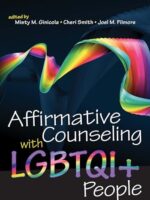
Affirmative Counseling with LGBTQI+ People: A Comprehensive Guide
$25.99Master affirmative counseling with this comprehensive ACA guide. Build the awareness, knowledge, and skills to serve LGBTQI+ clients competently and ethically. Order now.
$64.00-
Generalist Practice with Organizations and Communities, 7th Edition — Empowerment Series Macro Social Work Textbook
$27.99Master macro social work with the leading textbook from the Empowerment Series. Learn to assess, intervene, and lead change in organizations and communities.
$71.00 -
Ethical, Legal, and Professional Issues in Counseling, 6th Ed
$49.99Master ethical practice with the 6th edition of Ethical, Legal, and Professional Issues in Counseling. Essential for students and professionals. Order today.
$119.00 -
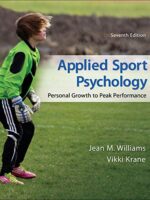
Applied Sport Psychology 7e: Personal Growth to Peak
$29.99Achieve peak performance with Applied Sport Psychology 7e. Master proven psychological techniques for personal growth. Get your digital copy today.
$59.00 -
Constitutional Law for a Changing America: Rights, Liberties, and Justice 10th Edition
$14.99Understand how political forces shape Supreme Court rulings on rights, liberties, and justice with this acclaimed 10th edition textbook by Epstein and Walker.
$29.00 -
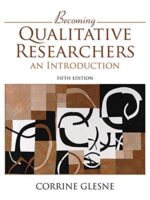
Becoming Qualitative Researchers: An Introduction (5th Edition) – Pearson eText
$31.99Master the fundamentals of qualitative research with this concise 5th edition guide—ideal for beginners. Get your copy and start your research journey today.
$85.00 -
A History of Psychology 2nd Edition – Global & Inclusive
$54.99This 2nd edition covers the history of psychology, including philosophical origins, women, minorities, and a new clinical chapter. Order now!
$184.00 -
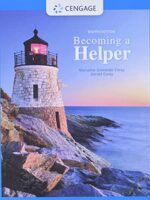
Becoming a Helper 8th Edition – Marianne & Gerald Corey eBook
$28.99Start your helping career with Corey & Corey’s Becoming a Helper, 8th Edition eBook—self-reflection, ethics, diversity, and practical skills in one essential guide.
$96.00