
save
$129.01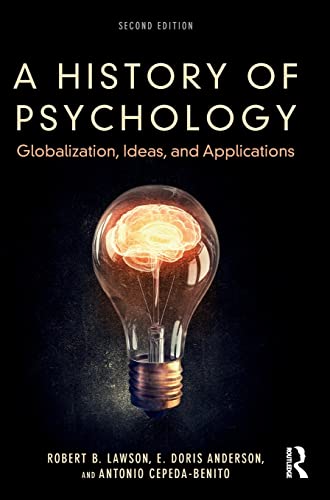
A History of Psychology 2nd Edition – Global & Inclusive
This 2nd edition covers the history of psychology, including philosophical origins, women, minorities, and a new clinical chapter. Order now!
Want to preview before you buy? Click Request Free Sample and tell us which chapter or pages you’d like to see, along with your email address. We’ll send you those pages from the eBook so you can be sure it’s the right one before buying.
- Instant download & lifetime access Available as soon as your payment is confirmed. Your download link is also sent to the email address you provide at checkout, and you can download your purchased eBook anytime from My Account → Downloads with unlimited downloads. An account is created automatically using the same email address.
- Own your eBook Receive the available PDF/EPUB file directly after purchase. No rental or temporary access — download and keep your eBook for personal use with lifetime access.
- Full refund guarantee If the eBook you receive does not match the details and description provided on the product page, contact [email protected] and we’ll issue a full refund within 24 hours.
- Secure payment through PayPal Pay securely by debit or credit card or with your PayPal account. Your card details are processed by PayPal and are never stored on our site.
$54.99$184.00
The Problem This Book Solves
Why do most psychology textbooks leave you with an incomplete picture? For decades, the standard history of psychology curriculum has been dominated by a narrow focus on European and American pioneers. This limited perspective fails to capture the global richness of the field.
Figures like Wilhelm Wundt, William James, and Sigmund Freud are covered in depth, while the contributions of women, people of color, and psychologists from Asia, Africa, and Latin America are marginalized or omitted entirely. This skewed narrative not only misrepresents the field’s true development but also deprives students of a richer, more nuanced understanding.
Furthermore, many texts treat philosophy and biology as separate preludes rather than integral components of psychology’s story. They present a fragmented view that obscures the interdisciplinary nature of the discipline.
A History of Psychology: Globalization, Ideas, and Applications breaks this mold by offering a truly global, interdisciplinary account. It weaves together philosophical origins, biological foundations, and cultural contexts from the very beginning, showing how psychology emerged as a global phenomenon.
This second edition deepens that commitment with a new chapter on clinical psychology and updated coverage throughout. By addressing these critical gaps, this textbook provides a more accurate and comprehensive foundation for anyone studying or working in psychology.
In today’s interconnected world, understanding psychology from a global perspective is more important than ever. Psychologists increasingly work with diverse populations, and a narrow historical view can limit their effectiveness. This book prepares students for a globalized field by providing the broad perspective they need.
What Is A History of Psychology: Globalization, Ideas, and Applications? A Complete Overview
A History of Psychology: Globalization, Ideas, and Applications is a comprehensive textbook that traces the development of psychological thought from ancient civilizations to the present day. Unlike conventional texts, it adopts a ‘wide lens’ perspective, examining both local and worldwide issues that have shaped the discipline.
The book is organized to highlight the interplay between ideas and the environmental contexts in which they arose. It covers the philosophical roots in ancient Greece, India, and China; the biological foundations laid by early physiologists and neurologists; and the emergence of modern psychology in the late 19th century.
A distinctive feature is its extensive coverage of women and minority psychologists, whose contributions are often overlooked. The second edition adds a new chapter on clinical psychology, reflecting the field’s growing applied focus.
Co-authored by Robert B. Lawson, E. Doris Anderson, and Antonio Cepeda-Benito, and published by Routledge in 2018, this edition has been thoroughly updated to incorporate the latest historical scholarship. The book is structured to be both accessible to undergraduates and rigorous enough for graduate study, making it a versatile resource for any history of psychology course.
Its interdisciplinary approach integrates philosophy, biology, and social sciences, providing a holistic view that helps readers understand psychology as a connected field rather than a collection of isolated facts.
The book begins by exploring psychological ideas in ancient Egypt, Mesopotamia, India, China, and Greece, showing how early cultures understood the mind and behavior. This foundation sets the stage for the later development of scientific psychology.
Who Should Read A History of Psychology?
This textbook is primarily designed for undergraduate and graduate students enrolled in history of psychology courses. Its clear, engaging prose and logical structure make it accessible to upper-level undergraduates, while its depth and scholarly rigor satisfy the needs of graduate students.
Psychology educators will find it an invaluable resource for course preparation, offering a more inclusive and global perspective than traditional texts. Researchers in psychology, history of science, and women’s studies will appreciate the comprehensive coverage and up-to-date references.
Additionally, professionals in clinical, counseling, and industrial-organizational psychology can benefit from understanding the historical roots of their fields. The book’s interdisciplinary approach also makes it suitable for students in philosophy, biology, and sociology who want to explore the intersections with psychology.
Finally, lifelong learners with an interest in the history of ideas will find this book engaging and enlightening. Whether you are new to psychology or an experienced professional, this textbook will broaden your perspective and deepen your appreciation for the field’s rich and diverse heritage.
For anyone who wants to understand how psychology has evolved across cultures and eras, this book is an essential read.
Whether used as a primary textbook for a semester-long course or as a supplementary resource, this book adapts well to various teaching styles. Its modular structure allows instructors to focus on specific topics as needed.
7 Key Things You Will Learn
By studying this textbook, readers will acquire a deep and nuanced understanding of psychology’s evolution. The following are seven of the most important takeaways:
- Philosophical and Biological Origins: Trace the roots of psychological thought from ancient philosophers like Aristotle and Plato to early neuroscientists like Galen and Descartes.
- Global Development: Understand how psychology evolved in different cultural contexts, including contributions from Islamic scholars, Chinese philosophers, and Indian thinkers.
- Women and Minorities: Discover the often-ignored contributions of women such as Mary Whiton Calkins and Margaret Floy Washburn, and minority psychologists like Francis Cecil Sumner and Mamie Phipps Clark.
- Clinical Psychology: Learn about the emergence of clinical psychology as a profession, including the roles of Lightner Witmer and the development of assessment and therapy.
- Environmental Context: See how social, political, and economic factors influenced the development of psychological theories and practices.
- Schools of Thought: Follow the rise and interaction of major schools—structuralism, functionalism, behaviorism, Gestalt, psychoanalysis, humanism, and cognitive psychology—from a global perspective.
- Future Directions: Explore contemporary trends such as cross-cultural psychology, positive psychology, and the integration of neuroscience, and consider where the field is heading.
Each of these areas is covered with depth and clarity, supported by primary sources and historical analysis. The book’s global and inclusive approach ensures that readers gain a perspective that is often missing from other textbooks.
Moreover, the book does not just present facts; it encourages critical thinking about why psychology developed the way it did and how historical contexts shape current practices.
By the end of the book, readers will not only know the key events and figures but also understand the underlying forces that drove psychology’s evolution.
Why A History of Psychology Outperforms Every Alternative
When compared to other leading textbooks in the field, A History of Psychology: Globalization, Ideas, and Applications stands out for several reasons. First, its global scope is unmatched. While many competitors focus primarily on Western psychology, this book provides a truly worldwide perspective.
Texts like Hergenhahn’s An Introduction to the History of Psychology and Schultz & Schultz’s A History of Modern Psychology are excellent in their own right, but they tend to emphasize European and American developments. This book deliberately includes contributions from Asia, Africa, and Latin America, offering a more balanced view.
Second, its interdisciplinary integration is more thorough. Instead of treating philosophy and biology as separate introductory chapters, this textbook weaves them into the narrative throughout, showing how they continually shaped psychological thought.
Third, the coverage of women and minorities is not an add-on but a central theme. This provides a more accurate and inclusive history that reflects the true diversity of the field. Fourth, the new chapter on clinical psychology addresses a gap in many competitors, which often neglect applied fields.
Finally, the book’s emphasis on the environmental and cultural contexts of ideas helps readers understand why certain theories emerged when and where they did. Published by Routledge, a trusted name in academic publishing, this second edition is both authoritative and current.
For instructors seeking a textbook that reflects the diversity of the field, this is the clear choice. Its readability and pedagogical features make it a favorite among students as well.
Author Authority & Publisher Credibility
Robert B. Lawson is a professor of psychology with extensive experience in teaching the history of psychology. E. Doris Anderson has contributed significantly to the scholarship on women in psychology. Antonio Cepeda-Benito brings expertise in clinical psychology and multicultural issues.
Together, they form a team that combines historical knowledge, inclusivity, and applied perspectives. Their collective expertise ensures that the content is accurate, well-researched, and pedagogically sound.
Routledge, the publisher, is a leading academic publisher in the social sciences and humanities, known for its rigorous peer-review process and high editorial standards. This gives readers confidence in the quality and reliability of the material.
The second edition has been carefully updated to reflect the latest research, ensuring that readers have access to current scholarship. The authors’ commitment to a global and inclusive approach is evident throughout, making this a trustworthy and authoritative resource.
With decades of combined experience, the authors bring a depth of knowledge that is rare in textbook writing. Their passion for the subject is evident on every page.
Is A History of Psychology Worth It? Our Verdict
Yes, this textbook offers exceptional value for anyone serious about understanding the history of psychology. Its global perspective fills a crucial void, providing a more complete and accurate picture than many alternatives.
The inclusive coverage of women and minorities is not merely tokenistic but deeply integrated, enriching the narrative. The new clinical psychology chapter ensures that readers are up-to-date with the applied dimensions of the field. The interdisciplinary approach helps readers see connections that are often missed.
When you consider the depth of content, the expertise of the authors, and the reputation of the publisher, the price of the ebook is a wise investment. Students will find it a reliable companion for their courses, and professionals will appreciate it as a reference that broadens their perspective.
In short, this textbook delivers on its promise of a global, inclusive, and comprehensive history. It is not just a textbook but a gateway to understanding psychology as a diverse and evolving discipline.
This is a resource you will refer back to throughout your career, making it a lasting addition to your library.
Get A History of Psychology — Your Global Perspective Starts Here
Don’t settle for a partial, Western-centric history. Equip yourself with the most comprehensive, global, and inclusive account of psychology’s development available.
Whether you are a student preparing for exams, an instructor designing a syllabus, or a professional seeking to deepen your understanding, this second edition has everything you need. The ebook format allows instant access, so you can begin learning immediately.
Order your copy of A History of Psychology: Globalization, Ideas, and Applications today and join thousands of readers who have gained a richer, more nuanced understanding of psychology’s diverse heritage. Published by Routledge in 2018, this edition is current, authoritative, and ready to transform your perspective on the history of psychology.
Add to cart now and start exploring the global story of psychology. This is the textbook that will change how you see the field.
The ebook is compatible with all major devices, allowing you to study anytime, anywhere. Take the first step toward a deeper understanding of psychology’s global history.
Related products

Case Study Research and Applications: Design & Methods, 6e
$19.99Master case study research with the definitive Sixth Edition of Case Study Research and Applications: Design and Methods. Order now for instant access.
$48.00-
The Cyber Effect: A Forensic Cyberpsychologist on Technology’s Impact on Behavior, Children & Society
$5.99Get The Cyber Effect by Mary Aiken: a forensic cyberpsychologist’s groundbreaking look at how technology shapes behavior, children, and society. Order now.
$15.00 -
ACA Ethical Standards Casebook, 7th Edition – Barbara Herlihy & Gerald Corey
$29.00Master the 2014 ACA Code of Ethics with real-world case studies from leading experts Herlihy & Corey. The essential guide for ethical counseling practice.
$64.00 -
Generalist Practice with Organizations and Communities, 7th Edition — Empowerment Series Macro Social Work Textbook
$27.99Master macro social work with the leading textbook from the Empowerment Series. Learn to assess, intervene, and lead change in organizations and communities.
$71.00 -
American Government 101: Everything You Need to Know About U.S. Politics
$3.00Master US politics with American Government 101 – the concise, engaging guide to elections, the Constitution, and how government works. Order now!
$9.00 -
Theories of Development: Concepts and Applications (6th Edition) — Pearson New International Edition
$22.00Get the 6th edition of Crain’s classic text covering 24 developmental theorists. Ideal for psychology students. Order your digital copy today!
$49.00 -
Applied Sport Psychology 7e: Personal Growth to Peak
$29.99Achieve peak performance with Applied Sport Psychology 7e. Master proven psychological techniques for personal growth. Get your digital copy today.
$59.00 -
General and Social Psychology by Robert H. Thouless – 2nd Edition
$19.99Secure your copy of the General and Social Psychology textbook by Robert H. Thouless, a classic for students of economics and social sciences.
$40.00