save
$22.01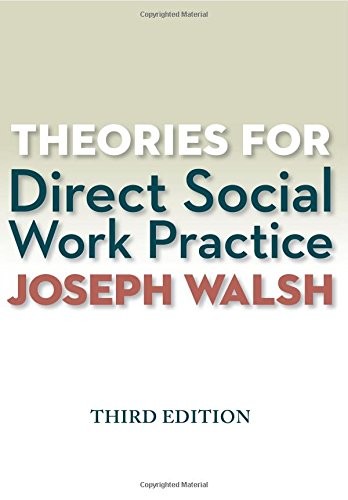
Theories for Direct Social Work Practice, 3rd Edition
Get Theories for Direct Social Work Practice, 3rd Edition — master all 11 clinical theories for assessment, planning, and intervention. Instant access.
Want to preview before you buy? Click Request Free Sample and tell us which chapter or pages you’d like to see, along with your email address. We’ll send you those pages from the eBook so you can be sure it’s the right one before buying.
- Instant download & lifetime access Available as soon as your payment is confirmed. Your download link is also sent to the email address you provide at checkout, and you can download your purchased eBook anytime from My Account → Downloads with unlimited downloads. An account is created automatically using the same email address.
- Own your eBook Receive the available PDF/EPUB file directly after purchase. No rental or temporary access — download and keep your eBook for personal use with lifetime access.
- Full refund guarantee If the eBook you receive does not match the details and description provided on the product page, contact [email protected] and we’ll issue a full refund within 24 hours.
- Secure payment through PayPal Pay securely by debit or credit card or with your PayPal account. Your card details are processed by PayPal and are never stored on our site.
$17.99$40.00
Why This Book Matters
Every social work student hits the same wall: theory courses feel abstract, and the leap from memorizing frameworks to actually using them with a client feels impossible. The gap between knowing what a theory says and knowing how to apply it in assessment, planning, and intervention is where confidence collapses.
Theories for Direct Social Work Practice by Joseph Walsh was written to close that gap. Instead of treating theories as academic artifacts, this Third Edition treats them as working tools — the kind a practitioner reaches for when a client walks in with a complex, messy, human situation.
If you have ever finished a theory chapter and asked, ‘But what do I actually do with this in a session?’ this book was written for that exact moment.
The problems this text solves:
- Theory courses that feel disconnected from real client work
- An overwhelming number of frameworks with no guidance on which to choose
- Difficulty turning assessment data into a defensible treatment plan
- Pressure to justify interventions with sound clinical reasoning
- The need for one text covering the major theories expected in field placement, comprehensive exams, and licensure preparation
By anchoring each framework to direct practice, the book gives you a repeatable method: understand the theory, apply it to assessment, and use it to plan and intervene.
About Theories for Direct Social Work Practice 3rd Edition eBook
Theories for Direct Social Work Practice is a clinical social work textbook by Joseph Walsh that provides concise, comprehensive coverage of eleven major clinical practice theories commonly used in assessment, planning, and intervention. This Third Edition was published by Cengage Learning in 2013.
The text is designed specifically for direct practice — the face-to-face work social workers do with client systems, including individuals, families, and groups. Each of the eleven theories is treated as a working framework, complete with assumptions about human behavior, guidance for assessment, and implications for intervention.
Its structure mirrors the practice process itself. The same theories appear as you move from understanding a client’s situation, to formulating a plan, to taking action — which is exactly how clinical reasoning happens in the real world.
What defines this edition:
- Eleven major clinical practice theories in a single manageable volume
- Concise, comprehensive treatment of each framework
- Assessment, planning, and intervention organized for direct application
- A Third Edition refined through years of classroom use
- Published by Cengage Learning, a major higher-education publisher
Is This Book Right for You?
If you are studying for a Bachelor of Social Work (BSW) or Master of Social Work (MSW), this is the theory text you want for core practice courses. It matches the curriculum of the clinical foundation classes where you must demonstrate the ability to assess, plan, and intervene using a recognized theoretical framework.
Who will get the most value from this Third Edition:
- BSW and MSW students in direct practice, methods, or clinical foundation courses
- Field placement students who need to connect classroom theory to real client cases
- Practitioners preparing for licensure exams or clinical supervision
- Instructors building a theory course around a clear, student-accessible text
- Supervisors who want a shared language for case discussions and staff training
The book is equally valuable as a working reference for practitioners. When a case does not fit your usual framework, the concise coverage of all eleven theories helps you re-examine the client’s situation from a fresh angle — without digging through a shelf of single-theory volumes.
If you are preparing for a comprehensive exam, or you simply want a clearly written theory text that does not presume prior mastery, this is the right level of rigor: demanding but genuinely readable.
What You Will Learn
The book is built to convert theoretical knowledge into clinical competence. By the time you finish this Third Edition, you will be able to do the following:
- Identify all eleven major clinical practice theories and the core assumptions behind each one
- Use each theory as a lens for assessment, organizing client information into a coherent professional format
- Translate assessment findings into treatment plans grounded in a defensible theoretical rationale
- Select the most appropriate theory for a given client population, setting, and presenting problem
- Apply intervention strategies that follow logically from each theoretical framework
- Compare and contrast theories to recognize where they overlap and where they genuinely conflict
- Critically evaluate the strengths and limitations of each approach for direct social work practice
- Develop your own integrated theoretical orientation — and articulate and justify it with confidence
These are not abstract learning objectives. Each one maps to the core competencies assessed in social work education and to the clinical reasoning skills tested in licensure exams.
The concise format is deliberate: you get the depth needed to apply each theory without the density that makes competing texts impossible to finish.
How It Compares
Most social work theory texts fall into one of two traps: they cover one or two theories in exhausting depth, or they survey dozens of frameworks with so little detail that none of them become usable. Theories for Direct Social Work Practice deliberately occupies the middle — eleven theories, each with enough depth to apply.
Because every theory is tied to assessment, planning, and intervention, the text reads like a practice manual rather than a philosophy anthology. You are never more than a page away from clinical application.
How it compares with the alternatives:
- A single-theory text leaves you unprepared when a client does not fit that framework; this one covers the full range of eleven major theories expected in direct practice
- A broad survey text sacrifices depth for coverage; this one devotes real attention to each of its eleven frameworks
- Overly abstract theory books ignore the practice sequence; this one is organized around assessment, planning, and intervention
- Dense, jargon-heavy volumes stall student progress; this one is written for readability while retaining graduate-level rigor
- A first-edition text carries unproven structure; this Third Edition has been tested and refined across years of classroom adoption
For instructors, the advantage is practical: a text students will actually read, a framework they can apply in field placement, and a structure that supports the syllabus from week one.
For students, the payoff is immediate: you gain the analytical tools to walk into an assessment and know exactly why you are asking the questions you are asking.
Behind the Book
Joseph Walsh brings a practice-grounded perspective to this Third Edition. The book’s organization — from assessment through planning to intervention — reflects how experienced clinicians structure their work, not how theorists arrange academic abstracts.
Reaching a third edition is itself a signal of quality. Textbooks do not earn multiple editions without sustained adoption and proven usefulness in social work programs. Instructors return to this structure because it works in the classroom and in the field.
Cengage Learning, the publisher behind this edition, is a major force in higher-education publishing. When you purchase this eBook, you are getting a professionally published, classroom-tested resource — not a scanned PDF of dubious origin.
Edition trust signals:
- Third Edition, published in 2013 by Cengage Learning
- Consistent coverage of eleven major clinical practice theories confirmed in publisher cataloging
- Long-standing presence in social work curricula and university course materials
- A structure aligned with the assessment, planning, and intervention sequence used across social work education
Final Assessment
Yes — especially if you are a BSW or MSW student who needs one trustworthy theory text to carry you through clinical practice courses. The value is not in page count; it is in how directly the content transfers to your daily work with clients.
Our verdict, in short:
- Coverage of all eleven major clinical practice theories in one manageable volume
- An assessment-to-intervention structure that mirrors real clinical reasoning
- A readable style that supports genuine understanding rather than rote memorization
- A proven Third Edition with the credibility of Cengage Learning behind it
- Immediate value in class, field placement, and licensure preparation
The only students who should look elsewhere are those whose programs mandate a different theory textbook for a specific course. For everyone else — if you need to master clinical practice theory, this is the edition to own.
Add Theories for Direct Social Work Practice 3rd Edition eBook to Your Library
You do not need another semester of disorganized notes and scattered web searches. This eBook delivers all eleven major clinical practice theories, organized for how social workers actually think and work — assessment, planning, and intervention — in one coherent, professionally published reference.
You are likely in the middle of a semester, facing a comprehensive exam, or building the clinical foundation that licensure will demand. This Third Edition from Cengage Learning is the trusted anchor your preparation needs.
Everything you receive:
- The complete Third Edition eBook of Theories for Direct Social Work Practice
- Concise, comprehensive coverage of eleven major clinical practice theories
- Assessment, planning, and intervention frameworks ready for immediate application
- Instant digital access — no shipping delays, no waiting for the bookstore
- A durable reference you will return to in field placement, exams, and professional practice
Get your copy today and put a complete, authoritative theory reference to work in your social work practice. Add Theories for Direct Social Work Practice to your cart now and start building the clinical confidence that comes from knowing what you are doing — and why.
Related products

A History of Psychology 2nd Edition – Global & Inclusive
$54.99This 2nd edition covers the history of psychology, including philosophical origins, women, minorities, and a new clinical chapter. Order now!
$184.00-
Unlearning Liberty: Campus Censorship, End of American Debate
$7.00Buy Unlearning Liberty by Greg Lukianoff and uncover how campus censorship threatens free speech and the future of American debate—get your copy now.
$15.00 -
Groups: Process and Practice 10th Edition – Group Counseling Text
$30.00Master group counseling with Corey & Corey’s 10th Edition – the definitive guide blending theory, ethics, and practical skills for students and professionals.
$79.00 -
Behavioral Genetics 7th Edition – Knopik, Neiderhiser, deFries, Plomin
$20.00Master heredity, DNA, and genetic methods with Behavioral Genetics, 7th Edition—the authoritative textbook by Knopik, Neiderhiser, deFries, and Plomin from Worth Publishers.
$41.00 -
Becoming Qualitative Researchers: An Introduction (5th Edition) – Pearson eText
$31.99Master the fundamentals of qualitative research with this concise 5th edition guide—ideal for beginners. Get your copy and start your research journey today.
$85.00 -
Designing and Conducting Mixed Methods Research 3rd Edition
$26.00Get the definitive guide to designing and conducting mixed methods research: the Third Edition by Creswell and Plano Clark covers seven designs and practical integration.
$71.00 -
Constitutional Law for a Changing America: Rights, Liberties, and Justice 10th Edition
$14.99Understand how political forces shape Supreme Court rulings on rights, liberties, and justice with this acclaimed 10th edition textbook by Epstein and Walker.
$29.00 -
Theories of Development: Concepts and Applications (6th Edition)
$22.00Get the 6th edition of Crain’s classic text covering 24 developmental theorists. Ideal for psychology students. Order your digital copy today!
$49.00