save
$26.00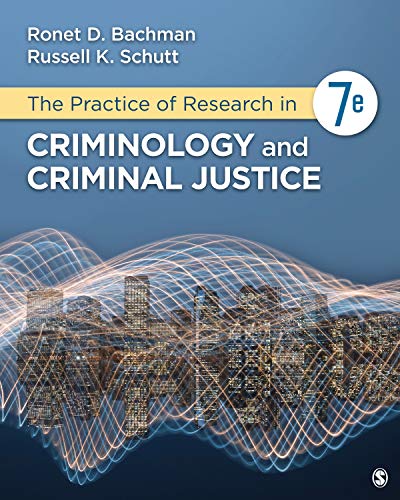
The Practice of Research in Criminology and Criminal Justice Seventh Edition
Master research methods in criminology and criminal justice with the definitive Seventh Edition textbook by Bachman and Schutt, now updated with intelligence-led policing and SNA.
Want to preview before you buy? Click Request Free Sample and tell us which chapter or pages you’d like to see, along with your email address. We’ll send you those pages from the eBook so you can be sure it’s the right one before buying.
- Instant download & lifetime access Available as soon as your payment is confirmed. Your download link is also sent to the email address you provide at checkout, and you can download your purchased eBook anytime from My Account → Downloads with unlimited downloads. An account is created automatically using the same email address.
- Own your eBook Receive the available PDF/EPUB file directly after purchase. No rental or temporary access — download and keep your eBook for personal use with lifetime access.
- Full refund guarantee If the eBook you receive does not match the details and description provided on the product page, contact [email protected] and we’ll issue a full refund within 24 hours.
- Secure payment through PayPal Pay securely by debit or credit card or with your PayPal account. Your card details are processed by PayPal and are never stored on our site.
$23.00$49.00
The Challenge It Addresses
Conducting rigorous research in criminology and criminal justice is fraught with challenges: ethical dilemmas, messy field data, rapidly evolving crime patterns, and the constant need to bridge theory and practice. Students and professionals alike often struggle to choose the right methodology, design valid studies, and interpret findings with confidence. Without a solid foundation in research methods, even the most passionate justice advocate can draw flawed conclusions that undermine policy and practice.
This book directly addresses these obstacles. It provides a clear, step-by-step framework for designing, executing, and evaluating research in the criminal justice context. Whether you are a graduate student tackling your first thesis or a seasoned practitioner seeking evidence-based insights, The Practice of Research in Criminology and Criminal Justice, Seventh Edition equips you with the tools to produce trustworthy, actionable knowledge.
About The Practice of Research in Criminology and Criminal Justice Seventh Edition
Research methods in criminology are the systematic techniques used to gather and analyze data about crime, offenders, and the justice system. This textbook is a comprehensive guide to those methods, written specifically for the field of criminology and criminal justice. The Seventh Edition (2020, SAGE Publications, Inc.) updates and expands the classic coverage with contemporary topics such as intelligence-led policing, social network analysis (SNA), and the evolution of cybercrime.
Authors Ronet D. Bachman and Russell K. Schutt bring decades of teaching and research experience to the page. Their approach balances conceptual depth with practical application, using real-world examples from policing, courts, corrections, and juvenile justice to illustrate each method. The book is organized around the entire research process — from problem formulation and research design to data collection, analysis, and dissemination — making it an ideal companion for a one- or two-semester course.
Who Will Benefit Most
This textbook is essential for anyone who needs to understand or conduct research in the criminal justice sphere. It is most commonly used in upper-level undergraduate and graduate courses in criminology, criminal justice, sociology, and related social sciences. However, its utility extends beyond the classroom.
Professionals in law enforcement, corrections, probation, and policy analysis will find the practical guidance invaluable for evaluating programs, interpreting crime statistics, and making data-driven decisions. The book also serves as a reference for researchers transitioning into the field from other disciplines, such as psychology or public health, who need a focused introduction to criminological methods.
Inside: What You Will Master
- Foundations of Research Design: Understand the differences between experimental, quasi-experimental, and non-experimental designs and when to use each in criminal justice settings.
- Sampling and Measurement: Learn how to select representative samples, construct valid measures of crime and justice concepts, and avoid common pitfalls like measurement error.
- Data Collection Techniques: Master surveys, interviews, field observations, and the use of existing records (including official crime data and social media sources).
- Qualitative and Quantitative Analysis: Gain proficiency in both statistical analysis (using SPSS or similar software) and interpretive methods such as thematic analysis and grounded theory.
- Ethics in Research: Navigate institutional review boards, informed consent, confidentiality, and the special ethical considerations when studying vulnerable populations and sensitive topics.
- Cutting-Edge Topics: Explore intelligence-led policing, social network analysis, cybercrime measurement, and the use of big data in criminal justice research.
- Writing and Disseminating Research: Develop skills to communicate findings effectively through research reports, articles, and policy briefs.
What Sets It Apart
Many general research methods texts exist, but few are tailored to the unique context of criminology and criminal justice. Bachman and Schutt’s book stands out because it embeds every methodological discussion within real criminal justice scenarios. For example, sampling is taught through the lens of studying gang members, not hypothetical college students. Ethical dilemmas are explored using actual cases of controversial prison research and police misconduct investigations.
The Seventh Edition also includes updates that competing editions lack: intelligence-led policing, social network analysis, and the evolving landscape of cybercrime. These additions ensure that students are prepared for the current research frontiers, not just classic methods. Furthermore, the SAGE publishing platform offers robust instructor resources — test banks, PowerPoint slides, and a companion website with data sets — making course delivery seamless.
Behind the Book
Ronet D. Bachman is a professor of sociology and criminal justice at the University of Delaware, with extensive published research on victimization, substance abuse, and women’s health. Russell K. Schutt is a professor of sociology at the University of Massachusetts Boston and a past president of the Society for the Study of Social Problems. Together, they bring decades of methodological expertise and a track record of influential textbooks.
SAGE Publications, Inc. is a leading independent academic publisher known for its rigorous peer review and high-quality social science textbooks. SAGE’s commitment to research methods education is reflected in the clarity and pedagogical design of this volume. The combination of distinguished authors and a trusted publisher gives this book unmatched authority in the field.
Final Assessment
For students and professionals who need a thorough, field-specific grounding in research methods, this textbook is the gold standard. Its real-world examples, updated content, and supplementary resources make it a superior choice over generic methods texts. The Seventh Edition is particularly valuable for those wanting to stay current with modern techniques like SNA and intelligence-led policing, which are increasingly central to criminal justice research.
While the price point reflects a premium academic textbook, the investment pays off in the depth of understanding and practical skills you gain. For instructors, the included teaching materials reduce preparation time and enhance student engagement. For self-learners, the logical structure and clear writing make complex topics accessible.
Start Reading The Practice of Research in Criminology and Criminal Justice Seventh Edition Today
Whether you are a criminology student preparing for your thesis, a criminal justice professional seeking evidence-based solutions, or a researcher expanding your methodological toolkit, The Practice of Research in Criminology and Criminal Justice, Seventh Edition is the definitive resource. Order your digital copy today and gain immediate access to the most current, applied research methods training available from SAGE Publications, Inc.
Related products

The Certification of Insanity: Local Origins and Imperial Consequences
$39.99The first systematic study of lunacy certification in the British Empire, examining local origins and imperial consequences through legal and archival sources.
$132.00-
Applied Sport Psychology 7e: Personal Growth to Peak
$29.99Achieve peak performance with Applied Sport Psychology 7e. Master proven psychological techniques for personal growth. Get your digital copy today.
$59.00 -
Case Study Research and Applications: Design & Methods, 6e
$19.99Master case study research with the definitive Sixth Edition of Case Study Research and Applications: Design and Methods. Order now for instant access.
$48.00 -
Unlearning Liberty: Campus Censorship, End of American Debate
$7.00Buy Unlearning Liberty by Greg Lukianoff and uncover how campus censorship threatens free speech and the future of American debate—get your copy now.
$15.00 -
A History of Psychology 2nd Edition – Global & Inclusive
$54.99This 2nd edition covers the history of psychology, including philosophical origins, women, minorities, and a new clinical chapter. Order now!
$184.00 -
Becoming Qualitative Researchers: An Introduction (5th Edition) – Pearson eText
$31.99Master the fundamentals of qualitative research with this concise 5th edition guide—ideal for beginners. Get your copy and start your research journey today.
$85.00 -
Methods in Behavioral Research 14th Edition – Cozby & Bates
$28.00Master behavioral research methods with Cozby & Bates’ 14th edition. SmartBook support, clear examples, and proven pedagogy. Get your digital copy today!
$51.00 -
Becoming a Helper 8th Edition – Marianne & Gerald Corey eBook
$28.99Start your helping career with Corey & Corey’s Becoming a Helper, 8th Edition eBook—self-reflection, ethics, diversity, and practical skills in one essential guide.
$96.00