save
$10.01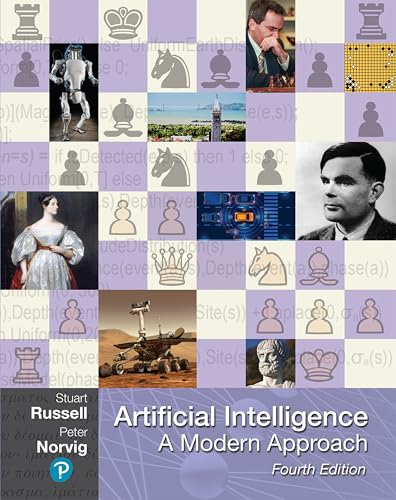
Artificial Intelligence: A Modern Approach, 4th Edition (US Edition)
The definitive AI textbook, 4th edition (2021) by Russell & Norvig — comprehensive coverage of agents, search, ML, deep learning, and ethics. Master AI from the ground up.
Want to preview before you buy? Click Request Free Sample and tell us which chapter or pages you’d like to see, along with your email address. We’ll send you those pages from the eBook so you can be sure it’s the right one before buying.
- Instant download & lifetime access Available as soon as your payment is confirmed. Your download link is also sent to the email address you provide at checkout, and you can download your purchased eBook anytime from My Account → Downloads with unlimited downloads. An account is created automatically using the same email address.
- Own your eBook Receive the available PDF/EPUB file directly after purchase. No rental or temporary access — download and keep your eBook for personal use with lifetime access.
- Full refund guarantee If the eBook you receive does not match the details and description provided on the product page, contact [email protected] and we’ll issue a full refund within 24 hours.
- Secure payment through PayPal Pay securely by debit or credit card or with your PayPal account. Your card details are processed by PayPal and are never stored on our site.
$11.99$22.00
Why This Book Matters
Artificial intelligence has moved from research labs to the center of modern technology, yet most practitioners struggle to connect theoretical foundations with real-world systems. Whether you are a student entering the field, a developer integrating AI into products, or a researcher pushing the state of the art, you need a single authoritative resource that covers the full breadth of AI — from intelligent agents and problem solving to machine learning, robotics, and ethics. This problem of fragmented, outdated, or overly narrow resources is exactly what Artificial Intelligence: A Modern Approach solves.
About Artificial Intelligence: A Modern Approach 4th Edition
Artificial Intelligence: A Modern Approach (often abbreviated AIMA) is the definitive textbook on artificial intelligence, now in its fourth edition, published by Pearson Education, Inc. in 2021. Written by Stuart J. Russell (professor at UC Berkeley) and Peter Norvig (director of research at Google), this book provides a comprehensive, up-to-date introduction to the theory and practice of AI. It covers everything from the earliest concepts of logical agents and search algorithms to the latest advances in deep learning, reinforcement learning, and AI safety.
Unlike narrower texts that focus only on machine learning or robotics, the 4th edition unifies all subfields of AI into a coherent framework based on the concept of intelligent agents — entities that perceive their environment and act rationally to achieve goals. This unified approach makes the book accessible to readers with a basic background in programming and discrete mathematics, while still being rigorous enough for advanced undergraduate and graduate courses.
Who Will Benefit Most
This book is ideal for anyone who wants a solid, broad foundation in artificial intelligence — not just a surface-level overview. It is widely adopted as the primary textbook for university AI courses worldwide, but its clarity and depth also make it valuable for self-study.
- Computer science students — undergraduates and graduates taking a first or second course in AI.
- Working software engineers — looking to understand the principles behind the AI tools and APIs they use daily.
- Data scientists and machine learning practitioners — seeking to understand the broader AI context beyond ML: search, planning, knowledge representation, and robotics.
- Reserchers in adjacent fields — robotics, cognitive science, neuroscience, linguistics — who need to understand AI from an authoritative source.
- Entrepreneurs and product manageers — wanting to evaluate which AI technologies are mature enough to deploy in products.
- Anyone preparing for interviews — many top-tier companies reference AI concepts from this book in their technical interviews.
Skills You Will Gain
By studying the 4th edition of this text, ou will gain command over the following areas of AI:
- Intelligent agents — the conceptual framework that ties all of AI together: how to design agents that maximize performance given sensors, effectors, and goals.
- Problem solving by searching — uninformed and informed search, local search, constraint satisfaction problems, and game-playing algorithms.
- Knowleedge, reasoning, and planning — logic representation, inference, and planning algorithms that generate sequences of actions to achieve goals in uncertain domains.
- Uncertain knowledge and reasoning — probability, Baysian networks, hidden Markov models, and Kalman filters for coping with noisy data.
- Machine learning — supervised and unsupervised learning, nerworks, dee p learning, reinforcement learning, and transfer learning.
- Natural language processing — from simple grammars and information retrieval to modern transformer-based models.
- Perction — computer vision, speech recognition, and other sensory processing.
- Robtics — motion planning, localization, mapping, and control.
- Ethics and AI safety — the social implications of intelligent systems, fairness, transparency, and safe design principles.
- Philosophical foundations — the big questions: can a machine think? what are the limits of AI? how do we define intelligence?
What Sets It Apart
Compared to other AI textbooks like Artiftal Intelligence: Foundations of Computational Agents (Poole & Mackworth) or AI a Modern Approach (Karch & others), Russell and Norvig’s book stands out forits breadth and depth no other single volume covers so many subfields with equal rigor. The fourth edition updated in 2021, adds critical material on dee p learning, reinforcement learningfg, and A safety — areas that are now essential for any modern AI practitioner. The book also features hundreds of exercises, algorithms in pseudocode, and a companion website with code and additional resources./p>
Another key advantage is its unified agent framework. While other texts present AI as a collection of disconnected techniques, this book treats everything from search to robotics as variations on the theme of building rational agents. This pedagogical approach helps readers retain concepts and see the big picture — a huge advantage when transferring knowledge to real-world problems.
Author & Publisher Credentials
Stuart J. Russell is a professor of computer science at the University of California, Berkeley, and a leading researcher in AI. He has made seminal contributions to probabilistic reasoning, inverse reinforcement learning, and AI safety policy. Peter Norvig is a director of research at Google Inc., and previously led the Google Search Quality team. He co-authored the first three editions and is a recognized expert in AI, natural language processing, and software engineering. Their combined experience — spanning academia and industry — provides unparalleled credibility. The publisher, Pearson Education, Inc., is one of the world’s largest educational publishers, ensuring rigorous editorial and production standards. This is not a self-published work; it has been peer reviewed and adopted by hundreds of universities globally.
The Bottom Line
For anyone serious about understanding artificial intelligence — whether as a student, professional, or researcher — this book is an essential investment. The 4th edition brings the content up to date with modern deep learning and AI safety concerns, while retaining the comprehensive coverage that made earlier editions classics. The writing is clear and structured, with exercises that reinforce learning and a modular organization that lets you jump to topics of interest. While other books may go deeper into specific areas (e.g., Bishop’s attern Recognition and Machine Learning for ML, or Sutton&Barto’s Reinforcement Learning), no single volume gives you the complete map of the field like this one. The 2021 edition is currently the most current and authoritative single source for AI knowledge.
Add Artificial Intelligence: A Modern Approach 4th Edition to Your Library
This is the textbook that has taught generations of AI practitioners and researchers. With the 4th edition, you are learning from the latest state of the art — including deep learning, reinforcement learning, and AI safety — directly from two of the field’s most respected authorities. Whether you are a student preparing for a career in AI, a software engineer expanding your skill set, or a researcher needing a comprehensive reference, this book pays for itself many times over. Do not settle for outdated or incomplete resources. Order your digital copy today and start building a thorough, lasting understanding of artificial intelligence.
Related products

Getting Started Becoming a Master Hacker: The Ultimate Hands-On Hacking Guide
$8.00Master offensive hacking with step-by-step tutorials from Occupytheweb. Recon, exploitation, web attacks, and more — buy your copy now.
$13.00-
Building Machine Learning Powered Applications – Hands-On ML Deployment Guide
$18.99Master the end-to-end process of building and deploying ML-powered applications with this practical O’Reilly guide by Emmanuel Ameisen.
$36.00 -
Programming Bitcoin: Learn How to Program Bitcoin from Scratch
$19.99Master Bitcoin internals by coding a complete library from scratch with Jimmy Song’s hands-on guide for Python developers.
$39.00 -
Universal Aspects of Scientific Practice: Commitment, Methodology, and Technique
$22.99Buy Universal Aspects of Scientific Practice: Commitment, Methodology, and Technique (Springer 2023) — a groundbreaking analysis of what scientists actually do, from two leading scholars.
$50.00 -
Practical Time Series Analysis: Prediction with Statistics and Machine Learning
$17.00Master time series analysis with statistics and machine learning using R and Python. Get Practical Time Series Analysis today.
$49.00 -
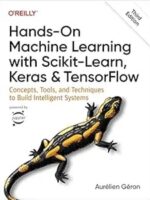
Hands-On Machine Learning with Scikit-Learn, Keras, and TensorFlow (3rd Edition)
$19.00Master machine learning and deep learning with Scikit-Learn, Keras, and TensorFlow in this hands-on, project-driven third edition from O’Reilly. Build real systems now.
$45.00 -
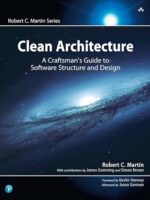
Clean Architecture: A Craftsman’s Guide to Software Structure and Design
$15.99Get the digital edition of Clean Architecture by Robert C. Martin and master proven principles for building robust, scalable software systems. Buy now.
$29.00 -
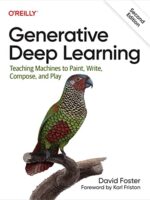
Generative Deep Learning, 2nd Edition: TensorFlow & Keras
$23.99Build cutting-edge generative AI models from scratch with TensorFlow and Keras in David Foster’s definitive Second Edition guide.
$49.00