save
$32.00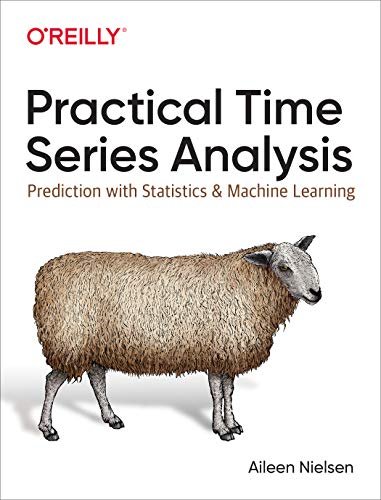
Practical Time Series Analysis: Prediction with Statistics and Machine Learning
Master time series analysis with statistics and machine learning using R and Python. Get Practical Time Series Analysis today.
Want to preview before you buy? Click Request Free Sample and tell us which chapter or pages you’d like to see, along with your email address. We’ll send you those pages from the eBook so you can be sure it’s the right one before buying.
- Instant download & lifetime access Available as soon as your payment is confirmed. Your download link is also sent to the email address you provide at checkout, and you can download your purchased eBook anytime from My Account → Downloads with unlimited downloads. An account is created automatically using the same email address.
- Own your eBook Receive the available PDF/EPUB file directly after purchase. No rental or temporary access — download and keep your eBook for personal use with lifetime access.
- Full refund guarantee If the eBook you receive does not match the details and description provided on the product page, contact [email protected] and we’ll issue a full refund within 24 hours.
- Secure payment through PayPal Pay securely by debit or credit card or with your PayPal account. Your card details are processed by PayPal and are never stored on our site.
$17.00$49.00
The Problem This Book Solves
Time series data is everywhere — from IoT sensors and healthcare monitors to stock prices and smart city infrastructure. Yet many data scientists and engineers struggle to extract meaningful forecasts and insights from this sequential data. Traditional statistical methods can feel outdated, while machine learning approaches often lack the structure needed for time-dependent patterns. Practical Time Series Analysis bridges this gap by giving you a dual toolkit: classical time series statistics and modern machine learning, all in both R and Python.
Whether you are dealing with missing timestamps, seasonal fluctuations, or high-frequency streaming data, this book provides battle-tested techniques to turn messy time series into actionable predictions. It is not a dry theoretical text — it is a hands-on guide designed for practitioners who need results fast.
What Is Practical Time Series Analysis? A Complete Overview
Practical Time Series Analysis is a comprehensive guide by data scientist Aileen Nielsen, published by O’Reilly Media in 2019 (First Edition). The book covers the entire workflow of time series analysis — from data cleaning and exploration to modeling, forecasting, and evaluation. It uniquely combines both statistical approaches (ARIMA, exponential smoothing, spectral analysis) and machine learning techniques (XGBoost, neural networks, feature engineering) for time series problems.
The book is structured to be language-agnostic, providing code examples in both R and Python. It covers real-world case studies from IoT, healthcare, finance, and smart cities, demonstrating how to handle common challenges like irregular sampling, multiple seasonality, and large-scale data. Nielsen emphasizes practical implementation over mathematical proofs, making the content accessible to engineers and analysts with basic data science experience.
Who Should Read Practical Time Series Analysis?
This book is ideal for data scientists, software engineers, and researchers who need to work with time series data but lack specialized training. If you are comfortable with Python or R and have basic knowledge of statistics and machine learning, this book will quickly elevate your time series skills.
It is particularly valuable for:
- Data scientists moving into IoT, healthcare analytics, or financial modeling
- Software engineers building monitoring systems or predictive features
- Academics and researchers needing a practical supplement to theoretical courses
- Analysts transitioning from traditional statistics to machine learning workflows
- Students preparing for data science roles that require time series forecasting
9 Key Things You Will Learn
By working through this guide, you will master the following core concepts and techniques:
- Time series data wrangling — Handling time zones, missing timestamps, and irregular sampling in both R and Python
- Exploratory analysis — Decomposing series into trend, seasonality, and residuals; visualizing autocorrelation and partial autocorrelation
- Statistical forecasting — Building ARIMA, SARIMA, and exponential smoothing models with proper diagnostics
- Machine learning for time series — Feature engineering from date/time, lag variables, rolling statistics, and using tree-based models like XGBoost
- Deep learning approaches — Implementing LSTM, CNN, and hybrid architectures for sequence prediction
- Multiple seasonality — Techniques for handling daily, weekly, and yearly patterns simultaneously
- Anomaly detection — Using statistical and ML methods to spot outliers in time series streams
- Model evaluation — Proper cross-validation for time series (walk-forward validation) and error metrics
- Real-world case studies — End-to-end examples from IoT sensor data, healthcare monitoring, and smart city applications
Why Practical Time Series Analysis Outperforms Every Alternative
Most time series books fall into one of two camps: dense academic texts full of equations, or shallow blog-post collections. Practical Time Series Analysis avoids both extremes. It delivers the depth of a textbook but with the clarity and code focus of a practical guide. Unlike competitors that limit themselves to either R or Python, this book gives you both — so you can work in whichever ecosystem you prefer.
Another key differentiator is its coverage of modern machine learning and deep learning for time series, a topic many older guides ignore. While books like Forecasting: Principles and Practice (Hyndman) are excellent for statistics, they do not cover XGBoost or neural networks. Nielsen’s book fills that gap, making it a one-stop resource for both classical and modern methods.
Author Authority & Publisher Credibility
Aileen Nielsen is a data scientist with extensive experience applying time series analysis across industries. She has worked at startups and large organizations, tackling forecasting, anomaly detection, and signal processing problems. Nielsen is also a frequent speaker at conferences and a contributor to the open-source community. Her practical, no-nonsense writing style reflects real-world experience.
O’Reilly Media is a trusted name in technology education, known for producing high-quality, authoritative books on programming, data science, and engineering. O’Reilly’s rigorous editorial process ensures that every title meets strict standards for accuracy and readability. This partnership guarantees that you are learning from a reliable source with a reputation for excellence.
Is Practical Time Series Analysis Worth It? Our Verdict
If you work with time series data and need a practical, up-to-date resource that covers both statistics and machine learning, this book is an excellent investment. It saves you the frustration of jumping between multiple sources — Nielsen consolidates the essential techniques into a single, well-organized volume. The hands-on code examples in R and Python mean you can start applying what you learn immediately.
The book’s only limitation is its 2019 publication date; some cutting-edge deep learning advances since then are not covered. However, the fundamentals and classical methods remain highly relevant. For most practitioners, the combination of breadth, clarity, and dual-language support makes this the best single guide to time series analysis available.
Get Practical Time Series Analysis — Master Time Series Data Today
Don’t let messy time series data hold back your projects. With Practical Time Series Analysis, you gain the skills to clean, explore, model, and forecast any time-dependent dataset with confidence. Whether you are a data scientist, engineer, or researcher, this book will be your go-to reference for solving real-world time series problems.
Get your copy now of the First Edition from O’Reilly Media and start turning sequential data into actionable predictions.
Related products

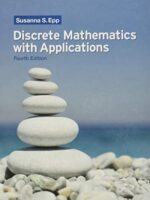
Discrete Mathematics with Applications 4th Edition Epp
$33.99Master discrete mathematics with Susanna Epp’s clear, application-driven Fourth Edition — the essential textbook for computer science and engineering students.
$89.00-
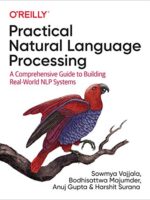
Practical Natural Language Processing: Build Real-World NLP Systems
$26.00Build, iterate, and deploy real-world NLP systems with this practical guide from O’Reilly — the definitive resource for production NLP.
$54.00 -
Getting Started Becoming a Master Hacker: The Ultimate Hands-On Hacking Guide
$8.00Master offensive hacking with step-by-step tutorials from Occupytheweb. Recon, exploitation, web attacks, and more — buy your copy now.
$13.00 -
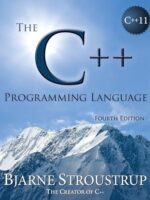
The C++ Programming Language, Fourth Edition
$26.99The definitive C++ reference by creator Bjarne Stroustrup, Fourth Edition. Master the language and standard library. Order now.
$64.00 -
Head First Java (3rd Edition) – A Brain-Friendly Guide
$22.99Master Java with the engaging, brain-friendly 3rd edition of Head First Java. Perfect for beginners and intermediate learners — start coding today!
$45.00 -
Mastering the Lightning Network: A Second Layer Blockchain Protocol for Instant Bitcoin Payments
$18.00Master the Lightning Network: the definitive guide to instant Bitcoin payments. Co-authored by LN creators, this O’Reilly book covers everything from payment channels to advanced routing.
$30.00 -
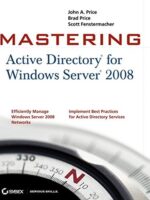
Mastering Active Directory for Windows Server 2008
$12.00Master Active Directory deployment, security, and troubleshooting in Windows Server 2008 with this comprehensive guide from Wiley — the essential reference for IT professionals.
$35.00 -
Applied Natural Language Processing in the Enterprise
$26.99Master NLP with BERT and GPT-3 using Python in this hands-on guide for enterprise practitioners. Get your copy now.
$56.00