save
$26.00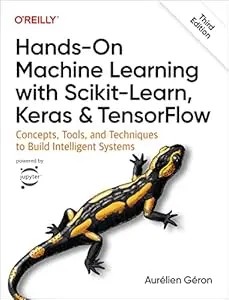
Hands-On Machine Learning with Scikit-Learn, Keras, and TensorFlow (3rd Edition)
Master machine learning and deep learning with Scikit-Learn, Keras, and TensorFlow in this hands-on, project-driven third edition from O’Reilly. Build real systems now.
Want to preview before you buy? Click Request Free Sample and tell us which chapter or pages you’d like to see, along with your email address. We’ll send you those pages from the eBook so you can be sure it’s the right one before buying.
- Instant download & lifetime access Available as soon as your payment is confirmed. Your download link is also sent to the email address you provide at checkout, and you can download your purchased eBook anytime from My Account → Downloads with unlimited downloads. An account is created automatically using the same email address.
- Own your eBook Receive the available PDF/EPUB file directly after purchase. No rental or temporary access — download and keep your eBook for personal use with lifetime access.
- Full refund guarantee If the eBook you receive does not match the details and description provided on the product page, contact [email protected] and we’ll issue a full refund within 24 hours.
- Secure payment through PayPal Pay securely by debit or credit card or with your PayPal account. Your card details are processed by PayPal and are never stored on our site.
$19.00$45.00
The Problem This Book Solves
Machine learning is transforming every industry, but mastering it requires more than theory — you need hands-on experience with the tools that power real-world AI systems. Many books overwhelm beginners with abstract math or skip straight to advanced topics, leaving a gap between learning and building. This third edition of Hands-On Machine Learning with Scikit-Learn, Keras, and TensorFlow bridges that gap by teaching you to build intelligent systems using proven Python frameworks, with just enough theory to understand what you are doing.
Whether you are a data scientist, software engineer, or student, the core challenge is the same: how do you go from knowing Python basics to deploying production-ready machine learning models? Aurélien Géron answers that question with a practical, example-driven approach that has made this book a bestseller in the field.
What Is Hands-On Machine Learning with Scikit-Learn, Keras, and TensorFlow? A Complete Overview
Hands-On Machine Learning with Scikit-Learn, Keras, and TensorFlow is a comprehensive guide that teaches you to build intelligent systems using three of the most popular Python frameworks. Published by O’Reilly Media in 2022, this third edition updates the previous version with new chapters, expanded coverage of transformers and self-supervised learning, and the latest features of TensorFlow 2.x and Keras.
The book is structured as a practical tutorial, not an academic textbook. It starts with the fundamentals — linear and logistic regression, decision trees, and ensemble methods — then progresses to deep learning with neural networks, convolutional nets, recurrent nets, and advanced topics like generative adversarial networks (GANs) and natural language processing (NLP) with transformers. Each chapter includes concrete examples and production-ready code that you can adapt to your own projects.
Who Should Read Hands-On Machine Learning with Scikit-Learn, Keras, and TensorFlow?
This book is designed for intermediate Python developers who want to master machine learning and deep learning. It assumes you have basic Python skills — you should be comfortable with data structures, loops, and functions — but it does not require prior experience with machine learning or linear algebra. If you have some exposure to NumPy or pandas, that is a plus, but the book covers what you need.
The ideal reader is a software engineer looking to add ML to their toolkit, a data scientist who wants to move from statistics to deep learning, or a student in computer science or a related field who wants practical skills. It is also valuable for researchers who need to implement models quickly and hobbyists building personal AI projects. If you have tried other ML resources and found them too theoretical or too advanced, this book is your best next step.
8 Key Things You Will Learn
By working through this book, you will gain the following practical skills and knowledge:
- Build end-to-end machine learning projects — from data collection and cleaning to model deployment and monitoring
- Master Scikit-Learn for classical ML tasks like classification, regression, clustering, and dimensionality reduction
- Design and train deep neural networks using Keras and TensorFlow, including convolutional and recurrent architectures
- Implement transfer learning and self-supervised learning to achieve state-of-the-art results with limited data
- Train and deploy transformers for natural language processing, including BERT and GPT-style models
- Use reinforcement learning to build agents that learn from interaction with their environment
- Optimize model performance with hyperparameter tuning, regularization, and ensemble methods
- Deploy models to production using TensorFlow Serving, TFX, and cloud platforms
Why Hands-On Machine Learning Outperforms Every Alternative
Most machine learning books fall into one of two camps: they are either too theoretical (like Bishop’s “Pattern Recognition and Machine Learning”) or too shallow (like many quick-start guides). Géron’s book strikes a rare balance — it gives you enough theory to understand why models work, but it focuses relentlessly on practical implementation.
Compared to “Introduction to Machine Learning with Python” by Müller and Guido, this book covers deep learning in depth, including TensorFlow and Keras, which the other book does not. Compared to “Deep Learning” by Goodfellow, Bengio, and Courville, this book is far more accessible and code-oriented. The third edition adds crucial modern topics like transformers and self-supervised learning that are missing from older editions and competitors. For professionals who need to build real systems, not just understand theory, this is the definitive choice.
Author Authority & Publisher Credibility
Aurélien Géron is a former Google engineer who led the YouTube video classification team and built the first version of the Google Analytics platform. His deep industry experience — building and deploying machine learning systems at scale — infuses every chapter with practical wisdom. He is also the author of the previous two editions, which have been widely adopted in university courses and corporate training programs worldwide.
O’Reilly Media is the premier publisher for technology professionals. Known for their practical, example-driven books, O’Reilly has been a trusted source for developers and data scientists for decades. This third edition underwent rigorous technical review and was updated to reflect the latest versions of TensorFlow 2.x, Keras, and Scikit-Learn, ensuring that the code and techniques are current.
Is Hands-On Machine Learning Worth It? Our Verdict
Yes. This is widely considered the best single book for learning applied machine learning and deep learning with Python. The third edition is a significant update — it adds chapters on transformers, self-supervised learning, and the latest TensorFlow APIs, while refining the existing material based on reader feedback. The code examples are clear, the explanations are intuitive, and the projects are relevant to real-world problems.
The book is not perfect for everyone: if you are a complete beginner to Python, you should start with a Python fundamentals course first. And if you need a deep theoretical treatment of optimization or probability, you will need a supplementary text. But for the vast majority of learners who want to build ML systems that work, this book delivers exceptional value. It is the resource that practicing data scientists recommend to colleagues and the one that university courses adopt for their practical ML sequences.
Get Hands-On Machine Learning — Build Intelligent Systems Today
Whether you are a software engineer pivoting into AI, a data scientist expanding into deep learning, or a student building your portfolio, this book gives you the fastest path from Python basics to production-ready models. With O’Reilly’s trusted content and Géron’s industry expertise, you are learning from a source that has already helped hundreds of thousands of professionals succeed. Add to cart now and start building the intelligent systems that define the future of technology.
Related products

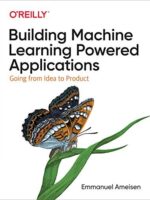
Building Machine Learning Powered Applications – Hands-On ML Deployment Guide
$18.99Master the end-to-end process of building and deploying ML-powered applications with this practical O’Reilly guide by Emmanuel Ameisen.
$36.00-
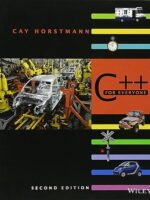
C++ for Everyone 2nd Edition – Cay Horstmann eBook
$12.99Master C++ programming fast with Cay Horstmann’s focused, beginner-friendly guide. No prior experience needed—start coding today.
$26.00 -
Programming Bitcoin: Learn How to Program Bitcoin from Scratch
$19.99Master Bitcoin internals by coding a complete library from scratch with Jimmy Song’s hands-on guide for Python developers.
$39.00 -
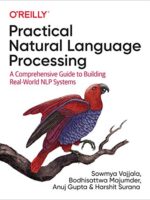
Practical Natural Language Processing: Build Real-World NLP Systems
$26.00Build, iterate, and deploy real-world NLP systems with this practical guide from O’Reilly — the definitive resource for production NLP.
$54.00 -
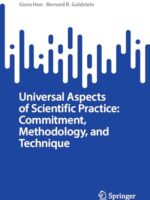
Universal Aspects of Scientific Practice: Commitment, Methodology, and Technique
$22.99Buy Universal Aspects of Scientific Practice: Commitment, Methodology, and Technique (Springer 2023) — a groundbreaking analysis of what scientists actually do, from two leading scholars.
$50.00 -
Ethical Hacking With Kali Linux: Learn Fast How To Hack Like a Pro
$12.00Master ethical hacking with Kali Linux — learn wireless attacks, penetration testing, and real-world exploits in one practical guide.
$31.00 -
Clean Architecture: A Craftsman’s Guide to Software Structure and Design
$15.99Get the digital edition of Clean Architecture by Robert C. Martin and master proven principles for building robust, scalable software systems. Buy now.
$29.00 -
Mastering the Lightning Network: A Second Layer Blockchain Protocol for Instant Bitcoin Payments
$18.00Master the Lightning Network: the definitive guide to instant Bitcoin payments. Co-authored by LN creators, this O’Reilly book covers everything from payment channels to advanced routing.
$30.00