save
$26.01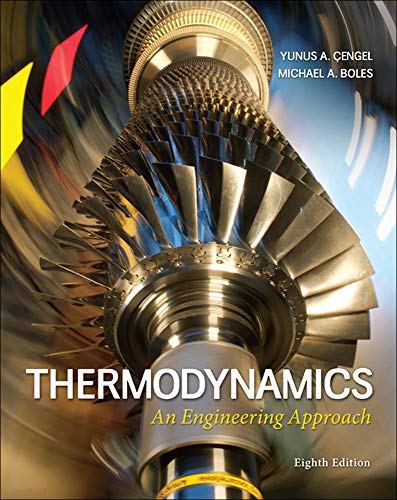
Thermodynamics: An Engineering Approach 8th Edition Çengel Boles
Master the energy principles driving modern engines, power plants, and HVAC systems with Çengel & Boles’s Eighth Edition — the #1 engineering thermodynamics textbook, now in digital format for instant access.
Want to preview before you buy? Click Request Free Sample and tell us which chapter or pages you’d like to see, along with your email address. We’ll send you those pages from the eBook so you can be sure it’s the right one before buying.
- Instant download & lifetime access Available as soon as your payment is confirmed. Your download link is also sent to the email address you provide at checkout, and you can download your purchased eBook anytime from My Account → Downloads with unlimited downloads. An account is created automatically using the same email address.
- Own your eBook Receive the available PDF/EPUB file directly after purchase. No rental or temporary access — download and keep your eBook for personal use with lifetime access.
- Full refund guarantee If the eBook you receive does not match the details and description provided on the product page, contact [email protected] and we’ll issue a full refund within 24 hours.
- Secure payment through PayPal Pay securely by debit or credit card or with your PayPal account. Your card details are processed by PayPal and are never stored on our site.
$23.99$50.00
The Problem This Book Solves
Engineering thermodynamics is often the gatekeeper course that separates those who truly understand energy systems from those who merely memorize equations. The conceptual leap from ideal gases to real-world power cycles, refrigeration, and combustion can feel insurmountable without a resource that bridges theory and practice. Thermodynamics: An Engineering Approach, Eighth Edition by Yunus A. Çengel and Michael A. Boles is precisely that resource — a textbook engineered to transform confusion into mastery, one principle at a time.
What Is Thermodynamics: An Engineering Approach 8th Edition Çengel Boles? A Complete Overview
Thermodynamics: An Engineering Approach is the definitive introductory engineering thermodynamics textbook used by hundreds of universities worldwide. This Eighth Edition, published by McGraw-Hill Education in 2015 (ISBN 9780073398174), delivers a comprehensive, example-driven treatment of the first and second laws of thermodynamics, energy analysis, entropy, exergy, gas and vapor power cycles, refrigeration, and gas mixtures. The book’s hallmark is its intuitive “energy balance” framework, which gives students a systematic methodology for solving real engineering problems rather than relying on rote formulae.
The text is structured to support two sequential semester courses, beginning with foundational concepts and progressing to advanced applications. Each chapter integrates worked examples, conceptual case studies, and end-of-chapter problems that reflect authentic engineering scenarios. The authors eschew abstract mathematics in favor of clear physical reasoning, making the subject accessible without sacrificing rigor.
A unique feature of this edition is the early introduction of the first law of thermodynamics, enabling students to apply energy balances from the outset. The combined coverage of closed and open systems alongside the conservation of mass principle provides a unified treatment that many competing textbooks postpone to later chapters. This pedagogical choice accelerates learning and reinforces the interconnectedness of thermodynamic principles.
Is This Book Right for You?
This textbook is the standard choice for undergraduate mechanical, aerospace, chemical, and civil engineering students enrolled in introductory thermodynamics courses. It is equally valuable for:
- Engineering sophomores and juniors taking their first thermal-fluids course — the step-by-step approach builds confidence from the ground up.
- Graduate students needing a thorough review of foundational thermodynamics before advancing to combustion, propulsion, or energy systems design.
- Practicing engineers in power generation, HVAC, refrigeration, and automotive industries who reference the text as a professional desk companion.
- Self-learners and exam candidates preparing for the Fundamentals of Engineering (FE) or Professional Engineering (PE) exams, where thermodynamics is a core topic.
Key Takeaways
- Energy and the First Law: Understand energy conservation for closed and open systems, including the sign convention for heat and work interactions.
- Properties of Pure Substances: Master the use of steam tables, ideal gas equations, and property diagrams (P-v, T-v, P-h).
- Entropy and the Second Law: Grasp why processes have direction, how to calculate entropy changes, and the practical meaning of the Clausius inequality.
- Exergy (Availability) Analysis: Learn to quantify the maximum useful work obtainable from a system — a critical skill for energy efficiency audits.
- Gas Power Cycles: Analyze Otto, Diesel, Brayton, and combined cycles with real engine performance parameters.
- Vapor and Combined Power Cycles: Model steam Rankine cycles and combined-cycle plants that dominate modern electricity generation.
- Refrigeration and Heat Pump Cycles: Evaluate vapor-compression systems, absorption refrigeration, and coefficient-of-performance calculations.
- Gas Mixtures and Psychrometrics: Handle air–water vapor mixtures, humidity ratios, and air-conditioning processes.
What Sets It Apart
While textbooks like Moran & Shapiro’s Fundamentals of Engineering Thermodynamics or Borgnakke & Sonntag’s Fundamentals of Thermodynamics are respected, Çengel and Boles’s approach is uniquely student-centered. Where other texts bury readers in dense derivations, this book introduces each concept with a real engineering context before presenting the mathematics. The authors’ hallmark “energy balance” methodology — Ein – Eout = ΔEsystem — is a simple yet powerful tool that students can apply immediately to solve problems methodically.
The Eighth Edition also improves upon earlier versions with enhanced visual clarity. Full-color illustrations, annotated P-v and T-s diagrams, and photograph-based examples connect abstract thermodynamics to physical phenomena like steam turbines, jet engines, and heat exchangers. No competing textbook matches this edition’s sheer density of worked examples — over 200 in the main text alone, each with detailed solution steps and unit conversion guidance.
Furthermore, the book’s organization for two sequential courses gives instructors flexibility. Chapters 1–9 cover core material for a first course, while Chapters 10–16 dive into advanced applications suitable for a follow-up or senior elective. This modular structure is absent in more compact introductions like Cengel’s own Introduction to Thermodynamics (which is an abridgment) and makes the full edition the superior choice for serious engineering curricula.
About the Author
Yunus A. Çengel is a Professor Emeritus of Mechanical Engineering at the University of Nevada, Reno. He brings decades of teaching experience and has authored multiple globally adopted textbooks on thermodynamics, fluid mechanics, and heat transfer, collectively used in over 100 countries. His writing philosophy emphasizes “think, then solve,” which infuses every example in this book with pedagogical intent.
Michael A. Boles is a Professor Emeritus of Mechanical and Aerospace Engineering at North Carolina State University. His research background in thermodynamics and energy conversion ensures the applications and problem sets reflect authentic engineering practice, not just hypothetical textbook exercises.
McGraw-Hill Education — the publisher of this Eighth Edition — is among the world’s premier academic publishers. Their rigorous peer-review process, professional illustration teams, and ancillary resources (including an online learning platform and instructor solution manual) provide the institutional support that guarantees this textbook meets the highest standards of accuracy and instructional design.
Final Assessment
Unequivocally, yes. This textbook has the rare distinction of being both the leading reference in its field and a genuinely effective teaching tool. The Eighth Edition refines a proven framework: early integration of the first law, abundant worked examples, accessible writing, and a logical progression from fundamentals to applications. For engineering students, the return on investment is immediate — the problem-solving strategies learned here transfer directly to coursework, professional practice, and licensure exams.
Where physical chemistry textbooks assume an advanced mathematics background and treat thermodynamics axiomatically, Çengel and Boles meet students where they are: aspiring engineers who need practical tools, not abstract theory. The accompanying homework problems are graded by difficulty, ensuring beginners build confidence before tackling the open-ended design problems that appear near each chapter’s end.
If you are an engineering student, instructor, or professional seeking one definitive thermodynamics resource, this is it. The Eighth Edition remains current in its coverage of combined-cycle power plants, refrigeration system analysis, and exergy destruction — topics that define modern energy engineering. Save money on multiple mediocre replacements by investing once in the standard-setter.
Start Reading Thermodynamics: An Engineering Approach 8th Edition Çengel Boles Today
Whether you are taking your first thermodynamics course or brushing up on steam cycles for the PE exam, Thermodynamics: An Engineering Approach, Eighth Edition provides the clearest path to understanding how energy powers our world. Stop struggling with disjointed lecture notes and outdated PDFs — own the authoritative textbook that top engineering programs rely on. Order your digital copy today and start working through the first chapter’s energy balance examples. McGraw-Hill Education’s 2015 edition is ready for instant download and use on any device. Get your copy now and build the thermodynamic intuition that will serve you for your entire engineering career.
Related products

Deep Learning for Coders with fastai and PyTorch – Practical AI Guide
$22.99Master practical deep learning with fastai & PyTorch. No heavy math required. Get the authoritative guide by Jeremy Howard & Sylvain Gugger now.
$41.00-
Practical Deep Learning for Cloud, Mobile, and Edge
$25.99Build and deploy production-ready deep learning applications for cloud, mobile, browser, and edge devices with this hands-on O’Reilly guide.
$51.00 -
Advances in Coating Materials Preparation and Characterization Techniques
$26.99Get the latest research on coating materials preparation and characterization techniques. This 2025 MDPI reprint offers cutting-edge studies on thin films and nanoscale coatings.
$44.00 -
Deep Learning and the Game of Go: Build a Go-Playing AI
$25.99Master deep learning by building a Go-playing AI with this hands-on guide. Get the eBook now and start coding your own bot!
$51.00 -
Data Science on AWS: End-to-End AI & ML Pipelines
$19.00Master end-to-end AI and ML pipelines on AWS with this practical guide by Chris Fregly and Antje Barth. Build and deploy data science projects in the cloud today.
$32.00 -
Advances of Chitin and Chitosan-Based Materials: Preparation and Applications
$29.99Get the latest MDPI reprint on chitin and chitosan materials – essential for researchers in biopolymer science and materials engineering.
$53.00 -
Data-Driven Fluid Mechanics: Combining First Principles and Machine Learning
$25.00Combining first principles and machine learning, this data-driven fluid mechanics book is your essential guide for modern CFD research and practice.
$41.00 -
Docker Deep Dive: Zero to Docker in a Single Book (2023 Edition) by Nigel Poulton
$23.99Master Docker from scratch with the 2023 Edition of Docker Deep Dive by Nigel Poulton. Learn containers, networking, security, Wasm, and AI integration in one complete book.
$40.00