save
$16.00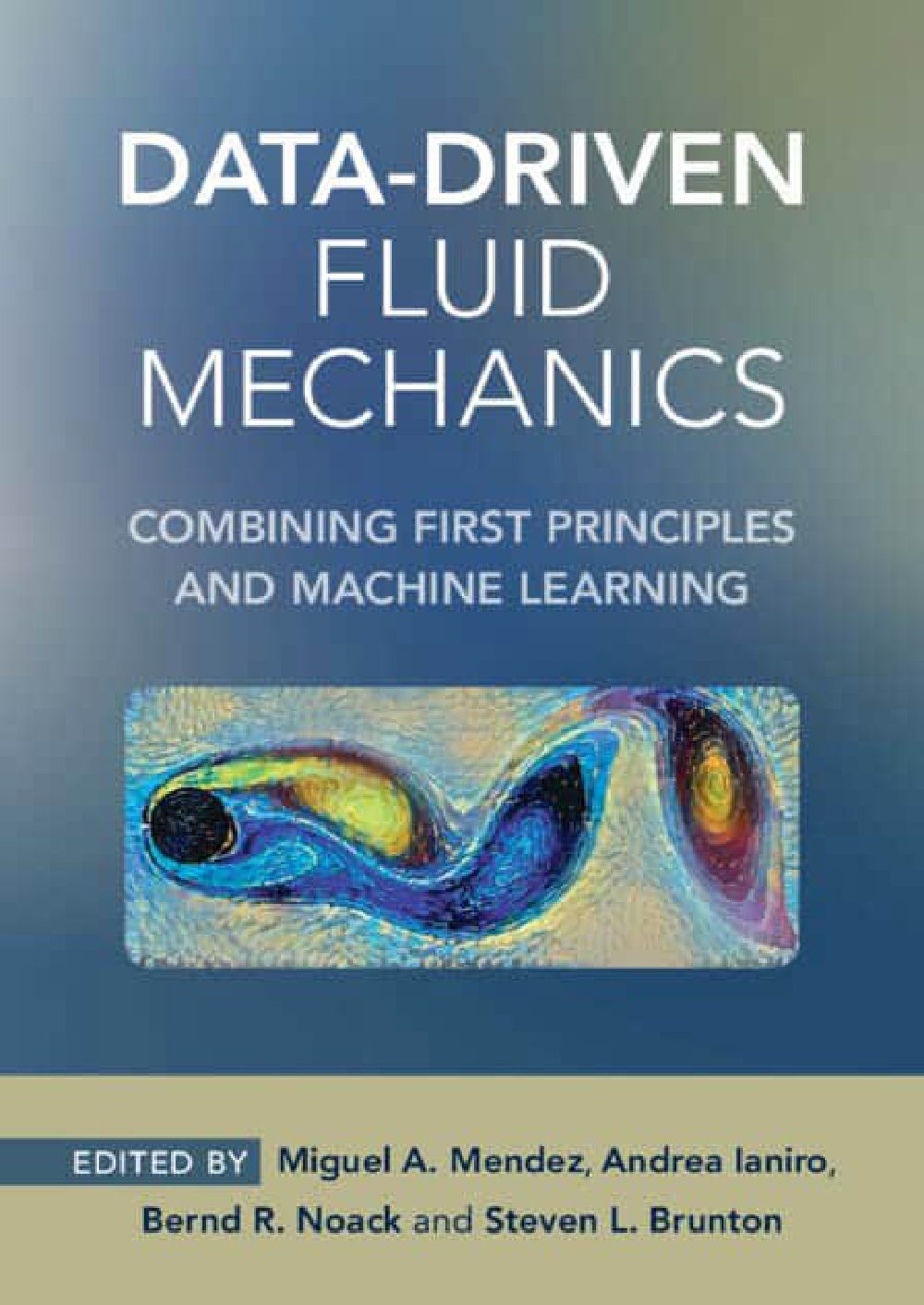
Data-Driven Fluid Mechanics: Combining First Principles and Machine Learning
Combining first principles and machine learning, this data-driven fluid mechanics book is your essential guide for modern CFD research and practice.
Want to preview before you buy? Click Request Free Sample and tell us which chapter or pages you’d like to see, along with your email address. We’ll send you those pages from the eBook so you can be sure it’s the right one before buying.
- Instant download & lifetime access Available as soon as your payment is confirmed. Your download link is also sent to the email address you provide at checkout, and you can download your purchased eBook anytime from My Account → Downloads with unlimited downloads. An account is created automatically using the same email address.
- Own your eBook Receive the available PDF/EPUB file directly after purchase. No rental or temporary access — download and keep your eBook for personal use with lifetime access.
- Full refund guarantee If the eBook you receive does not match the details and description provided on the product page, contact [email protected] and we’ll issue a full refund within 24 hours.
- Secure payment through PayPal Pay securely by debit or credit card or with your PayPal account. Your card details are processed by PayPal and are never stored on our site.
$25.00$41.00
The Problem This Book Solves
Data-driven methods and first-principles physics have historically operated in separate silos, leaving fluid dynamicists without a unified framework. This gap forces researchers to choose between purely empirical approaches and analytical models, each with critical limitations. The field demands a hybrid methodology that harnesses both big data and fundamental laws, yet no single resource has provided a comprehensive, practical guide—until now.
Data-Driven Fluid Mechanics: Combining First Principles and Machine Learning directly addresses this challenge by delivering a systematic treatment of modern data-driven techniques grounded in fluid physics. It equips readers with the tools to integrate machine learning, optimization, signal processing, and control theory into their workflow while respecting the constraints of fluid dynamics. This book is the solution for anyone seeking to leverage the power of data without sacrificing the rigor of first principles.
What Is Data-Driven Fluid Mechanics? A Complete Overview
Data-Driven Fluid Mechanics is the essential reference for the emerging discipline that fuses data-driven methodologies with classical fluid mechanics. Edited and co-authored by leading researchers Miguel A. Mendez, Andrea Ianiro, Bernd R. Noack, and Steven L. Brunton, this 2023 publication from Cambridge University Press provides a pedagogical yet cutting-edge overview of the field.
The book covers the full spectrum of data-driven approaches—from dimensionality reduction and system identification to machine learning and control—all within the context of fluid dynamics. It emphasizes hybrid methods that combine physical principles with data-driven techniques, offering readers a unique perspective that neither pure ML texts nor traditional fluid mechanics books can provide. Organized into self-contained chapters, it serves both as a classroom textbook and a reference for active researchers.
Who Should Read Data-Driven Fluid Mechanics?
This book is designed for graduate students, researchers, and practicing engineers in fluid dynamics, aerospace, mechanical engineering, and applied physics who want to incorporate data-driven methods into their work. It assumes a basic background in fluid mechanics but no prior expertise in machine learning or data science.
Ideal readers include: PhD candidates preparing for research in experimental or computational fluid dynamics; industry professionals working on flow control, diagnostics, or aerodynamic design; and academics seeking a modern curriculum for advanced fluid mechanics courses. Even seasoned data scientists new to fluid mechanics will find the physics-oriented approach illuminating.
If you are a fluid dynamicist who needs to navigate the data revolution, this book is your roadmap.
6 Key Things You Will Learn
Through its carefully structured chapters, this book equips you with actionable knowledge and skills. Here are the core competencies you will develop:
- Dimensionality reduction for fluid flows: Master techniques like proper orthogonal decomposition (POD) and dynamic mode decomposition (DMD) to extract coherent structures from high-dimensional data.
- System identification and modeling: Learn to construct reduced-order models from experimental or numerical data using sparse identification and neural networks.
- Machine learning for flow prediction: Apply regression, classification, and deep learning to forecast flow behavior and classify flow regimes.
- Data-driven control: Implement closed-loop flow control strategies using reinforcement learning and adaptive methods that leverage measured data.
- Uncertainty quantification: Integrate Bayesian inference and probabilistic modeling to assess confidence in data-driven predictions.
- Hybrid physics-ML approaches: Combine first-principles models with data-driven corrections to achieve the best of both worlds—accuracy and interpretability.
Why Data-Driven Fluid Mechanics Outperforms Every Alternative
Most textbooks on fluid mechanics remain rooted in classical analytical methods, while machine learning texts ignore the physical constraints that make fluid flows unique. Data-Driven Fluid Mechanics bridges this chasm like no other resource. It does not treat data-driven techniques as a black box; instead, it explains how to embed physical laws into algorithms for more robust and interpretable results.
Unlike typical ML-for-science books, this volume includes dedicated chapters on the specific challenges of fluid data—noise, nonstationarity, limited samples, and high dimensionality. It also provides code examples and references to open-source libraries, enabling immediate application. The book’s emphasis on hybrid models—such as physics-informed neural networks and constrained regression—makes it a standout in the growing field of scientific machine learning.
For researchers and students who need both breadth and depth, this is the definitive guide.
Author Authority & Publisher Credibility
The four editors and contributing authors are internationally recognized authorities in fluid dynamics, data science, and control theory. Miguel A. Mendez, Andrea Ianiro, Bernd R. Noack, and Steven L. Brunton collectively bring decades of research experience at the intersection of experiment, computation, and data-driven modeling. Their work has appeared in top-tier journals and conference proceedings, and they have taught workshops on these topics globally.
Cambridge University Press is a premier academic publisher with a long history of disseminating high-quality research in the sciences. A Cambridge publication carries a mark of scholarly rigor and editorial excellence. This book is no exception: it has been peer reviewed and carefully produced to meet the standards expected by the fluid mechanics community.
Is Data-Driven Fluid Mechanics Worth It? Our Verdict
Absolutely. This book fills a critical void in the literature by providing a unified, practical treatment of data-driven methods for fluid mechanics. It is not merely a collection of techniques; it offers a coherent framework that respects the physics of fluids while embracing the power of modern data science.
Whether you are starting a research project, designing a new course, or updating your skill set, the investment in this book will pay dividends. Its balance of theory and application, along with its focus on hybrid approaches, makes it relevant for years to come. In an era where data is abundant but insight is scarce, Data-Driven Fluid Mechanics gives you the tools to turn data into understanding.
Get Data-Driven Fluid Mechanics — Master Hybrid Methods
This is your opportunity to own the definitive guide on combining first principles and machine learning in fluid dynamics. If you are a graduate student, researcher, or professional engineer, this book will accelerate your work and broaden your methodological toolkit.
Act now: This current 2023 edition from Cambridge University Press is available in digital format for immediate access. Equip yourself with the knowledge that is reshaping fluid mechanics. Add Data-Driven Fluid Mechanics to your cart today and start building the hybrid models that define the future of the field.
Related products

Hacking: The Art of Exploitation, 2nd Edition – Jon Erickson
$15.99Master buffer overflows, shellcode, and network exploits with this classic hands-on guide. Your complete exploit development foundation starts here.
$30.00-
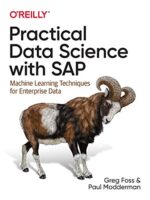
Practical Data Science with SAP (First Edition)
$26.99Unlock machine learning techniques for enterprise data with Practical Data Science with SAP. Get your copy now.
$53.00 -
Engineering Ethics: Contemporary and Enduring Debates
$9.00Master ethical decision-making with Engineering Ethics: Contemporary and Enduring Debates by Deborah G. Johnson. Order today from Yale University Press.
$15.00 -
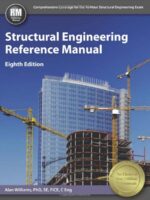
Structural Engineering Reference Manual (8th Edition)
$71.99Pass the NCEES 16-hour SE exam with the Structural Engineering Reference Manual, 8th Edition. Complete review of reinforced concrete, steel, timber, masonry, lateral forces, and bridge design.
$239.00 -
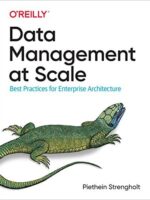
Data Management at Scale: Enterprise Data Architecture Best Practices
$26.99Master enterprise data architecture with proven patterns for migrating from complex, tightly coupled systems to scalable, governable data platforms.
$55.00 -
Facilities Planning and Design – Pearson New International Edition
$21.00Master facility layout and material handling with this Pearson New International Edition. Get the complete analytical toolkit from Garcia-Diaz and Smith — order your ebook now.
$60.00 -
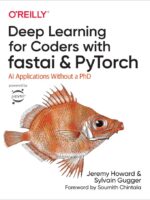
Deep Learning for Coders with fastai and PyTorch – Practical AI Guide
$22.99Master practical deep learning with fastai & PyTorch. No heavy math required. Get the authoritative guide by Jeremy Howard & Sylvain Gugger now.
$41.00 -
TinyML: Machine Learning with TensorFlow Lite on Arduino and Ultra-Low-Power Microcontrollers
$14.99Master TinyML with TensorFlow Lite on Arduino — deploy machine learning models on ultra-low-power microcontrollers with this hands-on guide.
$27.00