save
$14.01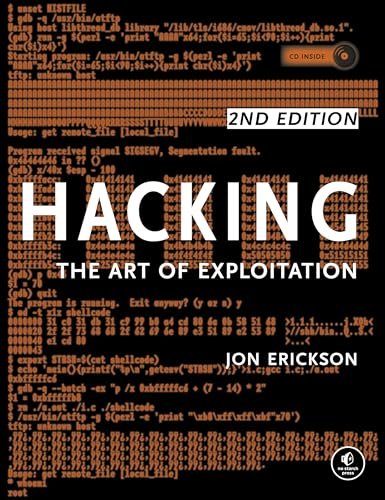
Hacking: The Art of Exploitation, 2nd Edition – Jon Erickson
Master buffer overflows, shellcode, and network exploits with this classic hands-on guide. Your complete exploit development foundation starts here.
Want to preview before you buy? Click Request Free Sample and tell us which chapter or pages you’d like to see, along with your email address. We’ll send you those pages from the eBook so you can be sure it’s the right one before buying.
- Instant download & lifetime access Available as soon as your payment is confirmed. Your download link is also sent to the email address you provide at checkout, and you can download your purchased eBook anytime from My Account → Downloads with unlimited downloads. An account is created automatically using the same email address.
- Own your eBook Receive the available PDF/EPUB file directly after purchase. No rental or temporary access — download and keep your eBook for personal use with lifetime access.
- Full refund guarantee If the eBook you receive does not match the details and description provided on the product page, contact [email protected] and we’ll issue a full refund within 24 hours.
- Secure payment through PayPal Pay securely by debit or credit card or with your PayPal account. Your card details are processed by PayPal and are never stored on our site.
$15.99$30.00
The Problem This Book Solves
Every modern software system is riddled with vulnerabilities waiting to be discovered. Whether you are a security professional, a developer, or a curious student, the gap between understanding how exploits work and actually building them from scratch is huge. Most resources show you how to run pre-written tools but never explain the underlying mechanics. This book eliminates that gap.
Hacking: The Art of Exploitation is the definitive hands-on guide to understanding and creating exploits. It does not just teach you what a buffer overflow is — it teaches you to think like an attacker so you can defend more effectively.
What Is Hacking: The Art of Exploitation? A Complete Overview
Hacking: The Art of Exploitation is a 2nd edition (2008) textbook by Jon Erickson, published by No Starch Press. It is widely regarded as the classic introduction to the art of exploitation — creative problem solving through finding unconventional solutions and exploiting security holes.
The book covers low-level programming concepts, assembly language, networking, cryptography, and shellcode development. Unlike other security books, it provides a complete Linux environment on a companion CD-ROM so you can practice every technique in a controlled, legal sandbox. The entire approach is learn-by-doing: you write your own exploits, debug them with GDB, and watch your code execute step by step.
Who Should Read Hacking: The Art of Exploitation?
This book is designed for readers who already have basic programming knowledge (C or assembly preferred) and want to dive deep into computer security. It is ideal for:
- Security researchers who need to understand exploit development from the ground up
- Penetration testers moving beyond script-kiddie tools to custom exploits
- Software developers who want to write more secure code by understanding how attackers think
- Computer science students studying operating systems, compilers, or network security
- Hobbyist hackers with a strong foundation in C programming and a Linux environment
If you have ever run a Metasploit module and wondered “how does that actually work?”, this is the book that answers that question.
5 Key Things You Will Learn
- Buffer overflows inside and out — how stack, heap, and integer overflows work, and how to write your own shellcode to exploit them
- Assembly language fundamentals — x86 instructions, registers, and the stack frame, all explained in practical exploit contexts
- Network-level exploitation — understanding TCP/IP, sniffing, spoofing, and remote exploit delivery
- Cryptography weaknesses — common implementation flaws in encryption algorithms and how to break them
- Defensive countermeasures — how to detect and prevent the very attacks you learn to build, including ASLR and stack canaries
Each chapter builds on the previous one. You start with a simple shellcode program and progress to writing a complete exploit that compromises a remote system. The companion CD contains all source code and a bootable Linux environment so you can follow along without any risk to your main machine.
Why Hacking: The Art of Exploitation Outperforms Every Alternative
Many security books exist — The Hacker Playbook, Penetration Testing: A Hands-On Introduction to Hacking, and Gray Hat Hacking are popular choices. Yet none match the deep, foundational approach of Hacking: The Art of Exploitation. Here is why:
First, this book focuses on conceptual understanding, not tool usage. While other titles teach you how to run Nmap or Burp Suite, Erickson teaches you to read assembly, manipulate the stack, and craft shellcode by hand. You leave with transferable knowledge, not memorized commands.
Second, the hands-on practice environment is unparalleled. The included bootable Linux CD lets you compile and test exploits immediately, with no fear of damaging your system. Most competitors assume you already have a lab set up — this book provides one.
Third, the depth of coverage on buffer overflows and shellcode is unmatched. The book dedicates hundreds of pages to these core topics, while others skim over them in a chapter or two. If you truly want to master exploitation, this is the definitive text.
Author Authority & Publisher Credibility
Jon Erickson is a computer security researcher with deep expertise in low-level systems programming. His ability to explain complex exploit techniques clearly stems from years of hands-on vulnerability research. While specific formal credentials are not detailed in this edition, the book’s reputation among security professionals speaks for itself.
Published by No Starch Press, a leading publisher of technical books in the security and programming space, the 2nd edition (2008) has been continuously recommended by security communities, university courses, and professional trainers worldwide. No Starch Press is known for rigorous technical editing and a focus on actionable, practical content — a perfect match for this subject.
Is Hacking: The Art of Exploitation Worth It? Our Verdict
If you are serious about understanding how computer systems are exploited, this book is essential reading. It is not a light overview — it demands time, patience, and a willingness to write and debug assembly code. For that effort, you gain a skill set that few possession: the ability to create custom exploits from first principles.
The 2nd edition is still highly relevant today. While it predates some modern mitigations (like Windows 10 protections or ARM mobile exploits), the core principles of stack overflows, shellcode, and network attacks remain unchanged. Many contemporary exploitation techniques are just variations of what this book teaches. For under $40, you get a full self-contained course in offensive security.
Verdict: Buy it. Pair it with a modern update on web or mobile security, and you will have a formidable foundation in the art of exploitation.
Get Hacking: The Art of Exploitation — Master Exploit Development Today
Whether you are a security student, a professional pentester, or a developer who wants to write bulletproof code, this book gives you the deepest possible understanding of exploitation. The included bootable Linux environment means you can start learning in minutes, not days.
Order your digital copy now and start building the skills that separate script kiddies from true hackers. This 2nd edition from No Starch Press is a lifetime reference — do not wait until the next vulnerability disclosure to wish you had studied exploits.
Add to cart today and take the first step toward mastering the art of exploitation.
Related products

Delmar’s Standard Textbook of Electricity (8th Edition)
$37.99Master electrical theory with the industry-standard textbook. No prior experience needed. Get the 8th edition now.
$95.00-
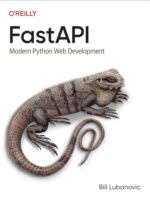
FastAPI: Modern Python Web Development (1st Edition) by Bill Lubanovic
$16.00Build high-performance Python web apps with FastAPI. This O’Reilly guide teaches async programming, REST APIs, and data validation—essential for modern developers.
$33.00 -
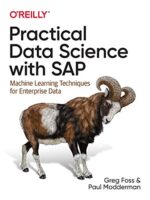
Practical Data Science with SAP (First Edition)
$26.99Unlock machine learning techniques for enterprise data with Practical Data Science with SAP. Get your copy now.
$53.00 -
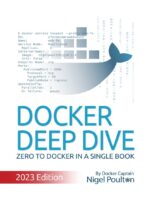
Docker Deep Dive: Zero to Docker in a Single Book (2023 Edition) by Nigel Poulton
$23.99Master Docker from scratch with the 2023 Edition of Docker Deep Dive by Nigel Poulton. Learn containers, networking, security, Wasm, and AI integration in one complete book.
$40.00 -
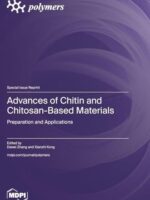
Advances of Chitin and Chitosan-Based Materials: Preparation and Applications
$29.99Get the latest MDPI reprint on chitin and chitosan materials – essential for researchers in biopolymer science and materials engineering.
$53.00 -
Object-Oriented Design Choices – Adair Dingle (1st Edition)
$28.99Master object-oriented design choices with this essential guide to composition, inheritance, and delegation trade-offs for better software design.
$65.00 -
Care and Repair of Fractional-Horsepower Motors (1936)
$29.99Get the classic 1936 guide to fractional-horsepower motor care and repair by A.G.P. Smith. Essential for technicians and hobbyists.
$60.00 -
Orbital Mechanics for Engineering Students (Third Edition)
$31.00Buy Orbital Mechanics for Engineering Students, 3rd Edition. Essential aerospace engineering textbook with clear theory, MATLAB examples, and homework problems. Order now.
$78.00