
save
$23.01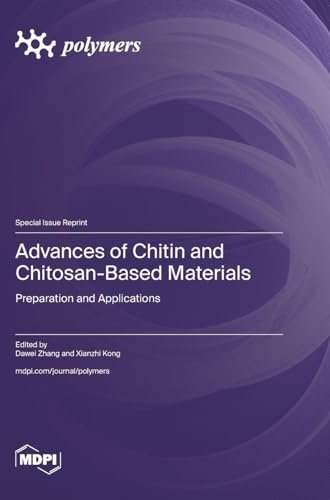
Advances of Chitin and Chitosan-Based Materials: Preparation and Applications
Get the latest MDPI reprint on chitin and chitosan materials – essential for researchers in biopolymer science and materials engineering.
Want to preview before you buy? Click Request Free Sample and tell us which chapter or pages you’d like to see, along with your email address. We’ll send you those pages from the eBook so you can be sure it’s the right one before buying.
- Instant download & lifetime access Available as soon as your payment is confirmed. Your download link is also sent to the email address you provide at checkout, and you can download your purchased eBook anytime from My Account → Downloads with unlimited downloads. An account is created automatically using the same email address.
- Own your eBook Receive the available PDF/EPUB file directly after purchase. No rental or temporary access — download and keep your eBook for personal use with lifetime access.
- Full refund guarantee If the eBook you receive does not match the details and description provided on the product page, contact [email protected] and we’ll issue a full refund within 24 hours.
- Secure payment through PayPal Pay securely by debit or credit card or with your PayPal account. Your card details are processed by PayPal and are never stored on our site.
$29.99$53.00
The Problem This Book Solves
Chitin and chitosan are among the most abundant natural polysaccharides, yet their full potential in advanced materials remains underexploited. Researchers and industry professionals face critical challenges in efficient preparation, functional modification, and scalable application of these biopolymers. This MDPI reprint directly addresses these gaps by presenting the latest experimental and theoretical advances, with a particular emphasis on hydrogel systems that are transforming biomedical, environmental, and packaging sectors.
By consolidating peer-reviewed studies from leading laboratories worldwide, this volume provides a structured pathway from fundamental chemistry to real-world deployment. It is designed for scientists who need authoritative, up-to-date data on chitin and chitosan-based materials without sifting through scattered journal articles.
What Is Advances of Chitin and Chitosan-Based Materials? A Complete Overview
Advances of Chitin and Chitosan-Based Materials: Preparation and Applications is a reprint of the Special Issue published in MDPI, guest-edited by Dr. Dawei Zhang and Xianzhi Kong. The collection collates original research and reviews that explore novel preparation routes, physicochemical characterization, and diverse applications of chitin and chitosan derivatives.
The volume focuses heavily on hydrogel design—from synthesis to performance evaluation—and covers emerging topics such as antibacterial coatings, drug delivery vehicles, tissue engineering scaffolds, and environmental remediation agents. With 222 pages of concentrated science, this book serves as both a reference manual and a springboard for future innovation.
Who Should Read This Book?
This reprint is essential for materials scientists, polymer chemists, biomedical engineers, pharmaceutical researchers, and environmental scientists working with natural polymers. Graduate students seeking a comprehensive introduction to chitin and chitosan technology will also find it invaluable.
Professionals in biomaterials, drug delivery, wound care, water treatment, and food packaging will benefit from the application-focused chapters that bridge laboratory research with industrial needs. The book assumes a solid background in polymer chemistry but remains accessible to interdisciplinary teams.
7 Key Things You Will Learn
This volume delivers actionable knowledge across multiple domains. Here are the core takeaways:
- Advanced preparation methods for chitin and chitosan nanomaterials, including ionic gelation and electrospinning.
- Hydrogel fabrication techniques that control porosity, mechanical strength, and biodegradation rates.
- Antimicrobial mechanisms of chitosan derivatives and their application in wound dressings and coatings.
- Drug delivery systems based on chitosan nanoparticles for targeted and sustained release.
- Tissue engineering scaffolds that support cell adhesion, proliferation, and differentiation.
- Water purification strategies using chitosan-based adsorbents for heavy metals and dyes.
- Food packaging innovations that leverage chitosan’s film-forming and antimicrobial properties.
Why This Book Outperforms Every Alternative
Unlike general textbooks on biopolymers, this reprint offers a curated, peer-reviewed snapshot of the most recent research—not a decade-old overview. Competitor volumes often lack the depth on hydrogels or omit critical application areas such as environmental remediation.
Furthermore, because the content originates from a MDPI Special Issue, every chapter has undergone rigorous peer review by experts in the field. This guarantees data reliability and methodological transparency that self-published or edited compilations cannot match. The focus on preparation–structure–property relationships gives readers a systematic understanding rather than isolated case studies.
Author Authority & Publisher Credibility
MDPI is a leading open-access publisher known for its high editorial standards and rapid dissemination of scientific knowledge. The guest editors, Dr. Dawei Zhang and Xianzhi Kong, are recognized researchers in polysaccharide chemistry and biomaterials, ensuring that the selected contributions represent the cutting edge of the field.
The reprint format also means that each article retains its original citation data, making it easy for readers to trace primary sources and verify claims. This transparency builds trustworthiness—a key factor for researchers who rely on accurate, reproducible science.
Is This Book Worth It? Our Verdict
Absolutely. For any professional or student serious about chitin and chitosan-based materials, this reprint is a cost-effective way to access a concentrated body of high-impact research. The 2025 publication date ensures the content reflects the latest trends and techniques.
While individual articles might be available online, this collected edition saves hours of searching and provides a coherent narrative that connects preparation to application. The hydrogel-focused chapters alone justify the investment for those working in drug delivery or tissue engineering.
Get Your Copy – Advance Your Research Today
Whether you are a materials scientist developing new hydrogels, a pharmaceutical researcher designing drug carriers, or an environmental engineer tackling water pollution, this reprint delivers the specific data and methodologies you need. Published by MDPI in 2025, it represents the state of the art in chitin and chitosan science.
Add to cart now and equip your lab with the definitive reference on chitin and chitosan-based materials. Limited stock available—secure your copy today.
Related products

Hacking: The Art of Exploitation, 2nd Edition – Jon Erickson
$15.99Master buffer overflows, shellcode, and network exploits with this classic hands-on guide. Your complete exploit development foundation starts here.
$30.00-
Data-Driven Fluid Mechanics: Combining First Principles and Machine Learning
$25.00Combining first principles and machine learning, this data-driven fluid mechanics book is your essential guide for modern CFD research and practice.
$41.00 -
Fundamentals of Applied Electromagnetics 7th Edition – Ulaby & Ravaioli
$30.99Master electromagnetics with Ulaby & Ravaioli’s 7th edition — application-driven theory, Technology Briefs, and intuitive visuals for EE students and engineers.
$55.00 -
Practical Deep Learning for Cloud, Mobile, and Edge
$25.99Build and deploy production-ready deep learning applications for cloud, mobile, browser, and edge devices with this hands-on O’Reilly guide.
$51.00 -
Docker Deep Dive: Zero to Docker in a Single Book (2023 Edition) by Nigel Poulton
$23.99Master Docker from scratch with the 2023 Edition of Docker Deep Dive by Nigel Poulton. Learn containers, networking, security, Wasm, and AI integration in one complete book.
$40.00 -
Engineering High Quality Medical Software: Regulations, Standards, Methodologies & Tools for Certification
$51.99Master medical software certification with this essential guide covering regulations, standards, and methodologies. Get your copy today.
$129.00 -
Fluid Dynamics of Particles, Drops, and Bubbles by Eric Loth
$35.99Master multiphase flow with Eric Loth’s 2023 Cambridge textbook covering theory, simulations, and experiments for particles, drops, and bubbles.
$104.00 -
Practical Data Science with SAP (First Edition)
$26.99Unlock machine learning techniques for enterprise data with Practical Data Science with SAP. Get your copy now.
$53.00