save
$50.01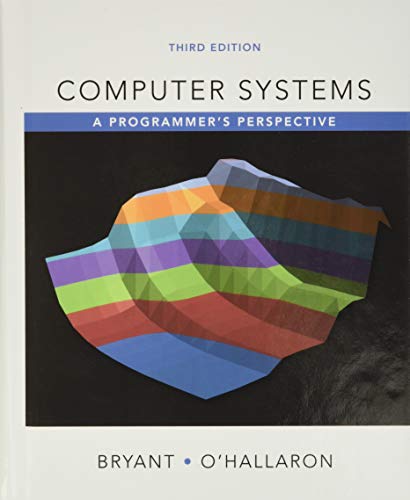
Computer Systems: A Programmer’s Perspective, 3rd Edition
Master x86-64 architecture, memory hierarchy, linking, and concurrency with the definitive CS:APP guide from Carnegie Mellon professors. Buy the 3rd edition now.
Want to preview before you buy? Click Request Free Sample and tell us which chapter or pages you’d like to see, along with your email address. We’ll send you those pages from the eBook so you can be sure it’s the right one before buying.
- Instant download & lifetime access Available as soon as your payment is confirmed. Your download link is also sent to the email address you provide at checkout, and you can download your purchased eBook anytime from My Account → Downloads with unlimited downloads. An account is created automatically using the same email address.
- Own your eBook Receive the available PDF/EPUB file directly after purchase. No rental or temporary access — download and keep your eBook for personal use with lifetime access.
- Full refund guarantee If the eBook you receive does not match the details and description provided on the product page, contact [email protected] and we’ll issue a full refund within 24 hours.
- Secure payment through PayPal Pay securely by debit or credit card or with your PayPal account. Your card details are processed by PayPal and are never stored on our site.
$30.99$81.00
The Challenge It Addresses
Every programmer eventually hits a wall: code that works on your machine breaks on another, performance mysteriously degrades, or a subtle bug appears only after deployment. These problems aren’t flaws in your logic—they stem from a lack of understanding about how the underlying computer system executes your programs. Computer Systems: A Programmer’s Perspective bridges the gap between high-level programming and the hardware-software stack, giving you the insight to write efficient, reliable, and portable code.
Inside Computer Systems: A Programmer’s Perspective, 3rd Edition: A Full Overview
Commonly referred to as CS:APP, this third edition textbook is the definitive guide to computer systems from a programmer’s viewpoint. Authored by Carnegie Mellon University professors Randal E. Bryant and David R. O’Hallaron, it explains how processors, memory, compilers, linkers, and operating systems work together to run your programs. Unlike traditional computer architecture texts that focus on hardware design, CS:APP takes a top-down approach, starting from C programs and revealing how they are transformed into machine code, executed, and managed by the OS.
The book covers the x86-64 architecture in depth, including data representation, machine-level programming, processor architecture, memory hierarchy, linking, exceptional control flow, virtual memory, and concurrency. Each concept is tied directly to practical programming implications—you learn not just how things work, but why that knowledge makes you a better programmer.
Who Should Read This Book?
This book is essential for computer science and engineering students taking an introductory systems course, especially those at universities that follow the CMU curriculum. It’s also invaluable for professional software developers who want to move beyond surface-level coding and understand the full stack. If you write C, C++, or any systems-level code, CS:APP will transform how you debug, optimize, and design software.
It is less suited for absolute beginners with no programming experience—readers should be comfortable with C and basic data structures. For intermediate to advanced programmers, this book fills critical knowledge gaps that most self-taught developers miss.
Inside: What You Will Master
- Data representation—how bits encode integers, floats, and pointers, and the pitfalls of overflow and precision.
- Machine-level code—reading and writing x86-64 assembly to understand compiler optimizations and performance bottlenecks.
- Processor architecture—the design of pipelined CPUs and how instruction-level parallelism works.
- Memory hierarchy—caches, locality, and how to write cache-friendly code that runs faster.
- Linking—how static and dynamic linkers resolve symbols, and how to avoid common linking errors.
- Exceptional control flow—signals, nonlocal jumps, and how the OS manages processes.
- Virtual memory and concurrency—address translation, memory mapping, and writing safe multithreaded programs.
Why This Book Stands Out
Most systems textbooks are either too hardware-focused (like Patterson & Hennessy) or too OS-centric (like Silberschatz). CS:APP uniquely balances both while keeping the programmer’s perspective at the center. The third edition has been updated to cover the x86-64 architecture (64-bit) instead of older IA32, making it relevant for modern development. The book’s accompanying labs and assignments—developed and refined over years at Carnegie Mellon—provide hands-on practice that solidifies understanding.
Competing titles often lack the practical depth needed to immediately improve your coding. CS:APP’s approach of showing you the exact machine code your compiler generates and explaining the hardware decisions behind it gives you actionable insights no other book offers.
Author & Publisher Credentials
Randal E. Bryant is a professor of computer science at Carnegie Mellon University and a Fellow of the ACM and IEEE. David R. O’Hallaron is a professor of electrical and computer engineering and computer science at the same institution. Together, they have taught the introductory computer systems course at CMU for decades, refining the material that became CS:APP. The book is published by Pearson, a leading educational publisher known for rigorous academic standards. This third edition (2016) continues the tradition of being the go‑to resource for systems education worldwide.
Is It Worth It?
Absolutely. If you want to truly understand how computers execute your code—and write better, faster, safer programs as a result—CS:APP is the single best investment you can make. It’s not just a reference; it’s a course in a book. The content is dense but well‑structured, and the accompanying online resources (labs, slides, and practice problems) make it suitable for self‑study. Whether you are a student preparing for technical interviews or a professional seeking mastery, this book delivers exceptional value.
Download Computer Systems: A Programmer’s Perspective, 3rd Edition Now
Stop guessing why your code behaves the way it does. With this third edition from Pearson, you’ll gain the foundational knowledge that separates elite programmers from the rest. Add it to your cart now and start writing code that fully leverages the machine beneath you.
Related products

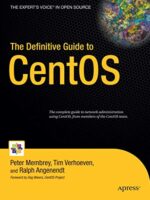
The Definitive Guide to CentOS
$24.99The first definitive reference for CentOS, this guide provides hands-on network administration tutorials from members of the CentOS team.
$49.00-
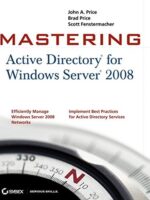
Mastering Active Directory for Windows Server 2008
$12.00Master Active Directory deployment, security, and troubleshooting in Windows Server 2008 with this comprehensive guide from Wiley — the essential reference for IT professionals.
$35.00 -
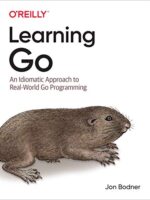
Learning Go: An Idiomatic Approach to Real-World Go Programming
$9.99Buy Learning Go by Jon Bodner. Master idiomatic Go programming, concurrency, and design patterns. Start coding like a Go expert today!
$20.00 -
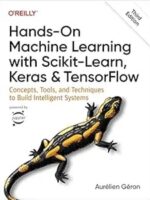
Hands-On Machine Learning with Scikit-Learn, Keras, and TensorFlow (3rd Edition)
$19.00Master machine learning and deep learning with Scikit-Learn, Keras, and TensorFlow in this hands-on, project-driven third edition from O’Reilly. Build real systems now.
$45.00 -
AI 2041: Ten Visions for Our Future – First Edition eBook
$3.99AI 2041 combines ten gripping short stories with expert analysis to reveal how AI will reshape work, society, and daily life by 2041. Buy the first edition ebook now.
$11.00 -
Big C++ 2nd Edition by Horstmann & Budd
$8.99Get the digital Big C++ 2nd Edition by Horstmann & Budd – the definitive guide to mastering C++ for students and professionals.
$15.00 -
Universal Aspects of Scientific Practice: Commitment, Methodology, and Technique
$22.99Buy Universal Aspects of Scientific Practice: Commitment, Methodology, and Technique (Springer 2023) — a groundbreaking analysis of what scientists actually do, from two leading scholars.
$50.00 -
Practical Time Series Analysis: Prediction with Statistics and Machine Learning
$17.00Master time series analysis with statistics and machine learning using R and Python. Get Practical Time Series Analysis today.
$49.00