save
$17.01
Quantum Computing from Hopfield Nets: A Textbook with Python Code Examples
Master quantum computing through Python code and Hopfield nets — the practical, code-first textbook for CS students from Springer.
Want to preview before you buy? Click Request Free Sample and tell us which chapter or pages you’d like to see, along with your email address. We’ll send you those pages from the eBook so you can be sure it’s the right one before buying.
- Instant download & lifetime access Available as soon as your payment is confirmed. Your download link is also sent to the email address you provide at checkout, and you can download your purchased eBook anytime from My Account → Downloads with unlimited downloads. An account is created automatically using the same email address.
- Own your eBook Receive the available PDF/EPUB file directly after purchase. No rental or temporary access — download and keep your eBook for personal use with lifetime access.
- Full refund guarantee If the eBook you receive does not match the details and description provided on the product page, contact [email protected] and we’ll issue a full refund within 24 hours.
- Secure payment through PayPal Pay securely by debit or credit card or with your PayPal account. Your card details are processed by PayPal and are never stored on our site.
$13.99$31.00
The Challenge It Addresses
Quantum computing promises to revolutionize fields from cryptography to drug discovery, yet most introductions assume a deep background in physics or linear algebra. Computer science students and self-taught programmers often find themselves overwhelmed by Dirac notation and circuit abstractions before they can write a single line of quantum code. This textbook bridges that gap by starting from a concept you already know — the Hopfield network — and building up to full quantum computation with practical Python examples at every step.
What Is Quantum Computing from Hopfield Nets: A Textbook with Python Code Examples? A Complete Overview
Quantum Computing from Hopfield Nets: A Textbook with Python Code Examples is an open-access textbook authored by Christian Bauckhage and Rafet Sifa, published by Springer in 2026. It offers a gentle, technically precise introduction to quantum computing specifically designed for computer science students. The book takes a unique pedagogical approach: it uses the familiar framework of Hopfield neural networks as a springboard into quantum concepts, making the transition from classical to quantum computing intuitive rather than abrupt.
Each theoretical concept is accompanied by executable Python code, ensuring that readers can experiment with quantum algorithms immediately. The presentation is technical but pragmatic, emphasizing understanding through implementation rather than abstract formalism. This is not a physics textbook — it is a computer science textbook that treats quantum computing as a natural extension of classical computation.
Who Should Read This Book?
This textbook is explicitly designed for computer science students at the undergraduate or graduate level who want a rigorous yet accessible entry point into quantum computing. It is equally valuable for software engineers, data scientists, and AI researchers who already understand neural networks and want to expand their toolkit to include quantum methods.
If you have experience with Python and a working knowledge of linear algebra and basic probability, you have the prerequisites. The book assumes no prior quantum mechanics or quantum computing knowledge. It is also an excellent resource for self-directed learners who prefer a code-first approach to understanding complex topics.
Skills You Will Gain
- From Hopfield Nets to Quantum Gates — Understand how the structure of a classical Hopfield network naturally motivates the mathematical framework of quantum bits and quantum gates.
- Quantum State Representation — Learn to represent and manipulate qubit states using vectors and matrices, with Python code to visualize each concept.
- Quantum Circuit Construction — Build and simulate quantum circuits in Python, from single-qubit gates to multi-qubit entangled states.
- Quantum Algorithms in Practice — Implement foundational algorithms such as Grover’s search and the Deutsch-Jozsa algorithm, seeing how they outperform classical counterparts.
- Quantum vs. Classical Computation — Develop a clear understanding of where quantum advantage truly lies, grounded in concrete examples rather than hype.
- Hands-On Python Exercises — Work through dozens of code examples and exercises that reinforce each concept, turning theory into working knowledge.
Why Choose This Edition
Most quantum computing textbooks fall into one of two camps: they are either mathematically dense physics texts or oversimplified popularizations. This book occupies a unique middle ground — it is rigorous enough for academic study yet practical enough for immediate coding. The use of Hopfield nets as a pedagogical foundation is a genuine innovation: it leverages your existing knowledge of neural networks to make quantum mechanics feel like a natural extension rather than a foreign language.
Competing titles like Nielsen and Chuang’s Quantum Computation and Quantum Information are authoritative but daunting for beginners. Bauckhage and Sifa’s approach is gentler without sacrificing depth. The inclusion of Python code throughout means you are never left wondering how to apply a concept — you can run the code, modify it, and see the results immediately. This code-first methodology is rare among quantum computing textbooks and makes the book particularly valuable for self-study.
Who Wrote This Book
Christian Bauckhage and Rafet Sifa are established researchers in machine learning and data science, with extensive publications in neural networks, pattern recognition, and applied AI. Their academic backgrounds ensure that the treatment of Hopfield networks — the book’s foundational concept — is authoritative and current. Springer, one of the world’s most respected scientific publishers, has a long history of producing high-quality textbooks in computer science and engineering. A Springer-published textbook undergoes rigorous peer review, guaranteeing accuracy, clarity, and pedagogical soundness. This combination of expert authors and a top-tier publisher gives readers confidence that the content is both trustworthy and cutting-edge.
Is It Worth It?
For computer science students and professionals seeking a practical, code-driven introduction to quantum computing, this textbook is an outstanding investment. Its unique pedagogical angle — building from Hopfield nets — makes the subject accessible without compromising on technical depth. The Python code examples transform abstract theory into tangible, runnable experiments, accelerating the learning process significantly.
Compared to the few other quantum computing textbooks that include code, this one is more tightly integrated: the code is not an afterthought but the primary vehicle for understanding. The open-access availability further increases its value, making high-quality education accessible to anyone with an internet connection. For its target audience, this is arguably the best entry point available in 2026.
Add Quantum Computing from Hopfield Nets: A Textbook with Python Code Examples to Your Library
If you are a computer science student or professional who already understands neural networks and wants to add quantum computing to your skillset, this textbook is your ideal starting point. With its gentle, code-first approach and authoritative Springer pedigree, it provides everything you need to go from Hopfield nets to quantum circuits in a single, well-structured volume. Order your digital copy today and begin writing quantum algorithms in Python — no physics background required.
Related products

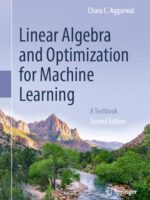
Linear Algebra and Optimization for Machine Learning: A Textbook 2nd Edition
$24.99Master the mathematics of ML with this unified, example-rich second edition. Buy now.
$49.00-
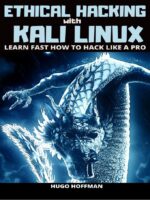
Ethical Hacking With Kali Linux: Learn Fast How To Hack Like a Pro
$12.00Master ethical hacking with Kali Linux — learn wireless attacks, penetration testing, and real-world exploits in one practical guide.
$31.00 -
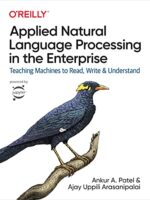
Applied Natural Language Processing in the Enterprise
$26.99Master NLP with BERT and GPT-3 using Python in this hands-on guide for enterprise practitioners. Get your copy now.
$56.00 -
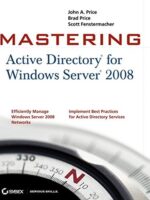
Mastering Active Directory for Windows Server 2008
$12.00Master Active Directory deployment, security, and troubleshooting in Windows Server 2008 with this comprehensive guide from Wiley — the essential reference for IT professionals.
$35.00 -
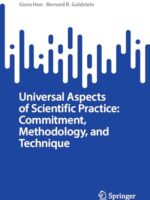
Universal Aspects of Scientific Practice: Commitment, Methodology, and Technique
$22.99Buy Universal Aspects of Scientific Practice: Commitment, Methodology, and Technique (Springer 2023) — a groundbreaking analysis of what scientists actually do, from two leading scholars.
$50.00 -
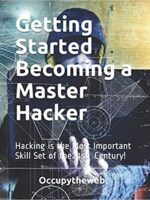
Getting Started Becoming a Master Hacker: The Ultimate Hands-On Hacking Guide
$8.00Master offensive hacking with step-by-step tutorials from Occupytheweb. Recon, exploitation, web attacks, and more — buy your copy now.
$13.00 -
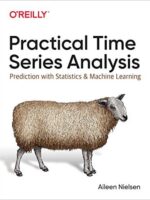
Practical Time Series Analysis: Prediction with Statistics and Machine Learning
$17.00Master time series analysis with statistics and machine learning using R and Python. Get Practical Time Series Analysis today.
$49.00 -
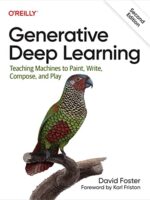
Generative Deep Learning, 2nd Edition: TensorFlow & Keras
$23.99Build cutting-edge generative AI models from scratch with TensorFlow and Keras in David Foster’s definitive Second Edition guide.
$49.00