save
$9.00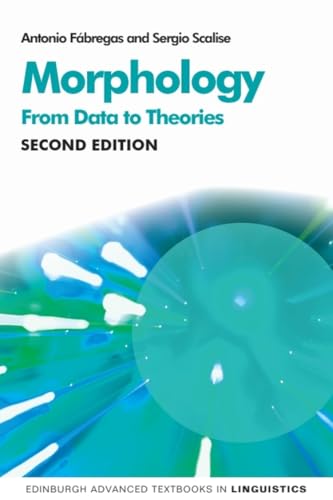
Morphology: From Data to Theories (2nd Edition)
Get the definitive 2nd edition of Morphology: From Data to Theories, the essential linguistics textbook bridging empirical data and theoretical models. Order now for in-depth analysis.
$11.00$20.00
The Problem This Book Solves
Every linguistics student or researcher who works with word structure faces the same challenge: bridging raw morphological data from diverse languages with the theoretical frameworks needed to explain it. Without a resource that systematically connects empirical observation to formal analysis, learners risk memorizing patterns without understanding the underlying principles. Morphology: From Data to Theories solves this by providing a structured pathway from concrete linguistic data to the abstract theories that govern morphological phenomena.
What Is Morphology: From Data to Theories (2nd Edition)? A Complete Overview
Morphology: From Data to Theories is a state-of-the-art textbook designed for advanced undergraduate and graduate students in linguistics. Published in its 2nd Edition by Edinburgh University Press in 2025, this volume offers a comprehensive introduction to morphological theory while actively engaging with the latest research developments. The book systematically covers the core domains of morphology — inflection, derivation, compounding, and morphophonology — and presents them through a data-driven lens that mirrors how linguists actually work.
Unlike traditional textbooks that separate data from theory, Fábregas and Scalise integrate real language examples from typologically diverse languages with competing theoretical models (including Distributed Morphology, Lexical Morphology, and Construction Morphology). The result is a text that not only teaches morphology but also trains students to think critically about how evidence supports or challenges different theoretical claims.
Is This Book Right for You?
This textbook targets two primary audiences. First, advanced undergraduate linguistics majors who have completed introductory courses in phonology and syntax and want to deepen their understanding of word structure. Second, graduate students in linguistics who need a rigorous, theory-informed foundation for their own research, whether in morphology, typology, or language acquisition. The book also serves as an excellent reference for professional linguists who want to stay current with the latest theoretical developments, especially those new to the 2nd edition’s expanded coverage of computational morphology and experimental methods.
If you are a self-taught language enthusiast or a professional in a related field such as cognitive science, computational linguistics, or language documentation, you will find the book accessible provided you have a basic understanding of linguistic terminology. The authors assume no prior specialization in morphology, making it a suitable entry point for motivated learners.
Key Takeaways
By working through this textbook, you will gain the following skills and knowledge:
- Master the core morphological processes: inflection, derivation, compounding, and the distinction between them.
- Analyze cross-linguistic data from languages as diverse as Swahili, Turkish, and Inuktitut to identify morphological patterns.
- Evaluate competing theoretical frameworks such as Distributed Morphology, Lexical Morphology, and Construction Morphology, and understand their empirical consequences.
- Apply morphological theory to real data sets through exercises that require you to justify your analytical choices.
- Understand the interface between morphology and other linguistic domains — especially phonology, syntax, and semantics.
- Engage with current research topics including morphological productivity, the mental lexicon, and the role of morphology in language change.
- Critically read morphological literature with the ability to assess the strength of theoretical arguments based on data.
Why Choose This Edition
Most morphology textbooks fall into one of two camps: they are either heavily data-driven, offering many examples but little theoretical depth, or they are purely theoretical, presenting abstract models without sufficient grounding in empirical data. Morphology: From Data to Theories uniquely bridges this gap. Each chapter begins with a set of data from a particular language, prompting the reader to analyze patterns before any theoretical framework is introduced. Only after the data is understood does the text present the theoretical tools that best explain it. This inductive approach mirrors how linguists actually develop and test theories, making the learning process more natural and memorable.
Furthermore, the 2nd edition incorporates feedback from classroom use of the first edition, with updated sections on morphology in experimental settings, the role of frequency, and the growing field of computational morphology. No other introductory morphology text offers the same balance of typological breadth, theoretical neutrality, and pedagogical clarity. Where competitors like Haspelmath’s Understanding Morphology focus on functional-typological approaches, Fábregas and Scalise provide equal coverage of generative and non-generative frameworks, giving students the tools to evaluate theories on their own merits.
Author & Publisher Credentials
Antonio Fábregas and Sergio Scalise are internationally recognized scholars in morphology and theoretical linguistics. Both have published extensively on word-formation processes, with Scalise being a leading figure in Italian morphology and Fábregas contributing to Spanish and Romance morphosyntax. Their combined expertise ensures that the text is both theoretically sophisticated and empirically grounded. Edinburgh University Press, the publisher, is a prestigious academic press known for its high-quality linguistics textbooks and reference works, including the Edinburgh Advanced Textbooks in Linguistics series. This institutional backing adds a layer of trustworthiness, as the book has undergone rigorous peer review and editorial oversight.
The Bottom Line
For any student or researcher serious about understanding morphological theory, this textbook is an indispensable resource. Its unique data-first pedagogy, combined with its balanced treatment of multiple theoretical perspectives, makes it superior to other introductory texts. The 2nd edition’s updates ensure that it reflects the most current research in the field, while the exercises and discussion questions at the end of each chapter provide ample opportunity for practice and reflection. The only caveat is that the book assumes a basic background in linguistics; it is not a first-year primer. But for its target audience, it delivers exactly what it promises: a rigorous, engaging, and theoretically informed introduction to morphology.
Get Your Copy Today
If you are a linguistics student or professional seeking to master the relationship between empirical data and theoretical models, Morphology: From Data to Theories is your definitive guide. The 2nd edition, fresh from Edinburgh University Press, offers the most up-to-date and pedagogically effective approach available. Whether you are preparing for qualifying exams, designing your own research projects, or simply want to understand how words are built across languages, this book will give you the analytical tools you need. Add to cart now and start building your expertise in morphological theory with the leading textbook in the field.
Related products

A History of Psychology 2nd Edition – Global & Inclusive
$8.99This 2nd edition covers the history of psychology, including philosophical origins, women, minorities, and a new clinical chapter. Order now!
$18.00-
Colloids by H.R. Kruyt – Second Edition 1930 Classic Textbook
$19.99Master colloid chemistry with Kruyt’s classic 1930 textbook covering boundary phenomena, suspensoids, and emulsoids in this second edition.
$40.00 -
A Text-Book of Scottish Church History by Rev. J. D. Mowat
$19.99Get your digital copy of this authoritative Scottish church history textbook by Rev. J. D. Mowat. Essential for students of ecclesiastical history.
$40.00 -
Mythology 101: From Gods and Goddesses to Monsters and Mortals
$12.00Explore Greek and Roman myths without the tedium. This engaging guide by Kathleen Sears cuts through the boring details, making ancient gods and heroes come alive.
$20.00 -
Health Behavior: Theory, Research, and Practice 5th Edition – Glanz, Rimer, Viswanath
$25.99Master health behavior theory with the definitive Fifth Edition textbook. Essential for public health students and professionals. Order now.
$55.00 -
The Strange Persistence of Universal History in Political Thought – Palgrave Macmillan
$13.99Explore the enduring influence of universal history on Western political thought with Brett Bowden’s incisive Palgrave Macmillan study — order your digital copy today.
$43.00 -
Fugitive Pedagogy: Carter G. Woodson and the Art of Black Teaching by Jarvis R. Givens
$22.99Discover the hidden tradition of Black teaching with Fugitive Pedagogy. Jarvis R. Givens reveals how Carter G. Woodson and generations of educators defied oppression to educate for liberation. Get your copy now.
$68.00 -
Moral Theory: An Introduction (Third Edition)
$9.00Explore major moral theories from divine command to consequentialism in Timmons’ comprehensive third edition. Ideal for ethics courses. Get your copy now.
$16.00