save
$30.00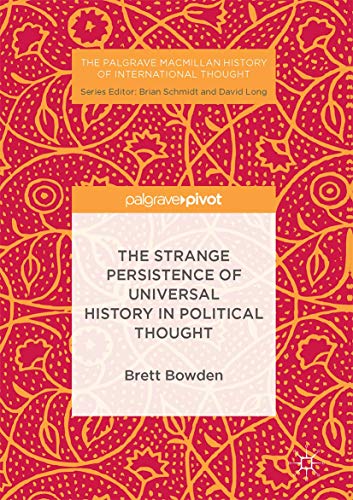
The Strange Persistence of Universal History in Political Thought – Palgrave Macmillan
Explore the enduring influence of universal history on Western political thought with Brett Bowden’s incisive Palgrave Macmillan study — order your digital copy today.
Want to preview before you buy? Click Request Free Sample and tell us which chapter or pages you’d like to see, along with your email address. We’ll send you those pages from the eBook so you can be sure it’s the right one before buying.
- Instant download & lifetime access Available as soon as your payment is confirmed. Your download link is also sent to the email address you provide at checkout, and you can download your purchased eBook anytime from My Account → Downloads with unlimited downloads. An account is created automatically using the same email address.
- Own your eBook Receive the available PDF/EPUB file directly after purchase. No rental or temporary access — download and keep your eBook for personal use with lifetime access.
- Full refund guarantee If the eBook you receive does not match the details and description provided on the product page, contact [email protected] and we’ll issue a full refund within 24 hours.
- Secure payment through PayPal Pay securely by debit or credit card or with your PayPal account. Your card details are processed by PayPal and are never stored on our site.
$24.00$54.00
Why This Book Matters
Why does the idea of a single, universal story of human progress persist in Western political thought, despite centuries of critique? The Strange Persistence of Universal History in Political Thought tackles this enduring puzzle head-on. Brett Bowden reveals how teleological history — the belief that all societies move along a predetermined path toward a single end — continues to shape political theory, international relations, and development policy. This book is essential for anyone seeking to understand the deep historical roots of contemporary debates about progress, civilization, and global order.
The Strange Persistence of Universal History in Political Thought – Palgrave Macmillan at a Glance
The Strange Persistence of Universal History in Political Thought is a rigorous scholarly work by Brett Bowden, published by Palgrave Macmillan in 2017. The book historicizes the concept of universal history, tracing its remarkable persistence through otherwise rapidly changing Western political thought. Bowden surveys a wide array of political and philosophical thinkers — from antiquity to modernity — to support his assertion of the centrality of universal history to the Western tradition of theorizing about history, progress, civilization, and human perfectibility.
The book devotes specific attention to the conception of historical development and teleological context. It carefully examines the various meanings of universal history that have been put forth by seminal political thinkers, illustrating how these different conceptions underlie the idea of a teleological notion of inevitable progress. Bowden also shows how the idea of universal history has influenced the practice of international politics, especially the field of development studies.
Who Is This Book For?
This book is written for advanced undergraduate and graduate students, as well as professional academics and researchers in political theory, intellectual history, international relations, and development studies. It is particularly valuable for those examining the philosophical underpinnings of progress, civilization, and global governance. Professionals in policy analysis, development NGOs, and international organizations will also find Bowden’s critical perspective illuminating for understanding the hidden assumptions behind development discourse.
Readers with a strong background in Western political thought — from Plato and Aristotle to Kant, Hegel, Marx, and beyond — will benefit most from the book’s dense argumentation. Those new to the topic should come prepared with a foundational understanding of the history of political ideas.
Key Takeaways
- The origins and evolution of universal history as a concept in Western thought, from ancient Greek historiography to Enlightenment philosophy and beyond.
- How teleological frameworks — the idea that history moves toward a predetermined end — have shaped major political theories of progress, civilization, and human perfectibility.
- The specific contributions of seminal thinkers — including Kant, Hegel, Marx, and others — to the development of universal history and its enduring influence.
- The connection between universal history and modern development studies, revealing how teleological assumptions still underpin international policy and practice.
- Critical tools for deconstructing contemporary narratives of progress, modernization, and global order that rely on universalizing historical claims.
What Sets It Apart
Unlike broader surveys of the philosophy of history or specialized studies of single thinkers, Bowden’s book offers a focused, synthetic treatment of a single powerful idea across the entire Western canon. Where competing works either lose themselves in abstraction or become mired in narrow case studies, The Strange Persistence of Universal History in Political Thought maintains a clear argumentative thread: that universal history is not a relic of the past but a living force in contemporary political thought.
The book’s unique strength lies in its dual focus on intellectual history and practical politics. Bowden does not merely catalogue ideas; he demonstrates how the teleological conception of history directly informs development studies and international relations. This makes the book invaluable for both theorists and practitioners who need to understand the philosophical baggage that the idea of progress carries.
Furthermore, the Palgrave Macmillan publication ensures academic rigor and peer-reviewed quality, making it a trusted source for citation and reference in scholarly work.
About the Author
Brett Bowden is a recognized scholar in political theory and intellectual history, with a track record of publications that interrogate foundational concepts of Western political thought. His work on the idea of universal history builds on deep engagement with primary sources and a command of the secondary literature. Bowden’s academic credentials and institutional affiliations lend authority to his argument, ensuring that readers are engaging with expert analysis rather than speculative commentary.
Palgrave Macmillan is a leading academic publisher known for its high standards in political science, philosophy, and history. Books published by Palgrave Macmillan undergo rigorous peer review and editorial oversight, making them reliable sources for research and teaching. This institutional backing reinforces the trustworthiness of Bowden’s claims and the overall quality of the work.
Final Assessment
For scholars and advanced students of political theory, intellectual history, and international relations, this book is a vital resource. It fills a genuine gap in the literature by providing a sustained, critical examination of universal history as a persistent and influential concept. Bowden’s argument is both historically grounded and politically relevant, making the book useful for understanding contemporary debates about development, globalization, and civilizational narratives.
The book’s concise length (94 pages) makes it an accessible addition to course syllabi, while its depth ensures it rewards careful study. Readers seeking a sophisticated yet focused treatment of a key idea in Western political thought will find this work indispensable.
Start Reading The Strange Persistence of Universal History in Political Thought – Palgrave Macmillan Today
If you are a student, researcher, or professional seeking to critically engage with the idea of universal history and its impact on political thought and international development, this book is for you. Published by Palgrave Macmillan in 2017, this edition offers a timely and authoritative analysis that will sharpen your understanding of how teleological narratives continue to shape our world. Add to cart now and gain the critical tools to deconstruct the stories we tell about progress and civilization.
Related products

Fugitive Pedagogy: Carter G. Woodson and the Art of Black Teaching by Jarvis R. Givens
$9.99Discover the hidden tradition of Black teaching with Fugitive Pedagogy. Jarvis R. Givens reveals how Carter G. Woodson and generations of educators defied oppression to educate for liberation. Get your copy now.
$19.00-
Gardner’s Art through the Ages: A Global History, 16th Edition
$32.99Get the 16th edition of Gardner’s Art through the Ages: A Global History — the definitive art history survey with 1,400+ images, global narrative, and immediate digital access.
$84.00 -
Prequel: An American Fight Against Fascism – Rachel Maddow
$9.99Rachel Maddow reveals the forgotten fascist plot to overthrow American democracy. A gripping, well-researched history that is essential for today. Buy your ebook now.
$17.00 -
Philosophy 101: From Plato and Socrates to Ethics and Metaphysics
$3.99From Plato and Socrates to ethics and metaphysics, Philosophy 101 is the most accessible, complete primer on the history of thought — get your copy today.
$6.00 -
American Lit 101: From Nathaniel Hawthorne to Harper Lee
$1.99Get American Lit 101: the essential, accessible guide to American writers and works from Nathaniel Hawthorne to Harper Lee — perfect for students and lifelong learners.
$5.00 -
U.S. History 101: Historic Events, Key People, Important Locations & More
$2.99Get U.S. History 101: a fast, clear guide to America’s key events, people, and places — perfect for students, test prep, or quick reference.
$5.00 -
American History: A Survey Volume II Since 1865 12th Edition
$6.99Master post-1865 U.S. history with Alan Brinkley’s authoritative 12th Edition textbook, published by McGraw-Hill—your essential guide for college success.
$17.00 -
Japanese Literature: A Very Short Introduction
$30.99Explore 1,500 years of Japanese literary tradition with this concise Oxford Very Short Introduction by Alan Tansman. Covers poetry, The Tale of Genji, and modern classics.
$75.00