save
$29.01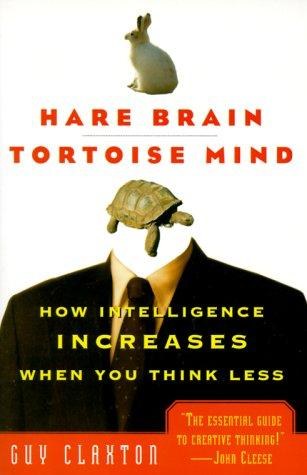
Hare Brain, Tortoise Mind: How Intelligence Increases When You Think Less
Psychologist Guy Claxton’s classic on slow knowing—why the mind’s patient, unconscious modes solve problems that hard, fast, deliberate thinking cannot.
$20.99$50.00
Why This Book Matters
We are trained to admire the fast, sharp, deliberate mind — the one that reasons its way to an answer under pressure. But some of our best ideas arrive only when we stop trying: in the shower, on a walk, or after “sleeping on it.” Hare Brain, Tortoise Mind makes the case that this slower, quieter kind of knowing is not a lapse in intelligence but a distinct and essential form of it.
Cognitive scientist Guy Claxton draws on psychology, neuroscience, philosophy, and contemplative traditions to show that patience, daydreaming, and unfocused attention are engines of creativity and insight — capacities a hurried, results-driven culture systematically undervalues.
What Is Hare Brain, Tortoise Mind? A Complete Overview
Hare Brain, Tortoise Mind: How Intelligence Increases When You Think Less distinguishes two modes of thought. The “hare brain” is fast, conscious, and deliberate — excellent for problems that are clearly defined and require logic. The “tortoise mind” is slow, intuitive, and largely unconscious — the mode that incubates hard problems, notices faint patterns, and produces the sudden “aha” that effortful analysis cannot force.
Claxton assembles the research on intuition, incubation, and implicit learning to argue that these slower ways of knowing are real cognitive skills, not vague mysticism. Crucially, he shows they can be cultivated — by tolerating uncertainty, resisting the urge to reach for premature answers, and giving the mind room to work beneath awareness.
What You’ll Take Away
- A clear framework for two complementary kinds of thinking — and when each one serves you best
- The science behind intuition, creative incubation, and learning without conscious effort
- Why patience, rumination, and “wasting time” are often where insight actually comes from
- Practical ways to make room for slow knowing in a culture addicted to speed and certainty
Who Should Read This
Writers, designers, scientists, students, and anyone whose work depends on creativity and judgment — as well as readers of Daniel Kahneman, Mihaly Csikszentmihalyi, and popular cognitive psychology. If you have ever done your best thinking by not thinking, this classic explains why.
Related products

Unlearning Liberty: Campus Censorship, End of American Debate
$11.99Buy Unlearning Liberty by Greg Lukianoff and uncover how campus censorship threatens free speech and the future of American debate—get your copy now.
$25.00-
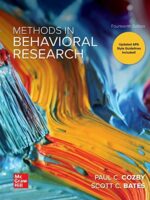
Methods in Behavioral Research 14th Edition – Cozby & Bates
$16.99Master behavioral research methods with Cozby & Bates’ 14th edition. SmartBook support, clear examples, and proven pedagogy. Get your digital copy today!
$51.00 -
American Government 101: Everything You Need to Know About U.S. Politics
$14.99Master US politics with American Government 101 – the concise, engaging guide to elections, the Constitution, and how government works. Order now!
$44.00 -
ACA Ethical Standards Casebook, 7th Edition – Barbara Herlihy & Gerald Corey
$13.99Master the 2014 ACA Code of Ethics with real-world case studies from leading experts Herlihy & Corey. The essential guide for ethical counseling practice.
$34.00 -
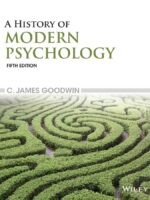
A History of Modern Psychology, 5th Edition – C. James Goodwin
$18.99Goodwin’s 5th edition offers a comprehensive, engaging history of modern psychology. Perfect for students and professionals—get your digital copy now!
$54.00 -
Clinical Assessment Workbook: Balancing Strengths and Differential Diagnosis 2nd Edition
$11.99Master clinical assessment with a strengths-based, DSM-5-aligned workbook. Hands-on cases and worksheets build differential diagnosis skills.
$30.00 -
The Certification of Insanity: Local Origins and Imperial Consequences
$28.99The first systematic study of lunacy certification in the British Empire, examining local origins and imperial consequences through legal and archival sources.
$65.00 -
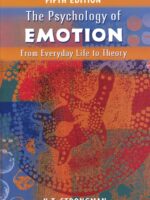
The Psychology of Emotion, 5th Edition – K.T. Strongman
$12.99Get the 5th edition of The Psychology of Emotion by K.T. Strongman — a comprehensive guide to emotion theories with everyday examples. Order your digital copy today.
$33.00