
save
$5.01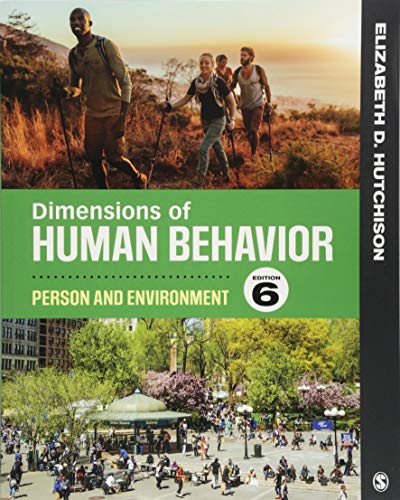
Dimensions of Human Behavior: Person and Environment 6th Edition
Master the person-in-environment framework with Hutchison’s Sixth Edition — the essential HBSE textbook for social work students and practitioners from SAGE Publications.
Want to preview before you buy? Click Request Free Sample and tell us which chapter or pages you’d like to see, along with your email address. We’ll send you those pages from the eBook so you can be sure it’s the right one before buying.
- Instant download & lifetime access Available as soon as your payment is confirmed. Your download link is also sent to the email address you provide at checkout, and you can download your purchased eBook anytime from My Account → Downloads with unlimited downloads. An account is created automatically using the same email address.
- Own your eBook Receive the available PDF/EPUB file directly after purchase. No rental or temporary access — download and keep your eBook for personal use with lifetime access.
- Full refund guarantee If the eBook you receive does not match the details and description provided on the product page, contact [email protected] and we’ll issue a full refund within 24 hours.
- Secure payment through PayPal Pay securely by debit or credit card or with your PayPal account. Your card details are processed by PayPal and are never stored on our site.
$7.99$13.00
The Gap This Book Fills
Social work, human services, and behavioral science students face a persistent challenge: understanding the complex interplay between individual development and the environmental forces that shape it. Traditional textbooks often treat these dimensions in isolation, leaving learners without a clear framework for analyzing real-life cases. Dimensions of Human Behavior: Person and Environment directly addresses this gap with a multidimensional approach that integrates biological, psychological, social, and cultural factors into a single coherent model.
What Is Dimensions of Human Behavior: Person and Environment 6th Edition? A Complete Overview
Now in its Sixth Edition, Dimensions of Human Behavior: Person and Environment is the definitive textbook for understanding how individuals develop within the contexts of family, community, and society. Authored by Elizabeth D. Hutchison and published by SAGE Publications, Inc. in 2019, this comprehensive volume builds on decades of research to provide a multidimensional framework — often called the person-in-environment perspective — that is the bedrock of modern social work education.
The book is organized into two complementary parts: one examining the dimensions of the person (including biological, psychological, and spiritual aspects) and the other exploring the multiple environmental systems (from families and groups to organizations and communities) that influence human behavior. This structure ensures that students and practitioners can systematically assess any client situation through a lens that is both holistic and evidence-based.
Who Will Benefit Most
This textbook is designed primarily for undergraduate and graduate students in social work, psychology, sociology, and human services programs. It is equally valuable for practicing social workers who want to refresh their theoretical grounding or adopt a more integrated approach to case assessment. Instructors will find the Sixth Edition updated with the latest research on genetics, trauma-informed care, and social justice — making it suitable for courses in human behavior and the social environment (HBSE).
If you are studying for the licensing exam or preparing for clinical practice, this book offers the foundational knowledge you need to link theory with real-world intervention. Researchers in adjacent fields such as public health, education, and counseling will also benefit from the multidisciplinary evidence synthesis presented in each chapter.
Inside: What You Will Master
- The multidimensional framework: How to analyze human behavior through biological, psychological, social, cultural, and spiritual lenses simultaneously — moving beyond single-factor explanations.
- Life course development: How individuals change across the lifespan, with attention to critical periods, turning points, and the cumulative impact of both risk and protective factors.
- Environmental systems theory: How families, groups, organizations, communities, and policy contexts shape behavior — and how to intervene at each level.
- Trauma and resilience: Up-to-date content on adverse childhood experiences, neurobiology of trauma, and strength-based approaches to recovery.
- Cultural humility and social justice: How race, ethnicity, class, gender, sexual orientation, and ability intersect with human development — and why culturally responsive practice demands this understanding.
Why This Book Stands Out
Unlike competing textbooks such as Ashford & LeCroy’s Human Behavior in the Social Environment or Zastrow & Kirst-Ashman’s Understanding Human Behavior and the Social Environment, Hutchison’s Dimensions of Human Behavior offers a truly integrated person-in-environment framework rather than a series of loosely connected chapters on separate theories. The Sixth Edition has been thoroughly revised to include the latest research on epigenetics, the social determinants of health, and the neurobiology of trauma — topics that competitors often treat superficially or omit entirely.
Furthermore, SAGE’s pedagogical design — including case vignettes, critical thinking questions, and online resources — supports deeper learning and easier application in field placements. The book’s organization into two major sections (Person and Environment) mirrors the CSWE EPAS competencies, making it the preferred choice for programs seeking accreditation alignment.
Behind the Book
Elizabeth D. Hutchison is a professor emerita at the School of Social Work, University at Albany, State University of New York. Her research has focused on the life course development of vulnerable populations, child welfare, and the integration of biological knowledge into social work practice. She has authored numerous peer-reviewed articles and several editions of this best-selling textbook, reflecting decades of expertise in human behavior theory.
SAGE Publications, Inc. is a leading independent academic publisher known for rigorous editorial standards, innovative digital learning tools, and a strong reputation across the social sciences. Since its founding in 1965, SAGE has published thousands of influential textbooks and reference works used in universities worldwide. The Sixth Edition was released in 2019, ensuring that readers have access to the most current scholarship available.
Our Verdict
Absolutely. For any student or practitioner committed to understanding human behavior through a comprehensive, evidence-based lens, Hutchison’s textbook is the gold standard. It balances theoretical depth with practical application, making it equally useful in the classroom and in the field. The Sixth Edition’s updates on trauma, social justice, and the biopsychosocial model ensure that readers are equipped to address contemporary challenges in mental health, child welfare, healthcare, and community practice.
Investing in this book means investing in a framework that will serve you throughout your career — whether you are preparing for licensure, conducting research, or delivering direct services. No other single volume offers the same range, coherence, and relevance to modern social work education.
Download Dimensions of Human Behavior: Person and Environment 6th Edition Now
This Sixth Edition is the definitive resource for understanding how individuals and environments interact to shape human behavior. Whether you are a social work student building your core knowledge or a licensed practitioner seeking to deepen your clinical assessment skills, Hutchison’s multidimensional framework will transform how you view every case. Add to cart now and gain immediate access to the most comprehensive HBSE textbook available — from SAGE Publications, one of the most trusted names in academic publishing. Don’t wait: equip yourself with the perspective that sets effective social workers apart.
Related products

Groups: Process and Practice 10th Edition – Group Counseling Text
$30.00Master group counseling with Corey & Corey’s 10th Edition – the definitive guide blending theory, ethics, and practical skills for students and professionals.
$79.00-
Clinical Assessment Workbook: Balancing Strengths and Differential Diagnosis 2nd Edition
$30.99Master clinical assessment with a strengths-based, DSM-5-aligned workbook. Hands-on cases and worksheets build differential diagnosis skills.
$75.00 -
Becoming a Helper 8th Edition – Marianne & Gerald Corey eBook
$28.99Start your helping career with Corey & Corey’s Becoming a Helper, 8th Edition eBook—self-reflection, ethics, diversity, and practical skills in one essential guide.
$96.00 -
A History of Psychology 2nd Edition – Global & Inclusive
$54.99This 2nd edition covers the history of psychology, including philosophical origins, women, minorities, and a new clinical chapter. Order now!
$184.00 -
The Psychology of Emotion, 5th Edition – K.T. Strongman
$25.99Get the 5th edition of The Psychology of Emotion by K.T. Strongman — a comprehensive guide to emotion theories with everyday examples. Order your digital copy today.
$74.00 -
General and Social Psychology by Robert H. Thouless – 2nd Edition
$19.99Secure your copy of the General and Social Psychology textbook by Robert H. Thouless, a classic for students of economics and social sciences.
$40.00 -
A History of Modern Psychology, 5th Edition – C. James Goodwin
$5.00Goodwin’s 5th edition offers a comprehensive, engaging history of modern psychology. Perfect for students and professionals—get your digital copy now!
$15.00 -
Designing and Conducting Mixed Methods Research 3rd Edition
$26.00Get the definitive guide to designing and conducting mixed methods research: the Third Edition by Creswell and Plano Clark covers seven designs and practical integration.
$71.00