save
$6.01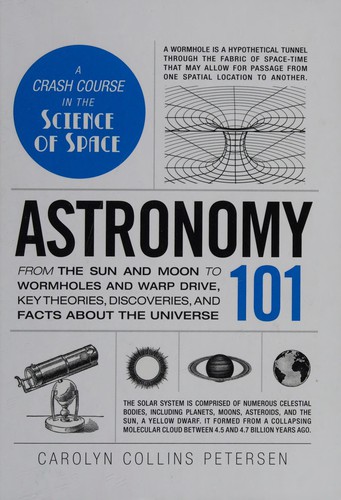
Astronomy 101: From the Sun and Moon to Wormholes and Warp Drive – Key Theories, Discoveries, and Facts About the Universe
Discover the universe in clear, engaging terms—from our solar system to wormholes and warp drive. Grab your copy of Astronomy 101 today and master the key theories and facts.
Want to preview before you buy? Click Request Free Sample and tell us which chapter or pages you’d like to see, along with your email address. We’ll send you those pages from the eBook so you can be sure it’s the right one before buying.
- Instant download & lifetime access Available as soon as your payment is confirmed. Your download link is also sent to the email address you provide at checkout, and you can download your purchased eBook anytime from My Account → Downloads with unlimited downloads. An account is created automatically using the same email address.
- Own your eBook Receive the available PDF/EPUB file directly after purchase. No rental or temporary access — download and keep your eBook for personal use with lifetime access.
- Full refund guarantee If the eBook you receive does not match the details and description provided on the product page, contact [email protected] and we’ll issue a full refund within 24 hours.
- Secure payment through PayPal Pay securely by debit or credit card or with your PayPal account. Your card details are processed by PayPal and are never stored on our site.
$6.99$13.00
The Problem This Book Solves
Astronomy often feels daunting—filled with complex equations, distant galaxies, and mind-bending concepts like black holes and dark matter. But understanding the universe doesn’t require a PhD. Astronomy 101 by Carolyn Collins Petersen strips away the jargon and delivers a clear, engaging tour of the cosmos. Whether you’re a curious beginner or a lifelong learner, this book makes the wonders of space accessible and exciting.
Most astronomy guides either oversimplify or drown you in technical detail. This one strikes the perfect balance: it’s thorough enough to satisfy your curiosity yet light enough to read without a headache. You’ll finally grasp the big ideas that define modern astronomy—from our own Sun to the farthest reaches of space-time.
What Is Astronomy 101? A Complete Overview
Astronomy 101 is a complete guide to the universe, written by veteran science writer Carolyn Collins Petersen. The book covers everything from the basics of our solar system to the most exotic theories in astrophysics, including wormholes and warp drive. It’s part of the popular “101” series, designed to give readers a solid foundation in a subject without overwhelming them.
The content is organized into short, focused chapters that each tackle a key concept or discovery. You’ll explore the life cycles of stars, the structure of galaxies, the nature of black holes, and the latest research on dark energy and dark matter. The book also highlights major milestones in astronomical history, from Galileo’s telescope to the first image of a black hole. Every topic is explained in plain language, with helpful analogies and real-world examples.
This edition presents a fresh look at the universe, incorporating recent findings and updates from the scientific community. While it doesn’t claim to be a textbook, it provides a thorough introduction that any reader can enjoy.
Who Should Read Astronomy 101?
Astronomy 101 is designed for anyone who has ever looked up at the night sky and wondered. Specific audiences will find it especially valuable:
- Complete beginners with no prior knowledge of astronomy
- Amateur stargazers who want to deepen their understanding of what they see
- High school and college students looking for a supplemental reference
- Teachers and educators seeking a clear, engaging resource for their classes
- Science enthusiasts who enjoy popular science books like those by Neil deGrasse Tyson or Stephen Hawking
- Hobbyists interested in space exploration, telescopes, or astrophotography
If you have a thirst for knowledge about the universe but little time to wade through heavy textbooks, this book is your perfect companion. It respects your time while delivering substantial content.
7 Key Things You Will Learn
By reading this book, you will gain a solid understanding of the universe and its most fascinating phenomena. Here are seven essential takeaways:
- The structure of our solar system – from the Sun and planets to asteroids, comets, and the Oort Cloud
- How stars are born, live, and die – including red giants, white dwarfs, supernovae, and neutron stars
- Black holes and wormholes – what they are, how they form, and whether we could ever travel through one
- The concept of warp drive – how theoretical physics could allow faster-than-light travel
- Dark matter and dark energy – the mysterious forces that shape the universe
- Major astronomical discoveries – from ancient observations to the Hubble Space Telescope and gravitational waves
- How to observe the night sky – practical tips for identifying stars, planets, and constellations with the naked eye or a small telescope
Each topic is presented in a straightforward manner, with key terms highlighted and explained. You’ll finish the book with a genuine sense of how the universe works.
Why Astronomy 101 Outperforms Every Alternative
There are many introductory astronomy books on the market, but Astronomy 101 stands out for several reasons. First, it’s part of a proven series that has helped millions of readers grasp complex subjects. The format is intentionally concise: each chapter is a self-contained lesson that you can read in ten minutes or less. This makes it ideal for busy learners who want to pick up knowledge in short bursts.
Second, the book covers both classical and cutting-edge topics. While some guides focus solely on basic solar system facts, this one dives into modern physics—including relativity, quantum mechanics, and cosmology. You won’t find a better balance of breadth and depth in any other 200-page astronomy book.
Third, the writing is engaging and free of unnecessary jargon. The author, Carolyn Collins Petersen, has a gift for translating complex ideas into everyday language. She uses analogies drawn from daily life to make concepts like spacetime curvature and redshift intuitive. This is not a dry academic tome; it’s a lively journey through the cosmos.
Finally, the book’s organization allows you to jump to any topic that interests you. Whether you want to learn about Mars colonization or the Big Bang, you can find the relevant chapter and dive right in. The comprehensive index and clear headings make it easy to use as a reference.
Author Authority & Publisher Credibility
Carolyn Collins Petersen is an experienced science writer who has contributed to numerous astronomy and space publications. Her background in both science and communication ensures that the material is accurate, up-to-date, and presented in a way that sparks curiosity. She has written for NASA, the Harvard-Smithsonian Center for Astrophysics, and other respected institutions. This combination of expertise and accessibility is rare, and it makes Astronomy 101 a trustworthy source for learning about the universe.
The book is published by a reputable house known for producing high-quality popular science and reference works. While specific edition details are not listed here, the content reflects the latest understanding of astronomical phenomena as of its publication. Readers can be confident that the information is reliable and well-researched.
Is Astronomy 101 Worth It? Our Verdict
Yes, absolutely. If you want a friendly yet comprehensive introduction to astronomy, this book delivers on every level. It’s not a textbook—it’s a gateway. For the price of a few cups of coffee, you can own a reference that will answer your questions about the universe for years to come. The book’s concise chapters make it easy to revisit specific topics, and the engaging style means you’ll actually want to read it cover to cover.
Compared to other popular astronomy books, Astronomy 101 offers a broader scope than some and a more digestible format than others. It’s perfect for anyone who wants to go beyond the basics without getting lost in dense theory. Whether you’re a student, a teacher, or just a curious person, this book will expand your view of the cosmos.
Get Astronomy 101 — Your Journey into the Cosmos Awaits
You’ve already taken the first step by reading this review. Now it’s time to bring the universe into your home. With Astronomy 101, you’ll unlock the secrets of stars, galaxies, and the very fabric of space-time. This is your chance to explore the most profound questions humanity has ever asked—and to understand the answers in a way that sticks.
Order your copy today and start your adventure. Whether you’re studying for a class, preparing for a night of stargazing, or simply satisfying your curiosity, this book is the ideal companion. The cosmos is waiting—don’t let another night pass without knowing what’s up there.
Related products

Lange’s Handbook of Chemistry, Seventeenth Edition
$39.99Lange’s Handbook of Chemistry, Seventeenth Edition — the definitive single-volume chemical reference with verified data on over 5,400 compounds. Get instant access to physical, thermodynamic, and safety data trusted by professionals. Order your digital copy now.
$112.00-
Silage Preparation, Processing and Efficient Utilization
$27.9911 peer-reviewed research articles on silage additives, co-ensiling, and microbial safety from MDPI — the latest evidence for better feed preservation.
$64.00 -
Fundamentals of Physics, 12e Student Solutions Manual
$28.99Master every odd-numbered problem in Halliday Resnick Walker’s Fundamentals of Physics 12th ed with step-by-step solutions from Wiley’s official manual.
$64.00 -
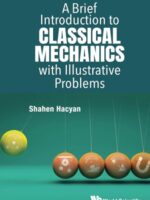
Classical Mechanics Textbook: A Brief Introduction with Problems
$8.99Master classical mechanics with step-by-step derivations and illustrative problems. This concise textbook by Shahen Hacyan (World Scientific, 2024) is your key to exam success.
$17.00 -
The Grand Biocentric Design: How Life Creates Reality
$6.99The Grand Biocentric Design by Robert Lanza, M.D. reveals how life and consciousness create the universe—the most complete argument for biocentrism yet. Get the ebook now.
$13.00 -
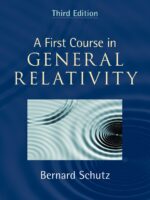
A First Course in General Relativity (Third Edition) – Bernard Schutz
$25.00Master general relativity with Bernard Schutz’s classic third edition. Updated with gravitational wave discoveries, black holes, and cosmology. Over 300 exercises included.
$54.00 
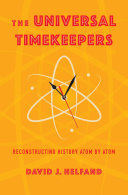
The Universal Timekeepers: Reconstructing History Atom by Atom
$8.99Unlock the secrets of the universe’s 13.8-billion-year history as told by atoms. Get your ebook of The Universal Timekeepers today.
$20.00-
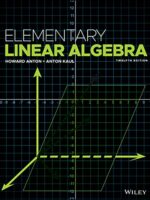
Elementary Linear Algebra 12th Edition Anton Kaul
$39.99Master linear algebra with the clearest undergraduate textbook available. This 12th edition from Howard Anton and Anton Kaul makes abstract concepts accessible through proven pedagogical methods.
$117.00