save
$4.00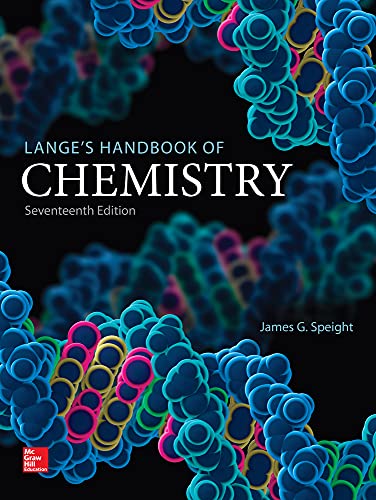
Lange’s Handbook of Chemistry, Seventeenth Edition
Lange’s Handbook of Chemistry, Seventeenth Edition — the definitive single-volume chemical reference with verified data on over 5,400 compounds. Get instant access to physical, thermodynamic, and safety data trusted by professionals. Order your digital copy now.
Want to preview before you buy? Click Request Free Sample and tell us which chapter or pages you’d like to see, along with your email address. We’ll send you those pages from the eBook so you can be sure it’s the right one before buying.
- Instant download & lifetime access Available as soon as your payment is confirmed. Your download link is also sent to the email address you provide at checkout, and you can download your purchased eBook anytime from My Account → Downloads with unlimited downloads. An account is created automatically using the same email address.
- Own your eBook Receive the available PDF/EPUB file directly after purchase. No rental or temporary access — download and keep your eBook for personal use with lifetime access.
- Full refund guarantee If the eBook you receive does not match the details and description provided on the product page, contact [email protected] and we’ll issue a full refund within 24 hours.
- Secure payment through PayPal Pay securely by debit or credit card or with your PayPal account. Your card details are processed by PayPal and are never stored on our site.
$8.00$12.00
The Gap This Book Fills
Every chemist, lab technician, or student knows the frustration of chasing scattered data across multiple sources — flipping through journal articles, online databases, and outdated textbooks just to find a single melting point or solubility value. Lange’s Handbook of Chemistry, Seventeenth Edition eliminates that inefficiency entirely by placing the most essential physical, chemical, and thermodynamic properties of over 5,400 compounds into a single, authoritative volume.
This is not a textbook you read cover to cover; it is a reference you reach for dozens of times a day — and it needs to be accurate, complete, and instantly accessible. The Seventeenth Edition delivers exactly that, with updated data and expanded coverage that keeps pace with modern chemistry.
What Is Lange’s Handbook of Chemistry, Seventeenth Edition? A Complete Overview
Lange’s Handbook of Chemistry is the gold-standard one-volume reference work for factual chemical data, now in its Seventeenth Edition (2017), published by McGraw-Hill Education and edited by Dr. James G. Speight. It compiles systematically organized tables, charts, and explanatory notes covering inorganic compounds, organic compounds, naturally occurring chemicals, and physical constants.
Unlike general chemistry textbooks that explain concepts, this handbook is built for rapid lookup: you open it to find the boiling point of an organic solvent, the density of a metal alloy, or the thermodynamic properties of a reaction. The Seventeenth Edition has been thoroughly updated to reflect the latest atomic weights, safety data, and environmental parameters, making it a trusted resource for both academic and industrial settings.
Who Will Benefit Most
This handbook is designed for anyone who works with chemical data on a regular basis. It is most valuable for:
- Professional chemists in research, quality control, or process development who need fast access to verified constants and properties
- Chemical engineers who require accurate thermodynamic and transport property data for design calculations
- Laboratory technicians and analysts who perform routine testing and need reference values for identification and quantification
- Graduate and advanced undergraduate students in chemistry, biochemistry, and chemical engineering who need a reliable supplement to their textbooks
- Safety officers and environmental scientists who must look up hazard classifications, exposure limits, and regulatory data
Skills You Will Gain
The Seventeenth Edition of Lange’s Handbook of Chemistry equips you with a comprehensive arsenal of chemical data organized into logical sections. Here is what you will find inside:
- Physical properties of elements and inorganic compounds — atomic weights, melting points, boiling points, densities, and crystal structures for every element and thousands of compounds
- Organic compound data — systematic tables of over 5,400 organic substances with molecular formulas, molecular weights, refractive indices, and solubility parameters
- Thermodynamic properties — enthalpies of formation, free energies, entropies, and heat capacities for common substances and reactions
- Fluid properties — viscosity, thermal conductivity, diffusion coefficients, and surface tension for liquids and gases at various temperatures
- Electrochemical data — standard electrode potentials, conductivity of solutions, and dissociation constants for acids and bases
- Spectroscopic data — IR, UV-Vis, NMR, and mass spectrometry reference values for structural identification
- Safety and hazard information — flash points, explosive limits, toxicity ratings, and permissible exposure limits
- Conversion factors and mathematical tables — SI units, physical constants, and mathematical formulas essential for laboratory calculations
What Sets It Apart
No other single-volume reference matches the breadth and reliability of Lange’s Handbook. The CRC Handbook of Chemistry and Physics is a strong competitor, but Lange’s offers deeper coverage of organic compounds and more practical industrial data. Online databases like PubChem or NIST are free but require internet access and often lack the curated, cross-referenced organization of a printed or downloadable reference.
Lange’s advantage lies in its editorial rigor: every data point has been verified by Dr. Speight and his contributors, ensuring consistency across tables. The Seventeenth Edition also updates key values to the latest IUPAC standards, which older editions or competing references may not reflect. For a professional who needs a single source of truth that works offline, Lange’s is the definitive choice.
Author & Publisher Credentials
Dr. James G. Speight is a renowned chemist and author with decades of experience in energy and environmental chemistry. He has authored over 80 books and hundreds of research papers, and his editorial oversight ensures that the Seventeenth Edition maintains the rigorous standards set by earlier editions of this classic reference.
McGraw-Hill Education, the publisher, is one of the world’s largest and most respected academic publishers, with a history dating back to 1888. Their scientific and technical titles are trusted by universities, corporations, and professionals worldwide. The combination of Speight’s expertise and McGraw-Hill’s editorial infrastructure gives this handbook unmatched authority in the field.
Is It Worth It?
For any chemist, engineer, or student who regularly needs accurate chemical data, Lange’s Handbook of Chemistry is not just worth it — it is essential. The Seventeenth Edition’s updates to atomic weights, safety data, and thermodynamic tables mean you are working with the most current information available. At roughly 1,300 pages, it replaces dozens of separate references and saves hours of searching every week.
The investment pays for itself in time saved and errors avoided. Whether you are verifying a synthesis procedure, designing a chemical process, or preparing for an exam, having Lange’s on your desk (or your device) gives you confidence that your data is correct.
Get Your Copy Today
Stop wasting time hunting for chemical data across scattered sources. With Lange’s Handbook of Chemistry, Seventeenth Edition, you get instant access to verified properties for over 5,400 compounds — all in one expertly curated reference. Whether you are a professional chemist, a chemical engineer, or a graduate student, this handbook will become your most-used resource.
Order your digital copy today and start working with the most trusted chemical reference in the world. Published by McGraw-Hill Education in 2017, this edition is current and ready for immediate download.
Related products

From Stardust to First Cells: The Origin and Evolution of Early Life
$38.99From Stardust to First Cells presents a groundbreaking hypothesis for the origin of life, integrating astrobiology, geology, and chemistry. Get the 2023 Springer Nature edition now.
$129.00-
The Grand Biocentric Design: How Life Creates Reality
$6.99The Grand Biocentric Design by Robert Lanza, M.D. reveals how life and consciousness create the universe—the most complete argument for biocentrism yet. Get the ebook now.
$13.00 -
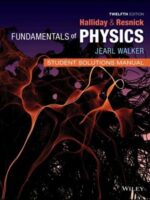
Fundamentals of Physics, 12e Student Solutions Manual
$28.99Master every odd-numbered problem in Halliday Resnick Walker’s Fundamentals of Physics 12th ed with step-by-step solutions from Wiley’s official manual.
$64.00 -
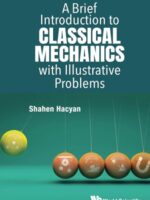
Classical Mechanics Textbook: A Brief Introduction with Problems
$8.99Master classical mechanics with step-by-step derivations and illustrative problems. This concise textbook by Shahen Hacyan (World Scientific, 2024) is your key to exam success.
$17.00 -
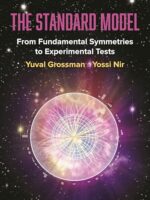
The Standard Model: From Fundamental Symmetries to Experimental Tests
$29.99Comprehensive graduate textbook on the Standard Model from symmetries to experiments. Essential for particle physics students. Buy now.
$68.00 -
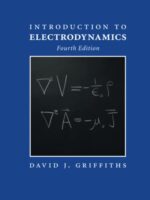
Introduction to Electrodynamics 4th Edition Griffiths
$28.00Master electrodynamics with Griffiths’s Fourth Edition—the clearest, most trusted undergraduate textbook from Cambridge University Press. Get your copy now.
$63.00 -
Mathematics for Physicists Textbook – Introductory Concepts and Methods
$27.99Master the mathematics essential for undergraduate physics with this comprehensive textbook by Altland & von Delft. Over 300 problems, worked examples, and online solutions.
$55.00 -
The Elegant Universe: Superstrings, Hidden Dimensions, and the Quest for the Ultimate Theory
$18.99Brian Greene’s The Elegant Universe makes superstring theory accessible without equations — a must-read for anyone curious about the ultimate nature of reality.
$54.00