save
$29.00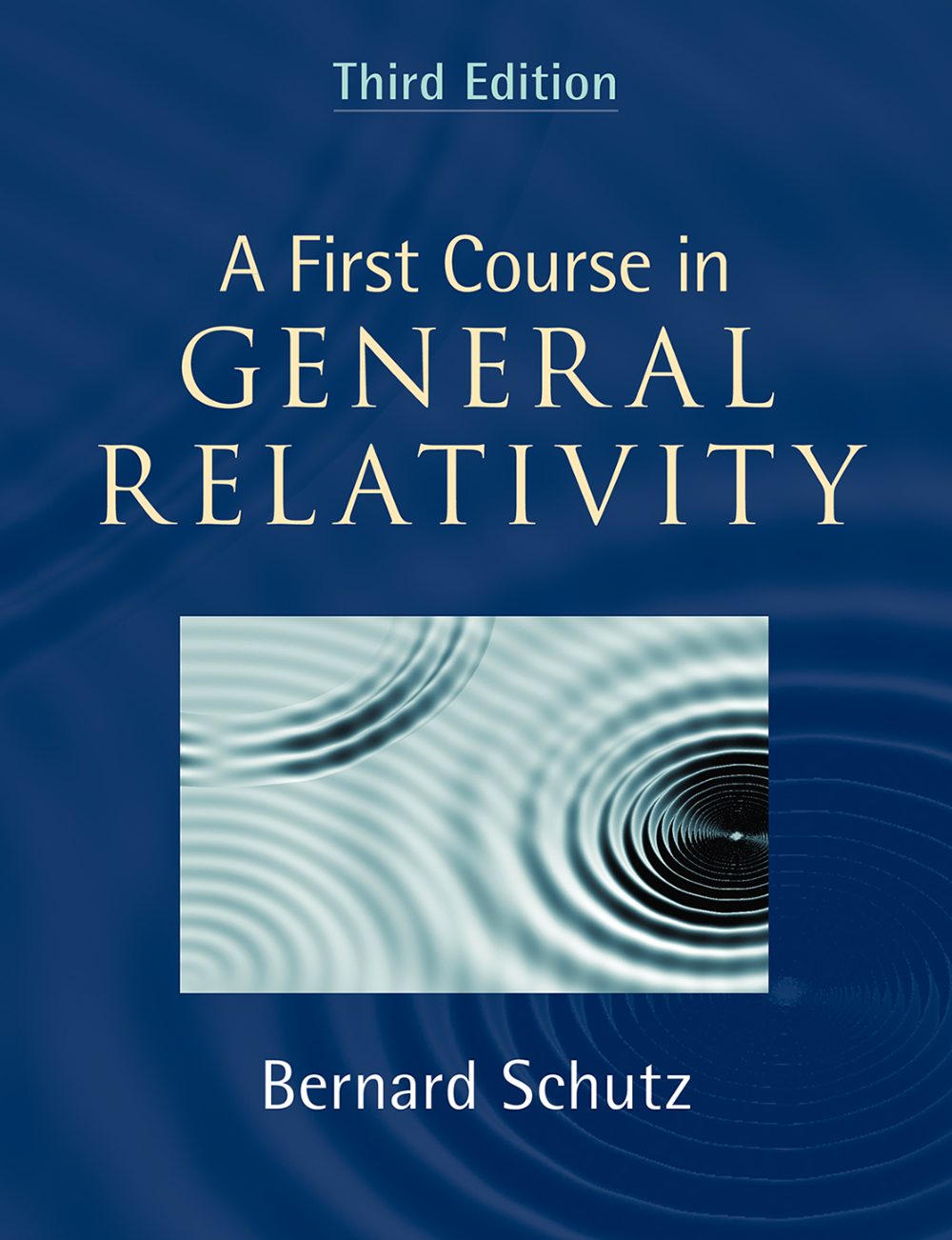
A First Course in General Relativity (Third Edition) – Bernard Schutz
Master general relativity with Bernard Schutz’s classic third edition. Updated with gravitational wave discoveries, black holes, and cosmology. Over 300 exercises included.
Want to preview before you buy? Click Request Free Sample and tell us which chapter or pages you’d like to see, along with your email address. We’ll send you those pages from the eBook so you can be sure it’s the right one before buying.
- Instant download & lifetime access Available as soon as your payment is confirmed. Your download link is also sent to the email address you provide at checkout, and you can download your purchased eBook anytime from My Account → Downloads with unlimited downloads. An account is created automatically using the same email address.
- Own your eBook Receive the available PDF/EPUB file directly after purchase. No rental or temporary access — download and keep your eBook for personal use with lifetime access.
- Full refund guarantee If the eBook you receive does not match the details and description provided on the product page, contact [email protected] and we’ll issue a full refund within 24 hours.
- Secure payment through PayPal Pay securely by debit or credit card or with your PayPal account. Your card details are processed by PayPal and are never stored on our site.
$25.00$54.00
The Gap This Book Fills
General relativity is one of the most intellectually demanding subjects in physics. Its mathematical machinery—tensor calculus, curved spacetime, Einstein field equations—often intimidates advanced undergraduates and even beginning graduate students. The standard textbooks either assume too much mathematical maturity or sacrifice depth for accessibility. Students need a resource that bridges rigorous theory with intuitive physical reasoning, and that is precisely the gap Bernard Schutz’s A First Course in General Relativity, Third Edition fills. This book solves the problem of making a sophisticated theory truly learnable without compromising accuracy.
Inside A First Course in General Relativity (Third Edition) – Bernard Schutz: A Full Overview
A First Course in General Relativity is a widely adopted textbook that guides advanced undergraduate students from foundational principles to modern applications in astrophysics and cosmology. Written by Bernard Schutz, a leading figure in gravitational-wave astronomy, the third edition updates the classic text with the latest discoveries and observational results. The book covers the core mathematics of general relativity—Riemannian geometry, tensor analysis, geodesic equations—and applies them to black holes, neutron stars, gravitational waves, and the expanding Universe. With over 300 exercises (many new to this edition), it ensures students develop both conceptual understanding and computational skill.
Published by Cambridge University Press in 2022, this third edition reflects the explosive growth of gravitational-wave science following the first direct detection by LIGO in 2015. Two full chapters are now devoted to gravitational waves, including their generation, propagation, and detection, as well as their impact on cosmological measurements like the Hubble constant. The book also incorporates new insights into black hole physics and the accelerating expansion of the Universe.
Who Should Read This Book?
This textbook is tailored for advanced undergraduate physics and astronomy majors who have completed a standard course in electromagnetism and special relativity. It assumes a minimal background in mathematics—only calculus and linear algebra are prerequisites—and develops tensor calculus from scratch within the first few chapters. Graduate students seeking a refresher or a more physically motivated introduction will also benefit.
Researchers transitioning into relativistic astrophysics—for example, astronomers working with gravitational-wave data or studying compact objects—will find the book’s clear explanations and worked examples invaluable. Professionals in fields like cosmology or high-energy astrophysics who need a self-contained reference for curved-spacetime physics will appreciate its balance of rigor and readability.
What You Will Learn
By working through A First Course in General Relativity, readers will master the following essential topics:
- Tensor analysis in special relativity—the mathematical language used throughout the rest of the book.
- Curved spacetime and the Einstein field equations—the core equations that govern gravity as geometry.
- The Schwarzschild solution—the exact solution for a non-rotating black hole, including its predictions for time dilation and light bending.
- Black holes and neutron stars—their properties, formation, and observational signatures, updated with recent discoveries.
- Gravitational wave physics—generation, propagation, and detection, with dedicated coverage of LIGO/Virgo observations.
- Cosmology with general relativity—the Friedmann equations, the expanding Universe, dark energy, and the cosmic microwave background.
- Relativistic stars and stellar collapse—the Tolman-Oppenheimer-Volkoff equation and the upper mass limit for neutron stars.
- The parameterized post-Newtonian formalism—testing general relativity in the solar system and with binary pulsars.
What Sets It Apart
Competing textbooks such as Gravity by Hartle, A General Relativity Workbook by Moore, or Spacetime and Geometry by Carroll each have strengths, but Schutz’s book uniquely combines pedagogical clarity with comprehensive coverage of the most modern topics. Hartle’s text is more verbose and less mathematically explicit; Moore’s workbook leans heavily on problem-solving without providing the same conceptual depth; Carroll’s book is written at a graduate level that can overwhelm undergraduates. Schutz strikes the perfect balance: the informal writing style demystifies difficult concepts, while the worked examples and over 300 exercises (with solutions available) build practical confidence.
Moreover, this third edition is the only one of its competitors that integrates two full chapters on gravitational waves, including the direct detection events and their implications for cosmology. No other introductory textbook covers the use of gravitational waves as standard sirens to measure the expansion rate of the Universe. This makes Schutz’s book not only a teaching tool but also a timely snapshot of current research frontiers.
Who Wrote This Book
Bernard Schutz is a professor of physics at the Weizmann Institute of Science and a pioneer in gravitational-wave data analysis. He co-founded the Max Planck Institute for Gravitational Physics (Albert Einstein Institute) and has been deeply involved in the LIGO Scientific Collaboration. His textbook reflects decades of research experience, ensuring that every physical insight is grounded in expertise.
Cambridge University Press is one of the world’s oldest and most prestigious academic publishers. Its physics list includes landmark texts by Dirac, Hawking, and Penrose. The third edition underwent rigorous peer review, and the content has been classroom-tested at institutions such as MIT, Caltech, and the University of Cambridge. This institutional backing guarantees accuracy and pedagogical effectiveness.
Final Assessment
Absolutely. For any advanced undergraduate or graduate student serious about understanding general relativity and its applications, this textbook is the gold standard. The third edition’s updates—especially the gravitational-wave chapters and the expanded coverage of black holes—make it more relevant than ever. The informal yet rigorous approach ensures that even mathematically anxious students can grasp the material, while the abundance of exercises provides ample practice. Compared to other texts, Schutz’s book delivers the best return on investment: you gain both a foundational understanding and the ability to engage with cutting-edge research. The Cambridge University Press branding and Schutz’s international reputation add an extra layer of trust.
Get Your Copy Today
Whether you are preparing for a career in astrophysics, cosmology, or gravitational-wave science, this textbook will equip you with the essential theoretical toolkit. The third edition is current, comprehensive, and written by a world authority. Order today to gain access to over 300 exercises, complete coverage of gravitational waves, and the clearest introduction to curved-spacetime physics available. Your journey into general relativity starts here.
Related products

Proceedings of the Third Conference on Reactions Between Complex Nuclei
$2.99Get the complete 1963 conference proceedings on nuclear reactions between complex nuclei – essential for researchers in nuclear physics.
$5.00
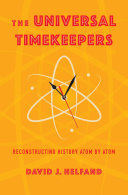
The Universal Timekeepers: Reconstructing History Atom by Atom
$8.99Unlock the secrets of the universe’s 13.8-billion-year history as told by atoms. Get your ebook of The Universal Timekeepers today.
$20.00-
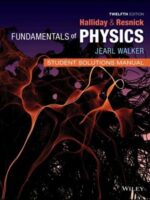
Fundamentals of Physics, 12e Student Solutions Manual
$28.99Master every odd-numbered problem in Halliday Resnick Walker’s Fundamentals of Physics 12th ed with step-by-step solutions from Wiley’s official manual.
$64.00 -
Cambridge International AS and A Level Chemistry Coursebook
$24.00Get the complete Cambridge International AS & A Level Chemistry coursebook — covers syllabus 9701 for 2022 exams, with AS and A Level content. Buy now.
$61.00 -
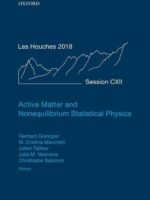
Active Matter and Nonequilibrium Statistical Physics – Les Houches Lecture Notes 2022
$21.00Master active matter theory with the authoritative Les Houches lecture notes—2022 Oxford University Press volume covering nonequilibrium statistical physics from leading experts.
$47.00 -
Gator Country: Deception, Danger, and Alligators in the Everglades
$7.99Uncover the undercover sting that took on alligator poachers in the Everglades — a true story of deception, danger, and double agents.
$15.00 -
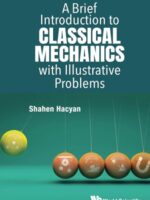
Classical Mechanics Textbook: A Brief Introduction with Problems
$8.99Master classical mechanics with step-by-step derivations and illustrative problems. This concise textbook by Shahen Hacyan (World Scientific, 2024) is your key to exam success.
$17.00 -
Breaking Through: My Life in Science by Katalin Karikó
$3.99Get the 2023 Nobel Prize-winning memoir that reveals the untold story behind mRNA vaccines—Katalin Karikó’s inspiring journey of resilience, science, and triumph.
$8.00