
save
$6.01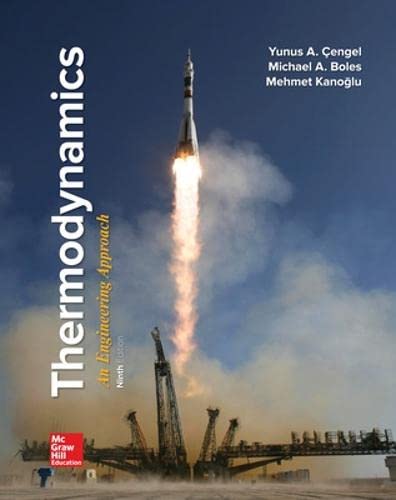
Thermodynamics: An Engineering Approach (9th Edition)
Get Thermodynamics: An Engineering Approach, 9th Edition and build real engineering intuition through physical reasoning and real-world examples.
Want to preview before you buy? Click Request Free Sample and tell us which chapter or pages you’d like to see, along with your email address. We’ll send you those pages from the eBook so you can be sure it’s the right one before buying.
- Instant download & lifetime access Available as soon as your payment is confirmed. Your download link is also sent to the email address you provide at checkout, and you can download your purchased eBook anytime from My Account → Downloads with unlimited downloads. An account is created automatically using the same email address.
- Own your eBook Receive the available PDF/EPUB file directly after purchase. No rental or temporary access — download and keep your eBook for personal use with lifetime access.
- Full refund guarantee If the eBook you receive does not match the details and description provided on the product page, contact [email protected] and we’ll issue a full refund within 24 hours.
- Secure payment through PayPal Pay securely by debit or credit card or with your PayPal account. Your card details are processed by PayPal and are never stored on our site.
$8.99$15.00
The Problem This Book Solves
Thermodynamics: An Engineering Approach, Ninth Edition, solves the problem that plagues every thermodynamics course: students memorize equations, pass exams, and still cannot explain why a system behaves the way it does. This textbook was built to replace equation memorization with physical understanding.
Engineering thermodynamics is often the first course where students hit a wall. The math is manageable, but the concepts are abstract. Without a clear mental model of energy, heat, and work, every new topic feels disconnected. That is why so many students end up memorizing problem patterns instead of understanding the underlying physics.
The authors emphasize the physics and physical arguments behind the theory, then reinforce those arguments with a wealth of real-world engineering examples. The result is an introductory textbook that trains you to think like an engineer before you start calculating like one.
What Is Thermodynamics: An Engineering Approach (9th Edition)? A Complete Overview
Thermodynamics: An Engineering Approach is an introductory engineering textbook that covers the basic principles of thermodynamics with a focus on physical intuition. It is designed for students who need to understand energy, heat, work, and entropy, not just manipulate formulas.
Thermodynamics is the science of energy and its transformations. In engineering, it is the foundation for analyzing power generation, heating and cooling systems, and countless thermal-fluid technologies. A textbook that teaches this subject well must connect abstract principles to real devices, and that is exactly what this book does.
Written by Yunus A. Çengel, Michael A. Boles, and Mehmet Kanoğlu, this Ninth Edition was published by McGraw-Hill Education in 2019. The book’s ISBN is 9781259822674, and its introductory approach makes it a natural fit for engineering thermodynamics courses.
What makes this edition distinctive is its emphasis on the physics and physical arguments underpinning the theory. Every principle is anchored to real-world engineering examples, so you can see how thermodynamics applies to actual devices and systems. The ebook format gives you the full text of this ninth edition in a portable, searchable digital form.
Is This Book Right for You?
Thermodynamics: An Engineering Approach is written for anyone who needs a practical, conceptual command of thermodynamics. It is especially valuable for students in engineering programs where energy systems and thermal-fluid sciences are core subjects.
This textbook is the right fit for:
- Undergraduate engineering students taking their first thermodynamics course.
- Students in mechanical, chemical, aerospace, or energy engineering programs.
- Practicing engineers returning to the fundamentals for licensing exams or professional refreshers.
- Graduate students who need to close gaps in their thermodynamic reasoning before advanced coursework.
- Self-directed learners who want to understand how real-world energy systems work.
If you fall into any of these groups, this ninth edition gives you the structured, example-driven approach you need to succeed. It is an engineering textbook, not a casual overview, so it works best for readers who are ready to engage with technical material.
If you are an instructor, this book also works well as a course text because its physical arguments and real-world examples give students a clear reason to care about every concept.
Inside: What You Will Master
This textbook does more than list formulas. It builds the reasoning skills you will use to analyze real engineering systems. Here are ten key things you will learn from Thermodynamics: An Engineering Approach:
- The foundational vocabulary of thermodynamics — systems, properties, states, processes, and cycles.
- How to distinguish heat, work, and energy transfer in engineering devices.
- How to apply the first law of thermodynamics to closed and open systems.
- How to apply the second law of thermodynamics and understand entropy.
- How to use physical arguments to predict the direction of real processes.
- How to model energy conversion systems using thermodynamic cycles.
- How to interpret property tables, charts, and thermodynamic data.
- How to evaluate the efficiency of engineering systems.
- How to connect theoretical principles to real-world engineering examples.
- How to build the intuitive understanding that separates skilled engineers from equation memorizers.
Each of these skills is developed through the book’s emphasis on physics and physical arguments, not just mathematical manipulation. By the time you finish, you will have a framework for approaching unfamiliar thermodynamic problems with confidence.
How It Compares
Many thermodynamics textbooks open with dense mathematical formalism and leave students to figure out the physical meaning on their own. Thermodynamics: An Engineering Approach takes the opposite path: it leads with physical arguments and then supports them with real-world engineering examples.
This approach matters because thermodynamics is a conceptual subject. The equations are tools, but the real skill is knowing when and why to use them. By emphasizing the physics behind the theory, this textbook helps you develop the judgment that engineering practice demands.
What sets this book apart:
- An introductory level that does not assume prior knowledge of advanced thermodynamics.
- Real-world engineering examples that show how principles apply to actual systems.
- A focus on physical intuition before mathematical detail.
- A complete framework for understanding energy conversion and thermal systems.
- A ninth-edition text published in 2019.
For students who want to truly understand thermodynamics rather than simply pass a course, this book is the stronger choice. It gives you the reasoning skills that make every subsequent engineering course easier.
The alternative is a textbook that teaches you to plug numbers into equations without a clear sense of what the results mean. That approach may get you through a homework set, but it will not prepare you for the open-ended problems you will face as an engineer.
Who Wrote This Book
Thermodynamics: An Engineering Approach is authored by Yunus A. Çengel, Michael A. Boles, and Mehmet Kanoğlu. This ninth edition continues their work on a textbook designed for introductory engineering courses.
The book is published by McGraw-Hill Education, and the Ninth Edition was released in 2019. This ebook delivers the full text of that edition in digital form, giving you the same content in a format that works on your devices. Because the author team and publisher are the source of this ninth edition, you are getting the official McGraw-Hill Education text, not an abridged or altered version.
Knowing who wrote the book and who published it matters. It tells you that the content has gone through a professional editorial process and that the authors are accountable for every explanation, example, and equation in the text.
Our Verdict
Yes. Thermodynamics: An Engineering Approach is worth it for any student or professional who needs to understand thermodynamics at a practical level. The book’s emphasis on physics and physical arguments directly addresses the reason most students struggle with the subject: they learn equations without developing intuition.
The real-world engineering examples are not decorative. They show you how the principles operate in actual systems, which makes the material easier to remember and apply. If you are preparing for an engineering career, this textbook is an investment in the way you think.
When you buy this ebook, you are paying for a conceptual framework that will save you hours of confusion. Instead of re-reading dense derivations, you will have a clear mental model that lets you approach new problems with confidence.
Our verdict: if you want a thermodynamics textbook that prioritizes understanding over memorization, this ninth edition is the right choice. It will save you time during your course and serve as a reference long after the semester ends.
Add Thermodynamics: An Engineering Approach (9th Edition) to Your Library
Thermodynamics: An Engineering Approach gives you the conceptual foundation and problem-solving framework you need to succeed in engineering thermodynamics. Stop relying on rote memorization and start building the physical intuition that real engineering work demands.
Whether you are a mechanical engineering student preparing for exams, a practicing engineer refreshing your fundamentals, or a self-directed learner exploring energy systems, this ebook is built for you. This is the current Ninth Edition, published by McGraw-Hill Education in 2019, so you are working with the most recent version of this text.
Choose the ebook format, download it to your device, and begin with the first chapter. The physical arguments will immediately change the way you approach problems.
Get your copy of Thermodynamics: An Engineering Approach today — add it to your cart now and start thinking like an engineer.
Related products

Advances in Coating Materials Preparation and Characterization Techniques
$26.99Get the latest research on coating materials preparation and characterization techniques. This 2025 MDPI reprint offers cutting-edge studies on thin films and nanoscale coatings.
$44.00-
Object-Oriented Design Choices – Adair Dingle (1st Edition)
$28.99Master object-oriented design choices with this essential guide to composition, inheritance, and delegation trade-offs for better software design.
$65.00 -
Docker Deep Dive: Zero to Docker in a Single Book (2023 Edition) by Nigel Poulton
$23.99Master Docker from scratch with the 2023 Edition of Docker Deep Dive by Nigel Poulton. Learn containers, networking, security, Wasm, and AI integration in one complete book.
$40.00 -
Deep Learning and the Game of Go: Build a Go-Playing AI
$25.99Master deep learning by building a Go-playing AI with this hands-on guide. Get the eBook now and start coding your own bot!
$51.00 -
Fluid Dynamics of Particles, Drops, and Bubbles by Eric Loth
$35.99Master multiphase flow with Eric Loth’s 2023 Cambridge textbook covering theory, simulations, and experiments for particles, drops, and bubbles.
$104.00 -
TinyML: Machine Learning with TensorFlow Lite on Arduino and Ultra-Low-Power Microcontrollers
$14.99Master TinyML with TensorFlow Lite on Arduino — deploy machine learning models on ultra-low-power microcontrollers with this hands-on guide.
$27.00 -
Cassandra: The Definitive Guide, Revised Third Edition
$21.99Master Cassandra 4.0 with this revised third edition guide. Learn data modeling, architecture, and deployment for distributed NoSQL databases at scale.
$50.00 -
Fundamentals of Applied Electromagnetics 7th Edition – Ulaby & Ravaioli
$30.99Master electromagnetics with Ulaby & Ravaioli’s 7th edition — application-driven theory, Technology Briefs, and intuitive visuals for EE students and engineers.
$55.00