save
$36.01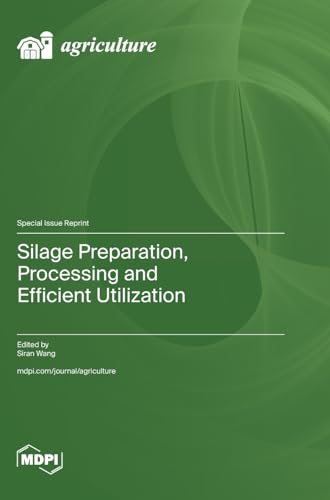
Silage Preparation, Processing and Efficient Utilization
11 peer-reviewed research articles on silage additives, co-ensiling, and microbial safety from MDPI — the latest evidence for better feed preservation.
Want to preview before you buy? Click Request Free Sample and tell us which chapter or pages you’d like to see, along with your email address. We’ll send you those pages from the eBook so you can be sure it’s the right one before buying.
- Instant download & lifetime access Available as soon as your payment is confirmed. Your download link is also sent to the email address you provide at checkout, and you can download your purchased eBook anytime from My Account → Downloads with unlimited downloads. An account is created automatically using the same email address.
- Own your eBook Receive the available PDF/EPUB file directly after purchase. No rental or temporary access — download and keep your eBook for personal use with lifetime access.
- Full refund guarantee If the eBook you receive does not match the details and description provided on the product page, contact [email protected] and we’ll issue a full refund within 24 hours.
- Secure payment through PayPal Pay securely by debit or credit card or with your PayPal account. Your card details are processed by PayPal and are never stored on our site.
$27.99$64.00
Why This Book Matters
Modern livestock operations face twin pressures: maximizing feed efficiency while minimizing spoilage and waste. Silage — the backbone of winter and preserved feeding — is notoriously sensitive to oxygen ingress, microbial instability, and nutrient loss. A poor ensiling process can degrade forage from a high-energy feed into a health risk. Silage Preparation, Processing and Efficient Utilization, a Special Issue reprint edited by Siran Wang and published by MDPI, tackles these exact challenges head-on, delivering cutting-edge research on preservation, additive use, and safety.
For farm managers, feed scientists, and researchers, this is not a theoretical overview: it is a data-driven toolkit built from 11 original studies. Each paper targets a specific bottleneck in the silage value chain — from additive formulation to microbial risk profiling — providing immediately applicable insights for higher-quality feed, lower losses, and safer silage.
About Silage Preparation, Processing and Efficient Utilization
Silage Preparation, Processing and Efficient Utilization is an academic collection of 11 original research articles published by MDPI in 2025. Edited by Siran Wang, the volume compiles the latest experimental findings on silage science, including novel raw materials, co-ensiling strategies, microbial community dynamics, and pathogenic risk assessment.
The reprint moves beyond textbook summaries into peer-reviewed, primary data. Topics covered extend from the biochemical mechanisms of fermentation to the practical outcomes of using non-traditional forages and bacterial inoculants. It is a reference for anyone who needs evidence — not opinion — to optimize their silage systems.
Who Will Benefit Most
Livestock nutritionists will find granular data on additive efficacy and nutrient preservation. Feedlot and dairy farm managers can apply co-ensiling techniques directly to reduce dry matter losses. Academic researchers in animal science, microbiology, and forage agronomy will use the microbial community analyses and pathogenic risk frameworks as foundational literature for new studies.
This book is also valuable for veterinary feed safety officers and agricultural extension specialists who advise on silage quality and health hazard mitigation. If your work involves storing, analyzing, or formulating ensiled forages, this reprint provides the specific, current evidence you need.
Skills You Will Gain
The 11 research articles deliver actionable findings across the silage lifecycle. Here are the core competencies you will gain:
- Silage additive selection — Which inoculants and chemical preservatives work best for different forage types and moisture levels.
- Novel raw material assessment — How unconventional biomass (e.g., crop residues, by-products) performs under ensiling conditions.
- Co-ensiling technology — Combining two or more forage types to improve fermentation profile and nutrient balance.
- Microbial community structure — How bacterial and fungal populations evolve during ensiling and how they affect silage stability.
- Pathogenic risk identification — Which microbes pose health threats in silage and how to mitigate their growth.
- Fermentation biochemistry — The pH, lactic acid, and volatile fatty acid dynamics that define a high-quality silage.
- Dry matter loss reduction — Practical strategies to minimize spoilage during storage and feedout.
- Aerobic stability management — How to keep silage stable once exposed to air during feeding.
- Protein and fiber preservation — Techniques to maintain forage quality through the ensiling process.
- Gas production analysis — In vitro methods to evaluate silage digestibility and energy content.
- Data-driven decision frameworks — How to apply the research findings directly to your own operation or experimental design.
What Sets It Apart
Typical silage textbooks (e.g., Silage Science and Technology by Buxton et al.) offer broad, decade-old principles. This MDPI reprint, by contrast, delivers fresh, peer-reviewed primary research published in 2025 — not a rehash of the same core chapters. The 11 articles represent the current frontier of silage science, including data on novel feedstocks and emerging pathogen risks that older volumes cannot address.
Another common alternative is individual journal subscriptions. A single paywalled journal article can cost $30–$50. This book bundles 11 full studies in a single volume at a fraction of the per-article cost. Where competitor pages merely list the article count, this product gives you the full context and cross-analysis of the entire Special Issue — something no single article purchase can provide.
Most importantly, this is not a generic overview: it is a targeted resource for applied silage improvement. Every study includes explicit materials, methods, and statistical results, so you can replicate the experiments or adapt the findings to your own forage systems.
Who Wrote This Book
Editor Siran Wang is a researcher publishing within the MDPI Agriculture journal ecosystem, a respected platform for open-access agricultural science. MDPI (Multidisciplinary Digital Publishing Institute) is a major global open-access publisher with rigorous peer-review standards, listed in the Directory of Open Access Journals (DOAJ) and indexed by Scopus, Web of Science, and PubMed Central. A publication through MDPI signifies that the research has passed independent, expert review.
The contributing authors — specialists in microbiology, forage agronomy, and animal nutrition — represent multiple institutions, lending geographic and methodological diversity to the findings. This collective expertise ensures the content is not the opinion of one individual but a multi-perspective, evidence-based compendium.
The Bottom Line
Yes, this collection offers exceptional value for its target audience. For feed scientists and farm advisors, the cost of a single trial failure — spoiled silage, reduced milk yield, or a health outbreak — can run into thousands of dollars. Investing in the latest peer-reviewed data on additives, co-ensiling, and microbial risk is a small price compared to a single feeding mistake.
The 2025 publication date guarantees the information is current, addressing challenges and technologies not covered in older reference works. If you need to understand why some silage piles fail and others perform, and you want research-backed, actionable answers, this book delivers.
It is not for casual reading or general farming guides; it is a specialist tool for professionals who base decisions on evidence. If that describes you, this is a high-ROI acquisition.
Get Your Copy Today
Whether you are a feed mill nutritionist, a dairy farm manager, or a forage researcher, this MDPI Special Issue reprint equips you with the precise, current data you need to improve silage quality, reduce spoilage, and manage microbial risks. The 11 research articles cover the entire silage value chain — from additive selection to pathogenic assessment — all in one volume.
Don’t rely on decade-old advice or pay per-article for incomplete insights. Order your copy of Silage Preparation, Processing and Efficient Utilization today and apply the latest peer-reviewed science to your operation. MDPI’s rigorous editorial process and the 2025 publication date ensure you are working with the most recent evidence available. Add to cart now and start optimizing your silage with confidence.
Related products

Fluid Mechanics: A Very Short Introduction by Eric Lauga
$6.99Master fluid mechanics without the math overload. Eric Lauga’s concise 2022 guide from Oxford University Press explains how liquids and gases flow using everyday examples. Build your intuition today.
$12.00-
The Standard Model: From Fundamental Symmetries to Experimental Tests
$29.99Comprehensive graduate textbook on the Standard Model from symmetries to experiments. Essential for particle physics students. Buy now.
$68.00 -
Condensed Matter Field Theory 3rd Edition – Altland & Simons
$26.99Master quantum field theory for condensed matter with Altland & Simons’ updated third edition – functional integration, topological matter, and nonequilibrium physics.
$72.00 
The Universal Timekeepers: Reconstructing History Atom by Atom
$8.99Unlock the secrets of the universe’s 13.8-billion-year history as told by atoms. Get your ebook of The Universal Timekeepers today.
$20.00-
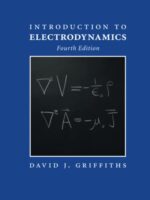
Introduction to Electrodynamics 4th Edition Griffiths
$28.00Master electrodynamics with Griffiths’s Fourth Edition—the clearest, most trusted undergraduate textbook from Cambridge University Press. Get your copy now.
$63.00 -
Problems and Solutions on Mechanics, 2nd Edition
$18.99Master 408 exam-level mechanics problems with complete solutions. The definitive preparation for PhD qualifying exams from World Scientific’s trusted series.
$40.00 -
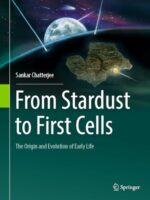
From Stardust to First Cells: The Origin and Evolution of Early Life
$38.99From Stardust to First Cells presents a groundbreaking hypothesis for the origin of life, integrating astrobiology, geology, and chemistry. Get the 2023 Springer Nature edition now.
$129.00 -
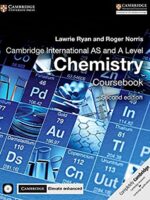
Cambridge International AS and A Level Chemistry Coursebook
$24.00Get the complete Cambridge International AS & A Level Chemistry coursebook — covers syllabus 9701 for 2022 exams, with AS and A Level content. Buy now.
$61.00