save
$28.01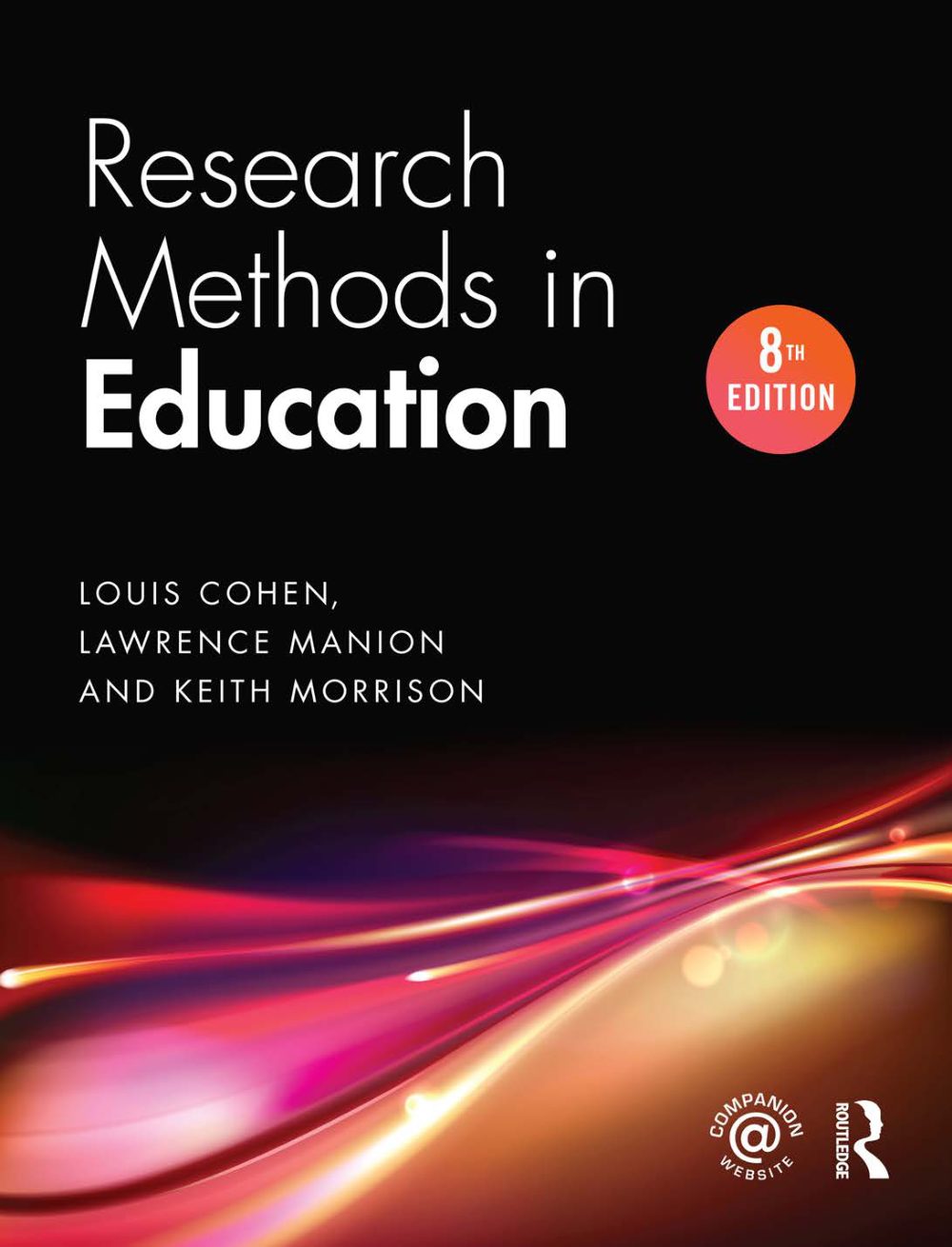
Research Methods in Education 8th Edition
The definitive Routledge guide to educational research methods—eighth edition covers design, data collection, analysis, and ethics in 916 comprehensive pages. Elevate your research now.
Want to preview before you buy? Click Request Free Sample and tell us which chapter or pages you’d like to see, along with your email address. We’ll send you those pages from the eBook so you can be sure it’s the right one before buying.
- Instant download & lifetime access Available as soon as your payment is confirmed. Your download link is also sent to the email address you provide at checkout, and you can download your purchased eBook anytime from My Account → Downloads with unlimited downloads. An account is created automatically using the same email address.
- Own your eBook Receive the available PDF/EPUB file directly after purchase. No rental or temporary access — download and keep your eBook for personal use with lifetime access.
- Full refund guarantee If the eBook you receive does not match the details and description provided on the product page, contact [email protected] and we’ll issue a full refund within 24 hours.
- Secure payment through PayPal Pay securely by debit or credit card or with your PayPal account. Your card details are processed by PayPal and are never stored on our site.
$22.99$51.00
The Challenge It Addresses
Educational researchers and graduate students face a daunting challenge: mastering the full spectrum of research methods—from designing studies and collecting data to analyzing results and reporting findings—while navigating ethical and practical complexities. Fragmented resources and outdated guides often leave critical gaps, leading to flawed designs and wasted effort. This book provides a complete, authoritative solution.
Inside Research Methods in Education 8th Edition – Comprehensive Guide: A Full Overview
Research Methods in Education (eighth edition) is the definitive textbook for understanding and applying the full range of research methods in educational settings. Published by Routledge, this 916-page volume offers systematic coverage of both quantitative and qualitative approaches, ensuring researchers can confidently design robust studies and interpret data accurately. Every chapter integrates real-world examples, theoretical grounding, and practical steps that bridge the gap from concept to execution.
This edition thoroughly updates and extends its content to reflect contemporary issues such as digital data collection, mixed-methods designs, and the latest ethical standards. It remains the long-running bestseller in its field for good reason: it leaves no methodological stone unturned.
Is This Book Right for You?
This book is essential for anyone engaged in educational research, whether you are a novice or a seasoned professional. Key audiences include:
- Graduate students in education, social sciences, and related disciplines preparing for thesis or dissertation work
- University faculty designing courses on research methodology or supervising student research
- Professional researchers in educational institutions, policy think tanks, and evaluation agencies
- Teachers and school administrators implementing action research or evidence-based practices
- Curriculum developers and instructional designers who need to evaluate program effectiveness
If you need to conduct credible, rigorous research in education, this book is your indispensable companion.
Skills You Will Gain
- Research design fundamentals: How to frame research questions, choose appropriate designs (experimental, quasi-experimental, survey, case study, ethnography), and align them with your goals.
- Sampling strategies: Techniques for selecting participants that ensure representativeness and minimize bias, including probability and non-probability methods.
- Data collection methods: Comprehensive guidance on interviews, questionnaires, observations, tests, and digital tools, with strengths and limitations of each.
- Statistical analysis: Step-by-step instructions for descriptive and inferential statistics, including parametric and non-parametric tests, effect sizes, and software handling.
- Qualitative analysis: Approaches to coding, thematic analysis, discourse analysis, and narrative inquiry to extract meaning from textual and observational data.
- Ethical and legal considerations: Navigating informed consent, confidentiality, Institutional Review Board requirements, and research integrity in educational contexts.
- Reporting and disseminating findings: Strategies for writing research reports, articles, and dissertations that meet academic standards and influence practice.
What Sets It Apart
Compared to other leading texts like Educational Research: Competencies for Analysis and Applications by Gay, Mills, and Airasian, or Introduction to Research in Education by Ary et al., this book offers distinct advantages. The eighth edition provides broader, more balanced coverage of both quantitative and qualitative paradigms, whereas many competitors lean heavily toward one tradition. It also includes dedicated chapters on mixed methods and action research—areas of increasing importance—that others treat only superficially.
Furthermore, the sheer scope (945 pages) allows for deep dives into specific methods: systematic observation schedules, Q methodology, and longitudinal studies are given dedicated attention. The writing style remains accessible without oversimplifying, making complex concepts digestible for both advanced undergraduates and doctoral candidates. No other single volume matches its combination of breadth, depth, and practical orientation.
Who Wrote This Book
While the specific author team for this eighth edition is not listeds in the provided details, the Routledge imprint signals exceptional quality: Routledge is a world-leading academic publisher specializing in social sciences and education, with rigorous peer review and editorial standards. The textbook itself has a proven track record as a long-running bestseller across multiple editions, indicating sustained trust among instructors and researchers globally.
The content reflects contributions from scholars with deep expertise in research methodology, curriculum studies, and educational assessment. This institutional backing ensures that every piece of advice is evidence-based and pedagogically sound.
Our Verdict
Absolutely. For anyone serious about conducting high-quality educational research, this book is not just a reference—it is a complete educational toolkit. Its systematic organization allows you to easily locate information during each phase of a project, while the exhaustive coverage means you will rarely need to consult other texts for foundational guidance. The price point for such a comprehensive, up-to-date resource represents excellent value, especially compared to purchasing multiple specialized books that would collectively cost far more.
Whether you are preparing a dissertation, evaluating a program, or building a research methods course, investing in this edition will pay dividends in the quality and confidence of your work.
Download Research Methods in Education 8th Edition – Comprehensive Guide Now
Stop piecing together outdated resources and fragmented advice. With the eighth edition of Research Methods in Education, you gain a single, authoritative guide that takes you from research question to published findings. Whether you are a graduate student facing a thesis, a professor designing a course, or a professional researcher, this book equips you with the proven methods and confidence to succeed.
Order your copy today and join thousands of researchers who trust this Routledge bestseller for their most critical projects. Act now while this current edition is available—don’t get stuck with outdated material as the field evolves.
Related products

Learning in Adulthood: A Comprehensive Guide (4th Edition)
$25.00Get the definitive guide to adult learning theory and practice. Order the 4th edition of Learning in Adulthood today and advance your understanding.
$66.00-
The Power of Place: Authentic Learning Through Place-Based Education
$11.99Transform your classroom with authentic place-based learning. This ASCD guide shows how to boost student agency and equity through community-connected education.
$19.00 -
Mindsets in the Classroom Updated Edition: Build a Growth Mindset Learning Community
$13.99Transform your classroom with growth mindset strategies from Mary Cay Ricci’s updated edition. Order now to foster student resilience and achievement.
$25.00 -
Tinkering toward Utopia: A Century of Public School Reform eBook
$12.99Get the ebook ‘Tinkering toward Utopia’ by David Tyack and Larry Cuban to understand why school reform succeeds or fails—buy now from Harvard University Press.
$29.00 -
Neurodiversity in the Classroom: Strength-Based Strategies
$10.99Transform your teaching with strength-based strategies for students with special needs. Practical tools to build on student strengths, not deficits.
$22.00 -
Parent-Child Relations: An Introduction to Parenting (9th Edition)
$17.99Get Parent-Child Relations, 9th edition, the classic resource for understanding family systems and parenting dynamics. Add to cart today!
$38.00 -
Mentoring Teachers: Navigating the Real-World Tensions
$9.99Master the five real-world tensions of mentoring with this essential guide for teachers and mentors. Get your copy today!
$16.00 -
Teaching for Critical Thinking: Tools and Techniques to Help Students Question Their Assumptions
$21.00Transform your teaching with proven techniques to help students question assumptions and think critically. Get the practical guide by Stephen Brookfield now.
$35.00