save
$24.01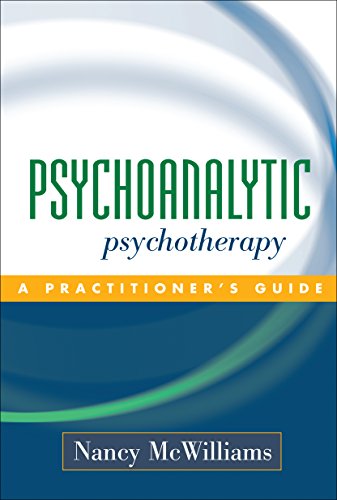
Psychoanalytic Psychotherapy: A Practitioner’s Guide
Master psychoanalytic therapy with Nancy McWilliams’ classic guide, blending theory and clinical vignettes for practitioners and trainees. Get the eBook now.
Want to preview before you buy? Click Request Free Sample and tell us which chapter or pages you’d like to see, along with your email address. We’ll send you those pages from the eBook so you can be sure it’s the right one before buying.
- Instant download & lifetime access Available as soon as your payment is confirmed. Your download link is also sent to the email address you provide at checkout, and you can download your purchased eBook anytime from My Account → Downloads with unlimited downloads. An account is created automatically using the same email address.
- Own your eBook Receive the available PDF/EPUB file directly after purchase. No rental or temporary access — download and keep your eBook for personal use with lifetime access.
- Full refund guarantee If the eBook you receive does not match the details and description provided on the product page, contact [email protected] and we’ll issue a full refund within 24 hours.
- Secure payment through PayPal Pay securely by debit or credit card or with your PayPal account. Your card details are processed by PayPal and are never stored on our site.
$31.99$56.00
The Challenge It Addresses
Every therapist knows the gap between textbook theory and the messy reality of the consulting room. Psychoanalytic Psychotherapy: A Practitioner’s Guide by Nancy McWilliams bridges that gap. It addresses the central challenge of clinical practice: how to apply psychoanalytic principles flexibly, humanely, and effectively with real patients. This book answers the question every trainee and seasoned clinician faces: How do I actually do this work?
Rather than presenting a rigid manual, McWilliams offers a deeply personal, clinically grounded framework. She distills decades of experience into practical guidance that respects the complexity of each therapeutic relationship. For professionals seeking to deepen their psychodynamic skills without losing sight of the person behind the diagnosis, this book is an essential resource.
Inside Psychoanalytic Psychotherapy McWilliams: A Practitioner’s Guide: A Full Overview
Psychoanalytic Psychotherapy: A Practitioner’s Guide is a comprehensive text that synthesizes the core values, assumptions, and clinical findings of the psychoanalytic tradition. Published by The Guilford Press in 2004, this work is widely regarded as a modern classic in psychodynamic education. McWilliams writes in accessible, nontechnical language enriched by extensive clinical vignettes that bring theory to life.
The book covers the full arc of therapeutic work: from initial assessment and case formulation to the nuances of transference, countertransference, and termination. It integrates contemporary research on attachment, trauma, and neurobiology with traditional psychoanalytic concepts. McWilliams emphasizes the therapeutic relationship as the primary vehicle for change, offering concrete strategies for building and maintaining a strong alliance.
Unlike many texts that focus solely on technique, this guide also addresses the therapist’s inner experience—the emotional challenges, ethical dilemmas, and personal growth that accompany this demanding work. It is both a practical manual and a compassionate companion for the journey of becoming a psychodynamic therapist.
Who Will Benefit Most
This book is designed for a broad audience of mental health professionals and trainees. It is particularly valuable for:
- Graduate students in clinical psychology, social work, counseling, and psychiatry who want a clear, integrative introduction to psychoanalytic therapy.
- Early-career therapists seeking a reliable framework for their first cases.
- Experienced clinicians from other modalities (CBT, humanistic, family systems) who wish to incorporate psychodynamic principles into their practice.
- Psychoanalytic candidates looking for a concise yet thorough review of core concepts.
- Educators and supervisors who need a text that communicates complex ideas with clarity and warmth.
- Researchers interested in the empirical foundations of psychodynamic psychotherapy.
- Any mental health professional committed to deepening their understanding of the therapeutic process.
McWilliams’ approach is inclusive and non-dogmatic, making this book suitable for therapists across theoretical orientations who value a relational, insight-oriented perspective.
Inside: What You Will Master
Reading Psychoanalytic Psychotherapy: A Practitioner’s Guide equips you with essential knowledge and skills. Here are seven critical takeaways:
- A coherent framework for case formulation that integrates developmental history, defense mechanisms, relational patterns, and current functioning.
- How to work with transference and countertransference as therapeutic tools rather than obstacles—turning the therapist’s emotional reactions into data about the patient’s internal world.
- Practical techniques for establishing and maintaining the therapeutic alliance, including handling ruptures and negotiating treatment goals collaboratively.
- An understanding of defense mechanisms and their role in psychic structure, with guidance on when and how to interpret them.
- Strategies for assessing and treating patients with diverse diagnoses, from depression and anxiety to personality disorders and trauma-related conditions.
- How to integrate attachment theory, affect regulation, and neurobiological findings into a psychodynamic framework without losing the core psychoanalytic sensibility.
- Self-care and ethical grounding for the therapist, including managing the emotional toll of the work and maintaining professional boundaries.
Each chapter is packed with clinical examples that illustrate these concepts in action, making the learning immediate and applicable.
What Sets It Apart
Several excellent texts exist on psychoanalytic therapy, but McWilliams’ guide stands apart for three reasons: accessibility, depth, and heart.
Compared to classic works like Greenson’s The Technique and Practice of Psychoanalysis or Brenner’s An Elementary Textbook of Psychoanalysis, McWilliams’ writing is far more engaging and less jargon-laden. She avoids the dense, abstract style that often alienates beginners. Instead, she speaks directly to the clinician’s experience, using vivid vignettes that make theory feel alive.
Unlike more recent manuals such as Shedler’s That Which Is Most Personal or Summers and Barber’s Psychodynamic Therapy: A Guide to Evidence-Based Practice, McWilliams offers a broader, more holistic perspective. She does not limit herself to a single school or technique but synthesizes insights from ego psychology, object relations, self psychology, and relational psychoanalysis. This integrative stance makes her book adaptable to a wide range of clinical situations.
Furthermore, McWilliams devotes significant attention to the therapist’s subjectivity—a dimension often neglected in other texts. Her chapters on the therapist’s emotional experience, the use of humor, and the importance of personal therapy are unique contributions that resonate deeply with practitioners. No other book in this field combines such rigorous scholarship with such genuine humanity.
Behind the Book
Nancy McWilliams, PhD, is a visiting professor at the Graduate School of Applied and Professional Psychology at Rutgers University and a widely respected clinician, teacher, and author. She is best known for her trilogy of psychodynamic texts—Psychoanalytic Diagnosis, Psychoanalytic Case Formulation, and this volume—which have become staples in training programs worldwide. Her work is distinguished by its clarity, clinical wisdom, and deep respect for the patient’s inner world.
The Guilford Press is a leading publisher of mental health and behavioral science books, known for its rigorous editorial standards and commitment to evidence-based practice. Guilford titles are trusted by clinicians, researchers, and educators for their scholarly excellence and practical utility. The fact that this book has remained in continuous print and demand since 2004 speaks to its enduring value.
McWilliams’ authority is further reinforced by her active role in teaching and supervision. She is not a distant academic but a clinician who has spent decades in the consulting room. This lived experience infuses every page with authenticity and practical relevance.
Final Assessment
Unequivocally, yes. Psychoanalytic Psychotherapy: A Practitioner’s Guide is not just a book; it is a mentor in print. For any therapist who wants to practice psychodynamic therapy with confidence, compassion, and competence, this is an indispensable resource.
The book’s strengths are many: its readability, its integration of theory and practice, its focus on the therapeutic relationship, and its humane, non-dogmatic tone. It earns its reputation as a classic because it meets clinicians where they are and guides them toward deeper understanding without ever talking down to them.
If you are a student, this book will give you a solid foundation that will serve you throughout your career. If you are an experienced clinician, it will refresh your perspective and remind you why you chose this work. If you are a supervisor, it is a text you can confidently recommend to your supervisees. In short, it is a wise investment in your professional development.
Get Your Copy Today
Whether you are a graduate student building your therapeutic toolkit or a seasoned practitioner seeking to refine your skills, Psychoanalytic Psychotherapy: A Practitioner’s Guide offers the depth, clarity, and heart you need. This is the edition that has guided thousands of clinicians—and it can guide you too.
Add to cart now and begin transforming your understanding of the therapeutic process. Published by The Guilford Press, this 2004 classic remains as relevant as ever. Don’t wait to bring McWilliams’ wisdom into your practice.
Related products

Vascular Surgical Emergencies: Well-Prepared for Duty
$28.00Master 50 vascular surgical emergencies with proven diagnostic and therapeutic protocols. The 2026 Springer guide from Susanne Regus — essential for every vascular surgeon.
$49.00-
Handbook of Forensic Drug Analysis – Comprehensive Chemical Reference
$13.99Get the essential Handbook of Forensic Drug Analysis, the definitive chemical reference for identifying and analyzing illicit substances in forensic labs.
$25.00 -
Vascular Access: Principles and Practice 5th Edition – Comprehensive Textbook
$48.99Master all aspects of vascular access for hemodialysis, chemotherapy, nutrition, and critical care with this practical 5th edition textbook by Samuel Eric Wilson. Get the definitive how-to guide now.
$141.00 -
General Thoracic Surgery, 7th Edition
$59.99Get the 7th edition General Thoracic Surgery eBook – the comprehensive two-volume guide to all open and endoscopic thoracic surgical procedures.
$149.00 -
Glandular Physiology and Therapy: AMA Symposium Ebook
$29.99Gain rare insight into early endocrinology with this authoritative AMA symposium. Essential for medical historians and hormone therapy researchers. Buy the ebook today.
$60.00 -
Diseases and Disorders: A Nursing Therapeutics Manual, 6th Edition — Marilyn Sawyer Sommers
$17.00Master 240+ diseases with nursing diagnoses, interventions, and patient teaching — all in one portable, evidence-based manual for students and clinicians.
$31.00 -
Endurance Sports Nutrition 3rd Edition – Fueling for Peak Performance
$6.00Fuel your best performance with Endurance Sports Nutrition. This science-backed guide helps you train longer, recover faster, and avoid injury with personalized fueling strategies.
$8.00 -
Essentials of Epidemiology in Public Health, Fourth Edition
$25.99Master epidemiologic methods with this essential Fourth Edition textbook from Jones & Bartlett Learning, perfect for public health students and professionals.
$78.00