save
$24.01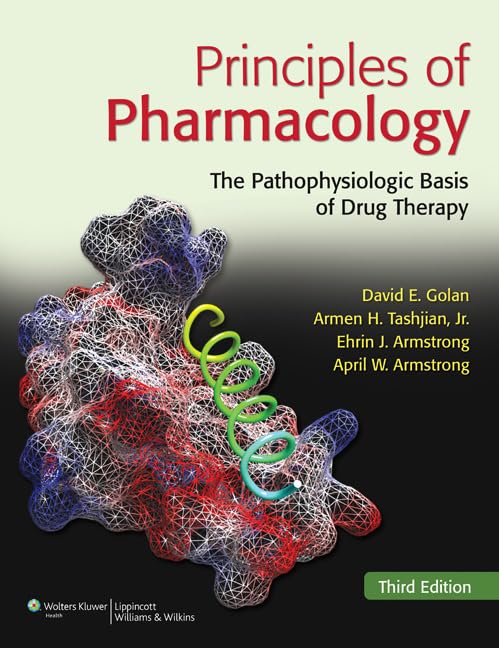
Principles of Pharmacology: Pathophysiologic Basis, 3rd Ed
Master drug therapy through a pathophysiologic framework with Principles of Pharmacology by Golan – the trusted textbook for medical and pharmacy students.
Want to preview before you buy? Click Request Free Sample and tell us which chapter or pages you’d like to see, along with your email address. We’ll send you those pages from the eBook so you can be sure it’s the right one before buying.
- Instant download & lifetime access Available as soon as your payment is confirmed. Your download link is also sent to the email address you provide at checkout, and you can download your purchased eBook anytime from My Account → Downloads with unlimited downloads. An account is created automatically using the same email address.
- Own your eBook Receive the available PDF/EPUB file directly after purchase. No rental or temporary access — download and keep your eBook for personal use with lifetime access.
- Full refund guarantee If the eBook you receive does not match the details and description provided on the product page, contact [email protected] and we’ll issue a full refund within 24 hours.
- Secure payment through PayPal Pay securely by debit or credit card or with your PayPal account. Your card details are processed by PayPal and are never stored on our site.
$21.99$46.00
The Problem This Book Solves
Every medical and pharmacy student faces the same challenge: learning hundreds of drug names, mechanisms, and side effects in isolation. Memorizing facts without a conceptual anchor leads to poor retention and clinical confusion. Principles of Pharmacology: The Pathophysiologic Basis of Drug Therapy, Third Edition solves this problem by teaching drugs through the diseases they treat — not as isolated agents. This approach transforms pharmacotherapy from a list of facts into a coherent, clinically relevant framework.
About Principles of Pharmacology: Pathophysiologic Basis, 3rd Ed
Principles of Pharmacology is the premier textbook for first‑course pharmacology, authored by David E. Golan and published by Lippincott Williams & Wilkins. Now in its Third Edition (2012), this text organizes drug therapy around the pathophysiologic mechanisms of disease. Rather than alphabetically listing drugs, it groups them by the physiologic or pathophysiologic systems they target — for example, drugs affecting the autonomic nervous system, cardiovascular system, or cancer cell pathways.
Each chapter begins with a clinical case that illustrates the disease state, then explains the underlying pathophysiology, and finally details how specific drugs counteract those derangements. Full‑color illustrations, summary tables, and clinical vignettes reinforce learning. The book delivers a deep understanding of drug action that prepares students for clinical reasoning.
Who Should Read This Book?
This textbook is designed for medical students, pharmacy students, and other health professions learners taking their first comprehensive pharmacology course. It also serves as an authoritative reference for residents, fellows, and practicing clinicians who want to refresh their understanding of drug mechanisms through a pathophysiologic lens.
If you are a student who finds rote memorization ineffective, or a professional seeking a conceptual foundation for therapeutic decisions, this book is for you. It assumes basic knowledge of physiology and biochemistry, but builds the pharmacologic principles from the ground up.
Skills You Will Gain
- Drug‑receptor interactions — how agonists, antagonists, and allosteric modulators alter cell signaling.
- Pharmacokinetic principles — absorption, distribution, metabolism, and excretion (ADME) of drugs.
- Autonomic pharmacology — sympathetic and parasympathetic agents, including cholinergics, anticholinergics, adrenergics, and blockers.
- Cardiovascular drug therapy — antihypertensives, antiarrhythmics, diuretics, and anticoagulants.
- Central nervous system pharmacology — anxiolytics, antidepressants, antipsychotics, and antiseizure drugs.
- Endocrine pharmacology — insulin, thyroid hormones, corticosteroids, and sex‑hormone modulators.
- Cancer chemotherapy and immunopharmacology — cytotoxic agents, targeted therapies, and immunomodulators.
Why Choose This Edition
Most pharmacology textbooks either drown you in trivial details or oversimplify to the point of uselessness. Principles of Pharmacology strikes the perfect balance. Its pathophysiologic organization is unique: instead of presenting drugs by class in isolation, it ties each agent to the specific disease mechanism it corrects. This mirrors the way clinicians actually think — “what is the pathophysiology? Now what drug fixes that?”
Competing texts like Katzung & Trevor’s Basic & Clinical Pharmacology or Rang & Dale’s Pharmacology are excellent but often pack too much detail for a first course. Golan’s text provides depth without overload, reinforced by clinical cases and full‑color artwork. The Third Edition updated content includes newer drugs and revised therapeutic algorithms, keeping the material current for 2012 and beyond.
Behind the Book
David E. Golan, MD, PhD is a respected pharmacologist and physician at Harvard Medical School and Brigham and Women’s Hospital. His dual expertise in basic science and clinical medicine ensures the text bridges bench to bedside. The publisher, Lippincott Williams & Wilkins (LWW), is a leading imprint in medical education, known for gold‑standard textbooks like Stedman’s Medical Dictionary and Grant’s Atlas of Anatomy. LWW’s rigorous peer‑review process and editorial quality guarantee accuracy and clarity.
The Bottom Line
Yes — unequivocally. For medical and pharmacy students who want to understand pharmacology rather than temporarily memorize it, this textbook is indispensable. The pathophysiologic approach makes material stick and translates directly to clinical practice. The clinical cases and summary tables are especially valuable for board exam preparation (USMLE Step 1, NBME, etc.). While a newer Fourth Edition exists, the Third Edition (2012) covers all core pharmacology with proven effectiveness — and at a significantly lower cost.
If you prefer a more succinct or organ‑system approach, consider Katzung or Rang & Dale. But for those who want a single, coherent, and visually engaging textbook that connects disease to drug, Principles of Pharmacology is the gold standard.
Download Principles of Pharmacology: Pathophysiologic Basis, 3rd Ed Now
Whether you are a medical student facing your first pharmacology block or a resident brushing up on therapeutic basics, this book will give you the conceptual framework to understand and retain drug mechanisms. The Third Edition from Lippincott Williams & Wilkins remains a trusted resource, available in digital format for immediate access.
Don’t waste hours memorizing scattered drug lists. Add Principles of Pharmacology: The Pathophysiologic Basis of Drug Therapy, 3rd Edition to your cart now and build a lasting foundation in pharmacotherapy.
Related products

Guide to the Most Common Internal Medicine Workups and Diseases: An Evidence-Based Hospital Reference
$30.99Master the most common hospital-based internal medicine workups with this evidence-based guide. Get the structured clinical reference you need for daily practice.
$59.00-
Handbook of Forensic Drug Analysis – Comprehensive Chemical Reference
$13.99Get the essential Handbook of Forensic Drug Analysis, the definitive chemical reference for identifying and analyzing illicit substances in forensic labs.
$25.00 -
Kaufman’s Clinical Neurology for Psychiatrists 9th Edition – ABPN Board Review
$38.99Master ABPN neurology quickly with Kaufman’s Clinical Neurology for Psychiatrists, 9th Edition — focused review, practice questions, and updated content from Elsevier.
$103.00 -
Child and Adolescent Mental Health Screening, Evidence-Based Assessment, Intervention, and Health Promotion, 3rd Edition
$30.99The essential evidence-based guide for child and adolescent mental health screening, assessment, and intervention—updated third edition with practical tools and KySS framework.
$65.00 -
Neuroanatomy: An Illustrated Colour Text 6th Edition
$19.99Master neuroanatomy with this visual, concise Sixth Edition by Crossman & Neary. Includes enhanced eBook with bonus figures and self-assessment.
$35.00 -
Anthony’s Textbook of Anatomy & Physiology 18th Edition – Mosby
$20.00Master human anatomy and physiology with this clear, comprehensive 18th Edition from Mosby. Perfect for nursing and allied health students.
$62.00 -
Diseases and Disorders: A Nursing Therapeutics Manual, 6th Edition — Marilyn Sawyer Sommers
$17.00Master 240+ diseases with nursing diagnoses, interventions, and patient teaching — all in one portable, evidence-based manual for students and clinicians.
$31.00 -
Guyton and Hall Textbook of Medical Physiology 15th Edition
$31.99Understand medical physiology with the clearest, most authoritative textbook. Guyton and Hall 15th edition explains how cells, tissues, and organs work together. Trusted by students and clinicians worldwide.
$81.00