save
$16.01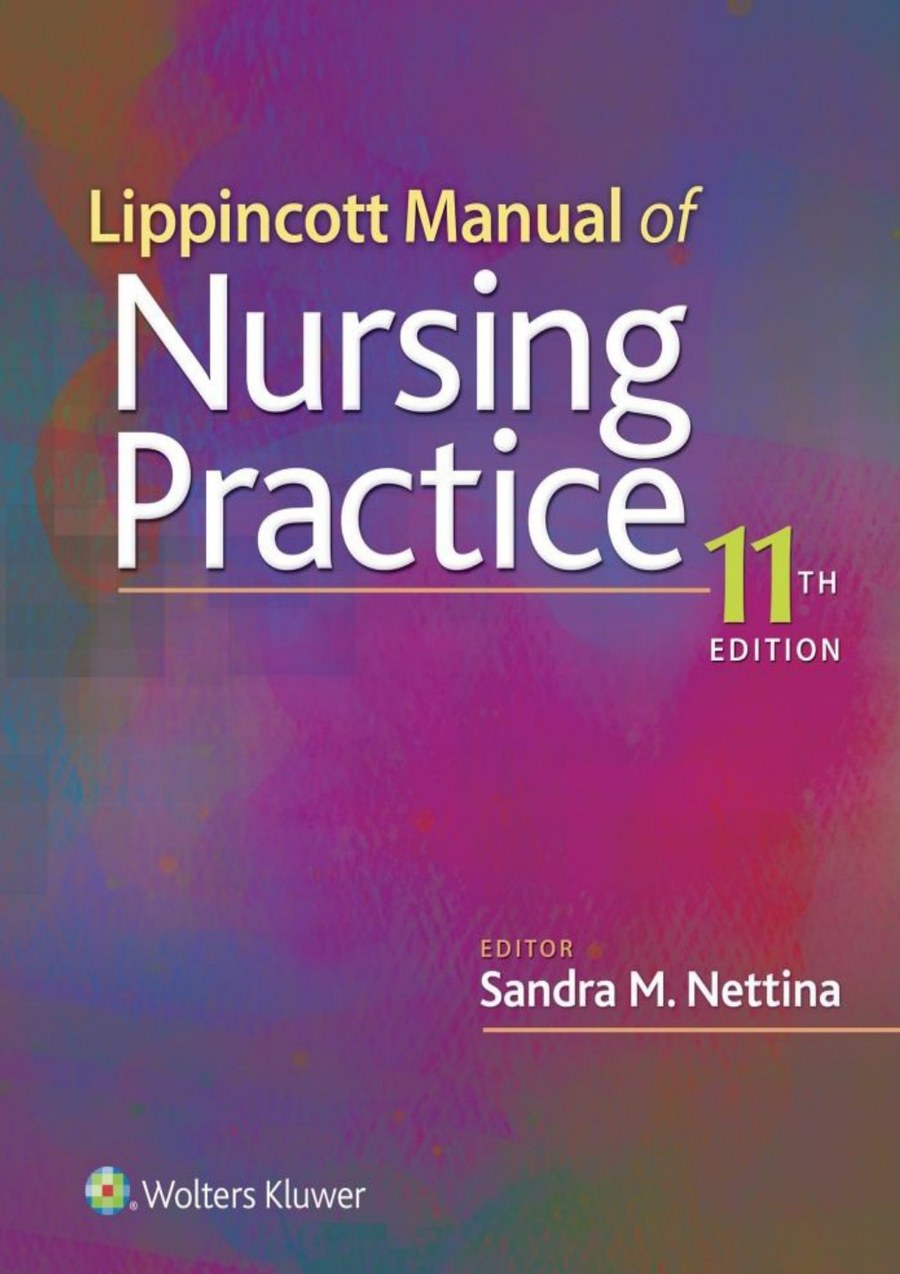
Lippincott Manual of Nursing Practice Eleventh Edition Sandra M Nettina
Master clinical nursing across med-surg, maternal-neonatal, pediatrics, and psychiatry with Lippincott Manual of Nursing Practice, Eleventh Edition — the trusted point-of-care reference by Wolters Kluwer.
Want to preview before you buy? Click Request Free Sample and tell us which chapter or pages you’d like to see, along with your email address. We’ll send you those pages from the eBook so you can be sure it’s the right one before buying.
- Instant download & lifetime access Available as soon as your payment is confirmed. Your download link is also sent to the email address you provide at checkout, and you can download your purchased eBook anytime from My Account → Downloads with unlimited downloads. An account is created automatically using the same email address.
- Own your eBook Receive the available PDF/EPUB file directly after purchase. No rental or temporary access — download and keep your eBook for personal use with lifetime access.
- Full refund guarantee If the eBook you receive does not match the details and description provided on the product page, contact [email protected] and we’ll issue a full refund within 24 hours.
- Secure payment through PayPal Pay securely by debit or credit card or with your PayPal account. Your card details are processed by PayPal and are never stored on our site.
$23.99$40.00
The Challenge It Addresses
Every shift in acute care, community health, or long-term nursing presents a cascade of clinical decisions — many of which must be made in seconds. Nursing students and practicing registered nurses (RNs) face the same core challenge: how to access authoritative, evidence-based guidance on assessment, diagnosis, and intervention without wading through dense textbooks or outdated references. The Lippincott Manual of Nursing Practice, Eleventh Edition directly addresses this problem by delivering the full scope of bedside-ready knowledge in a streamlined, quick-access format.
This manual acts as the bridge between classroom theory and real-world patient care. Instead of memorizing protocols, you gain a trusted reference that provides the essential steps, rationales, and nursing considerations for hundreds of conditions — from common medical-surgical problems to critical maternal-neonatal and pediatric emergencies.
Inside Lippincott Manual of Nursing Practice Eleventh Edition Sandra M Nettina: A Full Overview
The Lippincott Manual of Nursing Practice is a comprehensive clinical reference text designed for both nursing students and experienced RNs. Published by Wolters Kluwer in 2019 as the Eleventh Edition, this volume represents decades of cumulative nursing expertise, updated to reflect current evidence-based guidelines and practice standards.
Under the editorial leadership of Sandra M. Nettina, MSN, APRN, BC, ANP, the manual covers the full spectrum of nursing care: medical-surgical, maternal-neonatal, pediatric, psychiatric, and emergency nursing. Its hallmark is the concise outline format that prioritizes speed of access — each disorder includes definition, etiology, assessment (subjective and objective), diagnostic findings, nursing diagnoses, interventions, and patient education. This structure mirrors the nursing process itself, making it an intuitive tool for both learning and point-of-care reference.
Who Will Benefit Most
This title is purpose-built for three primary audiences, each of whom will find immediate value in its pages.
Nursing Students (BSN, ADN, and accelerated programs) can use the manual as a core companion for clinical rotations. The outline format simplifies complex pathophysiology into manageable steps, and the nursing diagnosis sections align directly with care-plan assignments. When a student needs to understand the nursing management of, for example, a patient with acute pancreatitis or preeclampsia, this book delivers the essentials in under ten minutes.
New Graduate Nurses and RNs transitioning to a new specialty will find the manual indispensable during orientation. The consistent format across all body systems reduces cognitive load, allowing the nurse to focus on direct patient care while verifying key protocols. The inclusion of pediatric, maternal-neonatal, and psychiatric sections means a single manual covers the breadth of generalist practice — no need to carry separate specialty references.
Experienced RNs and Nurse Educators benefit from the updated content on pharmacology, infection control, and evidence-based nursing interventions. The manual serves as a rapid refresher for less frequently encountered conditions and as a teaching resource for precepting students or new hires.
Skills You Will Gain
The Lippincott Manual of Nursing Practice, Eleventh Edition equips you with actionable knowledge across every major patient-care domain. Here is a structured breakdown of what you will master:
- Comprehensive Nursing Process Application — How to systematically apply assessment, diagnosis, planning, implementation, and evaluation to any clinical scenario, from stable chronic conditions to acute decompensation.
- Medical-Surgical Nursing Essentials — Detailed management of cardiovascular, respiratory, gastrointestinal, neurological, musculoskeletal, renal, endocrine, and integumentary disorders, including pre- and postoperative care.
- Maternal-Neonatal Care Protocols — Antepartum, intrapartum, and postpartum nursing care, plus neonatal assessment, resuscitation, and management of common newborn complications.
- Pediatric Nursing Interventions — Age-specific assessment techniques, growth and development milestones, immunization schedules, and management of common pediatric illnesses and injuries.
- Psychiatric and Mental Health Nursing — Therapeutic communication, crisis intervention, management of mood disorders, anxiety disorders, psychosis, substance use disorders, and eating disorders.
- Emergency and Critical Care Nursing — Triage principles, airway management, shock resuscitation, trauma nursing, cardiac arrest protocols, and disaster preparedness.
- Pharmacology and Medication Administration — Drug classifications, mechanisms of action, nursing implications, adverse effects monitoring, and safe administration practices across all age groups.
- Diagnostic Testing and Laboratory Interpretation — Normal values, indications for common tests, nursing responsibilities before and after procedures, and how to recognize critical results.
- Patient Education and Discharge Planning — Effective teaching strategies for diverse populations, self-care instructions for chronic disease management, and coordination of home health services.
- Legal and Ethical Dimensions of Nursing — Informed consent, advance directives, confidentiality (HIPAA), mandatory reporting, and ethical decision-making frameworks for end-of-life care and resource allocation.
Why This Book Stands Out
When choosing a nursing reference, three alternatives dominate the market: Brunner & Suddarth’s Textbook of Medical-Surgical Nursing, Ignatavicius Medical-Surgical Nursing, and the Nursing2025 Drug Handbook. The Lippincott Manual distinguishes itself by combining the breadth of a textbook with the portability of a handbook, while maintaining a level of clinical detail that drug guides cannot provide.
Unlike the multi-volume textbooks, the Lippincott Manual covers all specialties — med-surg, maternal-neonatal, pediatrics, psychiatric, and emergency — in a single volume. This eliminates the need to purchase separate references for each rotation. The outline format also allows faster information retrieval: a nurse looking for the management of diabetic ketoacidosis can find the relevant subsection within 30 seconds, versus minutes of scanning narrative paragraphs in traditional textbooks.
Competing references such as Mosby’s Manual of Diagnostic and Laboratory Tests cover only one aspect of care. The Lippincott Manual integrates diagnostics, pharmacology, nursing interventions, and patient teaching into each disorder entry, providing a truly holistic point-of-care tool. For the RN who values efficiency without sacrificing depth, this manual is the superior choice.
Author & Publisher Credentials
Sandra M. Nettina, MSN, APRN, BC, ANP, brings over three decades of advanced practice nursing experience to this edition. As an adult nurse practitioner and educator, she has shaped the clinical training of thousands of nurses. Her editorial leadership ensures that every entry reflects current evidence-based practice, not outdated tradition.
Published by Wolters Kluwer — a global leader in health science information — the Lippincott Manual of Nursing Practice, Eleventh Edition benefits from rigorous peer review, professional indexing, and compliance with the highest editorial standards. Wolters Kluwer’s commitment to accuracy is evident in the detailed references, clinical pathways, and standardized nursing language used throughout the text.
This combination of expert authorship and institutional credibility places the manual among the most trusted resources in nursing education and clinical practice. It is the type of reference that preceptors recommend to orientees and that students keep on their shelves after graduation.
Our Verdict
For nursing students and practicing RNs, the answer is a definitive yes. The Eleventh Edition offers significant value over its predecessors, with updated content on opioid safety, infection prevention, and the latest pharmacologic agents. The book’s durability — both physical and intellectual — makes it a long-term investment rather than a perishable semester purchase.
From a cost-per-use perspective, this manual is among the most economical nursing references available. Students who buy it for their first clinical rotation can rely on it through graduation and into their first year of practice. Experienced nurses will find it a reliable backup for less common conditions and a teaching tool for precepting.
The only scenario where this manual may not be the first choice is for nurses practicing in a single, highly specialized field such as pediatric oncology critical care — those clinicians may prefer a sub-specialty text. However, for the vast majority of generalist RNs and BSN students, the Lippincott Manual of Nursing Practice remains the gold standard.
Start Reading Lippincott Manual of Nursing Practice Eleventh Edition Sandra M Nettina Today
Whether you are a nursing student preparing for NCLEX, a new graduate entering your first med-surg unit, or an experienced RN seeking a reliable point-of-care reference, the Lippincott Manual of Nursing Practice, Eleventh Edition delivers the comprehensive, evidence-based guidance you need — exactly when you need it. With the authority of Sandra M. Nettina and the backing of Wolters Kluwer, this is the reference you will reach for shift after shift. Order your digital copy today and equip yourself with the most trusted manual in nursing.
Related products

Davis’s Comprehensive Handbook of Laboratory & Diagnostic Tests, 8th Edition
$18.00Master every lab and diagnostic test with nursing implications you can trust. The 8th edition of Davis’s Comprehensive Handbook is your pocket-sized guide to accurate interpretation and safe patient care.
$33.00-
Farquharson’s Textbook of Operative General Surgery 11th Ed
$40.99Master operative surgery with the Eleventh Edition of Farquharson’s essential textbook for surgical trainees, featuring 490 color illustrations and expert guidance.
$91.00 -
Advanced Practice Nursing in the Care of Older Adults – 2nd Edition
$34.99Evidence-based guide for APRNs covering healthy aging, comprehensive geriatric assessment, and symptom management in older adults. 2nd Edition.
$74.00 -
Antibiotic Drug Resistance (1st ed.)
$64.99Comprehensive guide to antibiotic drug resistance mechanisms, clinical impact, and solutions. Ideal for researchers and clinicians. Order now.
$185.00 -
Handbook of Forensic Drug Analysis – Comprehensive Chemical Reference
$13.99Get the essential Handbook of Forensic Drug Analysis, the definitive chemical reference for identifying and analyzing illicit substances in forensic labs.
$25.00 -
Child and Adolescent Mental Health Screening, Evidence-Based Assessment, Intervention, and Health Promotion, 3rd Edition
$30.99The essential evidence-based guide for child and adolescent mental health screening, assessment, and intervention—updated third edition with practical tools and KySS framework.
$65.00 -
Medication Fact Book for Psychiatric Practice, Fifth Edition
$14.99The Medication Fact Book for Psychiatric Practice, Fifth Edition: the essential, portable reference for dosing, costs, and side effects of common psychotropic drugs.
$29.00 -
Neuroanatomy: An Illustrated Colour Text 6th Edition
$19.99Master neuroanatomy with this visual, concise Sixth Edition by Crossman & Neary. Includes enhanced eBook with bonus figures and self-assessment.
$35.00