save
$23.01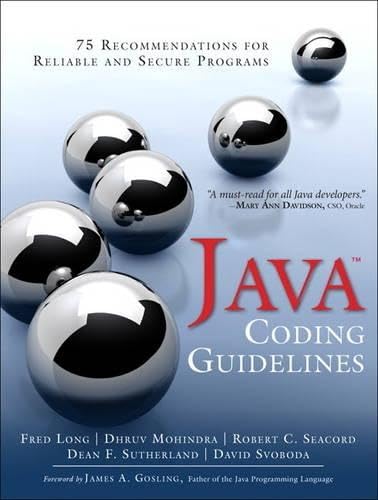
Java Coding Guidelines: 75 Recommendations for Secure Code
Master secure Java coding with 75 actionable guidelines from CERT experts. Essential for developers to prevent vulnerabilities and write reliable code. Get your copy now!
Want to preview before you buy? Click Request Free Sample and tell us which chapter or pages you’d like to see, along with your email address. We’ll send you those pages from the eBook so you can be sure it’s the right one before buying.
- Instant download & lifetime access Available as soon as your payment is confirmed. Your download link is also sent to the email address you provide at checkout, and you can download your purchased eBook anytime from My Account → Downloads with unlimited downloads. An account is created automatically using the same email address.
- Own your eBook Receive the available PDF/EPUB file directly after purchase. No rental or temporary access — download and keep your eBook for personal use with lifetime access.
- Full refund guarantee If the eBook you receive does not match the details and description provided on the product page, contact [email protected] and we’ll issue a full refund within 24 hours.
- Secure payment through PayPal Pay securely by debit or credit card or with your PayPal account. Your card details are processed by PayPal and are never stored on our site.
$22.99$46.00
Why This Book Matters
Every Java developer faces the challenge of writing code that is not only functional but also secure, reliable, and maintainable. In today’s threat landscape, a single vulnerability can compromise an entire system. This book addresses the critical gap between writing code that works and writing code that withstands attacks, performs consistently, and can be maintained over time.
Java Coding Guidelines delivers 75 actionable recommendations drawn from real-world experience and industry best practices. It targets the most common pitfalls in Java development—from input validation and concurrency issues to serialization and exception handling—providing clear, concise guidance that you can apply immediately.
About Java Coding Guidelines: 75 Recommendations for Secure Code
Java Coding Guidelines: 75 Recommendations for Reliable and Secure Programs is a focused reference work authored by a team of security and software engineering experts from the Software Engineering Institute (SEI) at Carnegie Mellon University. Published by Addison-Wesley in 2013, this book distills decades of collective expertise into a compact set of rules that every Java developer should know.
The guidelines are organized into categories such as security, reliability, and maintainability, making it easy to find relevant advice for specific coding scenarios. Each recommendation includes a rationale, example code snippets (both noncompliant and compliant), and references to authoritative sources like the CERT Oracle Secure Coding Standard for Java.
This is not a beginner’s tutorial—it assumes familiarity with Java syntax and common APIs. Instead, it serves as a practical checklist and reference for developers who want to elevate their code quality and security posture.
Who Will Benefit Most
This book is essential for Java developers at all levels who write production code and care about its security and reliability. Specifically, it is invaluable for:
- Software engineers building enterprise applications that handle sensitive data
- Security analysts and penetration testers who need to understand common Java vulnerabilities
- Team leads and architects responsible for code review standards and secure development lifecycles
- Students in advanced computer science or software engineering courses focusing on secure coding
- Anyone preparing for certification exams that cover Java security best practices
If you write Java code that runs on servers, in the cloud, or in embedded systems, this book will help you avoid the mistakes that lead to costly breaches and outages.
Inside: What You Will Master
Java Coding Guidelines covers a wide range of topics. Here are seven critical areas where the recommendations will immediately improve your code:
- Input validation and sanitization – Prevent injection attacks (SQL, LDAP, command) by treating all external input as untrusted.
- Secure object serialization – Avoid deserialization vulnerabilities that can lead to remote code execution.
- Concurrency and thread safety – Eliminate race conditions, deadlocks, and inconsistent state in multithreaded applications.
- Exception handling – Use exceptions properly to avoid information leaks and ensure robust error recovery.
- Access control and permissions – Implement the principle of least privilege in Java security manager environments.
- Logging and auditing – Log security-relevant events without exposing sensitive data.
- Code maintainability – Write clear, self-documenting code that reduces the risk of introducing vulnerabilities during maintenance.
Each guideline is accompanied by concrete examples that show the difference between vulnerable and secure code, making the lessons immediately applicable.
Why Choose This Edition
Many Java security books exist, but Java Coding Guidelines stands out for its practical, rule-based approach. Unlike general Java books that cover security as an afterthought, this book focuses exclusively on actionable recommendations. It is peer-reviewed by the CERT coordination center, ensuring that every guideline is backed by real incident data and expert consensus.
Compared to online resources like OWASP, which are broad but often shallow, this book provides depth and consistency across 75 rules that are directly applicable to Java. It also complements classic references like Effective Java by focusing specifically on security and reliability, areas where even experienced developers frequently make mistakes.
The book’s organization by category and its cross-references to the CERT standard make it an ideal companion for code reviews and training programs. No other single volume delivers this level of targeted, authoritative guidance for Java secure coding.
Who Wrote This Book
The authors of Java Coding Guidelines are leading experts in software security. Fred Long, Dhruv Mohindra, Robert C. Seacord, Dean F. Sutherland, and David Svoboda are all affiliated with the Software Engineering Institute (SEI) at Carnegie Mellon University, a world-renowned center for cybersecurity research. Robert C. Seacord is the author of the widely used Secure Coding in C and Java and a senior researcher at SEI. The team’s collective experience includes developing the CERT Secure Coding Standards, which are used by organizations worldwide.
Addison-Wesley, the publisher, is a respected imprint of Pearson Education known for high-quality technical books. Their editorial process ensures accuracy and relevance. While this edition was published in 2013, the fundamental principles of secure coding remain timeless, and the guidelines are still taught in modern secure development lifecycles.
Our Verdict
Absolutely. For any Java developer who takes security seriously, this book is a must-have reference. Its 75 recommendations are not theoretical—they are distilled from real-world vulnerabilities and coding errors that have caused major security incidents. The concise format (under 300 pages) means you can read it in a weekend and keep it on your desk for daily use.
The only limitation is that it does not cover the latest Java versions (e.g., modules in Java 9+), but the core principles of secure coding—input validation, proper exception handling, concurrency safety—are language-version independent. Combined with online resources for newer APIs, this book provides a foundation that will serve you for years.
We rate it 5 out of 5 for developers who want to write code that is not only functional but also resilient against attacks.
Add Java Coding Guidelines: 75 Recommendations for Secure Code to Your Library
Stop guessing whether your code is secure. With Java Coding Guidelines, you get a proven, peer-reviewed set of rules that will immediately improve the reliability and security of your Java applications. Whether you are a professional developer, a team lead, or a student preparing for a career in software engineering, this ebook is your shortcut to writing code that stands up to scrutiny.
Add to cart now and start applying these 75 expert recommendations. Your future self—and your users—will thank you.
Related products

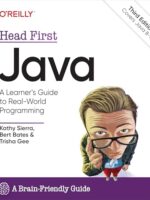
Head First Java (3rd Edition) – A Brain-Friendly Guide
$22.99Master Java with the engaging, brain-friendly 3rd edition of Head First Java. Perfect for beginners and intermediate learners — start coding today!
$45.00-
Superstring Theory Green Schwarz Witten Vol 2 25th Anniversary
$18.99Get the definitive 25th Anniversary Edition of Superstring Theory Volume 2 by Green, Schwarz, and Witten — the essential resource for loop amplitudes and anomalies.
$53.00 -
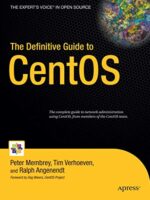
The Definitive Guide to CentOS
$9.00The first definitive reference for CentOS, this guide provides hands-on network administration tutorials from members of the CentOS team.
$15.00 -
Ethical Hacking With Kali Linux: Learn Fast How To Hack Like a Pro
$12.00Master ethical hacking with Kali Linux — learn wireless attacks, penetration testing, and real-world exploits in one practical guide.
$31.00 -
Building Machine Learning Powered Applications – Hands-On ML Deployment Guide
$18.99Master the end-to-end process of building and deploying ML-powered applications with this practical O’Reilly guide by Emmanuel Ameisen.
$36.00 -
Big C++ 2nd Edition by Horstmann & Budd
$8.99Get the digital Big C++ 2nd Edition by Horstmann & Budd – the definitive guide to mastering C++ for students and professionals.
$15.00 -
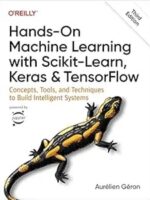
Hands-On Machine Learning with Scikit-Learn, Keras, and TensorFlow (3rd Edition)
$19.00Master machine learning and deep learning with Scikit-Learn, Keras, and TensorFlow in this hands-on, project-driven third edition from O’Reilly. Build real systems now.
$45.00 -
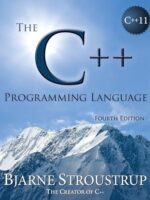
The C++ Programming Language, Fourth Edition
$26.99The definitive C++ reference by creator Bjarne Stroustrup, Fourth Edition. Master the language and standard library. Order now.
$64.00