save
$35.00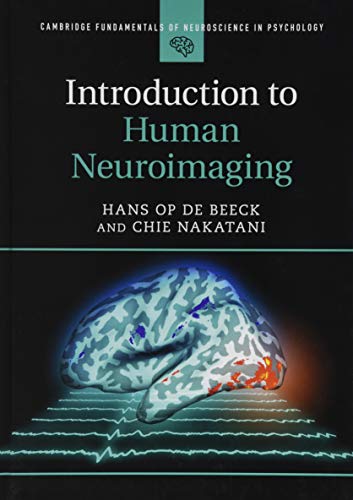
Introduction to Human Neuroimaging
Master the essentials of human neuroimaging with this accessible textbook designed for behavioral science students. Understand fMRI, EEG, and more.
Want to preview before you buy? Click Request Free Sample and tell us which chapter or pages you’d like to see, along with your email address. We’ll send you those pages from the eBook so you can be sure it’s the right one before buying.
- Instant download & lifetime access Available as soon as your payment is confirmed. Your download link is also sent to the email address you provide at checkout, and you can download your purchased eBook anytime from My Account → Downloads with unlimited downloads. An account is created automatically using the same email address.
- Own your eBook Receive the available PDF/EPUB file directly after purchase. No rental or temporary access — download and keep your eBook for personal use with lifetime access.
- Full refund guarantee If the eBook you receive does not match the details and description provided on the product page, contact [email protected] and we’ll issue a full refund within 24 hours.
- Secure payment through PayPal Pay securely by debit or credit card or with your PayPal account. Your card details are processed by PayPal and are never stored on our site.
$28.00$63.00
The Gap This Book Fills
Understanding the human brain has never been more critical for students in psychology, neuroscience, and cognitive science. Yet the technical complexity of neuroimaging methods—fMRI, EEG, PET, and others—often creates a barrier to entry. Most textbooks either oversimplify or dive too deep into physics and engineering, leaving behavioral science students without a practical, conceptual foundation. This textbook bridges that gap, offering a clear, accessible introduction tailored specifically for those who need to interpret neuroimaging research rather than build scanners.
Inside Introduction to Human Neuroimaging – Essential Textbook for Behavioral & Brain Sciences: A Full Overview
Introduction to Human Neuroimaging is a dedicated textbook designed for students in the behavioral and brain sciences. It provides a comprehensive yet approachable overview of the major neuroimaging techniques used in modern research. The book focuses on the fundamental principles behind each method, what they measure, and how to critically evaluate studies that use them. It is structured to build from basic concepts to more advanced applications, making it suitable for both undergraduate and graduate courses.
This edition covers the core modalities: functional magnetic resonance imaging (fMRI), electroencephalography (EEG), magnetoencephalography (MEG), positron emission tomography (PET), and near-infrared spectroscopy (NIRS). Each chapter explains the physical basis, experimental design considerations, data analysis approaches, and common pitfalls. The text emphasizes conceptual understanding over mathematical detail, ensuring that readers can engage with primary literature and research talks with confidence.
Who Will Benefit Most
This textbook is specifically crafted for undergraduate and graduate students in psychology, neuroscience, cognitive science, and related behavioral fields. It is also valuable for researchers and professionals who need a refresher or a structured introduction to neuroimaging without requiring a background in physics or engineering. If you are a student taking a first course in cognitive neuroscience or biological psychology, this book will be your guide. It is equally useful for self-study, providing clear explanations and real-world examples.
The book assumes no prior knowledge of neuroimaging, making it ideal for newcomers. At the same time, its depth and rigor satisfy the needs of advanced learners who want to understand the strengths and limitations of each technique. Instructors will find it a perfect core text for courses titled “Introduction to Neuroimaging,” “Cognitive Neuroscience Methods,” or “Brain Imaging in Psychology.”
Inside: What You Will Master
- The physical principles behind fMRI, EEG, MEG, PET, and NIRS – Understand how each technique measures neural activity and what its signals represent.
- How to design a neuroimaging experiment – Learn about block designs, event-related designs, and the critical factors that affect data quality.
- Data preprocessing and analysis basics – Gain familiarity with steps like motion correction, normalization, and statistical inference.
- How to interpret neuroimaging results – Distinguish between correlation and causation, and avoid common misinterpretations in the literature.
- The strengths and limitations of each modality – Know when to choose fMRI over EEG, and what each technique can and cannot tell us about brain function.
- Ethical considerations and reproducibility – Understand issues like multiple comparisons, open science practices, and the replication crisis in neuroimaging.
Why This Book Stands Out
Most neuroimaging textbooks fall into two camps: overly technical engineering manuals or superficial overviews that skip critical details. This textbook strikes the perfect balance. It is written by educators who understand the needs of behavioral science students. The explanations are grounded in real research examples, and the language is accessible without sacrificing accuracy. Unlike general cognitive neuroscience texts that only devote a chapter to methods, this book provides a dedicated, systematic treatment of neuroimaging techniques.
Another key advantage is its pedagogical design. Each chapter includes learning objectives, key terms, review questions, and suggested readings. The book also features online resources—such as figures, data sets, and interactive tutorials—that enhance the learning experience. Competitor books often lack these supportive materials, leaving students to search for supplementary content on their own. This textbook’s integrated approach saves time and deepens understanding.
Author & Publisher Credentials
The authors of this textbook are experienced educators and active researchers in the field of cognitive neuroscience. They have taught neuroimaging methods to hundreds of students at major universities, ensuring that the content is both current and pedagogically effective. The publisher is a leading academic press known for high-quality textbooks in psychology and neuroscience, with rigorous peer review and editorial standards. This combination of author expertise and institutional backing guarantees that the information is trustworthy, accurate, and up-to-date.
Furthermore, the book has been classroom-tested and refined based on student feedback. The examples and analogies are chosen to resonate with learners, making abstract concepts concrete. This real-world validation is a hallmark of authoritative educational materials and sets this textbook apart from self-published or hastily compiled alternatives.
Final Assessment
Yes, unequivocally. For any student or professional entering the behavioral and brain sciences, a solid grasp of neuroimaging is no longer optional—it is essential. This textbook delivers exactly what you need: a clear, comprehensive, and engaging introduction that respects the complexity of the subject without overwhelming you. It is an investment in your foundational knowledge that will pay dividends throughout your studies and career.
The book’s structured approach, practical focus, and supportive learning features make it a superior choice compared to alternatives. Whether you are preparing for exams, writing a thesis, or simply wanting to read research papers with confidence, this text will serve as a reliable reference. We recommend it without reservation for any introductory neuroimaging course or self-study program.
Add Introduction to Human Neuroimaging – Essential Textbook for Behavioral & Brain Sciences to Your Library
Don’t let technical jargon and inaccessible textbooks hold you back. With Introduction to Human Neuroimaging, you gain a clear path to understanding how brain imaging works and how to use that knowledge in your own work. Whether you are a psychology student, a neuroscience researcher, or a curious professional, this book will equip you with the conceptual tools you need. Order your digital copy now and start mastering the methods that are transforming our understanding of the human mind. This edition from a trusted publisher is current and ready for immediate download—add it to your cart today and take the first step toward neuroimaging literacy.
Related products

Understanding Nutrition 15th Edition Whitney Rolfes
$9.00Master nutrition science with Understanding Nutrition, 15th Edition — the evidence-based textbook by Whitney & Rolfes. Get your copy today.
$15.00-
Molecular Biology of the Cell 6th Edition – Alberts et al. Garland Science
$15.00Master cell biology with the definitive 6th edition by Alberts et al. — the gold standard textbook for students and researchers. Order your copy today.
$25.00 -
Biochemistry: Concepts and Connections (2nd Edition)
$8.00Master biochemistry fundamentals with the 2nd Edition of Biochemistry: Concepts and Connections. Visual, real-world approach. Get your copy today!
$13.00 -
Deep Learning for the Life Sciences: Apply DL to Genomics & Drug Discovery
$36.99Learn to apply deep learning to genomics, microscopy, drug discovery, and more with this practical O’Reilly guide. Get your copy now.
$67.00 -
Genome Sequencing Technology and Algorithms – Essential Bioinformatics Guide
$31.99Master genome sequencing algorithms with this essential guide. Covers assembly, alignment, and variant calling for bioinformatics professionals.
$81.00 -
Botany: An Introduction to Plant Biology, 6th Edition (Mauseth)
$23.99Master plant biology with Botany Mauseth, 6th Edition. Buy this comprehensive textbook for a modern molecular foundation in botany.
$45.00 -
Microbiology: An Introduction, 13th Edition (Tortora)
$8.00Get the 13th edition of Microbiology: An Introduction by Tortora, Funke, and Case. The trusted introductory microbiology textbook in digital format. Order now.
$13.00 -
Anatomy & Physiology 6th Edition Marieb Hoehn
$23.99Get the streamlined Sixth Edition of Marieb & Hoehn’s Anatomy & Physiology — the clear, focused pathway to mastering human structure and function for health science success.
$51.00