save
$38.01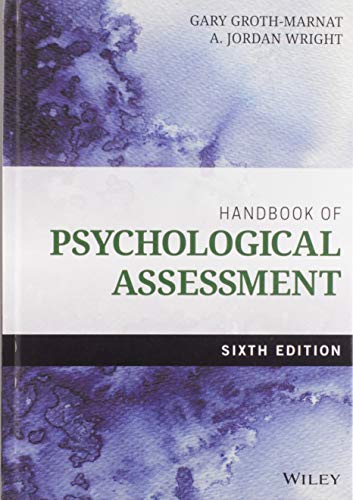
Handbook of Psychological Assessment 6th Edition
Get the Handbook of Psychological Assessment, Sixth Edition — the definitive 928-page guide to evidence-based assessment practice. Order now.
$20.99$59.00
Why This Book Matters
Psychological assessment is a high-stakes discipline. A single diagnostic conclusion can shape a treatment plan, a forensic outcome, or an educational placement — and the difference between a valid result and a costly error often comes down to the clinician’s mastery of the instruments they choose. For graduate students, practicing psychologists, and mental health professionals, staying current with the field’s evolving methods is not optional; it is an ethical responsibility.
Yet the gap between classroom theory and real-world administration remains the most persistent challenge in clinical training. Handbook of Psychological Assessment, Sixth Edition directly confronts this problem by translating complex psychometric principles into actionable clinical practice. It is the reference that bridges what you learned in coursework with what you must execute in the intake room, the courtroom, and the clinic.
Inside Handbook of Psychological Assessment 6th Edition PDF: A Full Overview
Handbook of Psychological Assessment is the definitive clinical reference for the principles, methods, and instruments of psychological testing. Authored by Gary Groth-Marnat and A. Jordan Wright, this Sixth Edition (2016) from John Wiley & Sons, Inc. offers 928 pages of systematic guidance across the entire assessment process — from referral and data collection to interpretation, report writing, and feedback delivery.
The book is organized around a structured framework that mirrors the actual workflow of a psychological evaluation. It covers the foundational logic of assessment, the mechanics of test selection, and the integration of results into coherent, actionable conclusions. Rather than presenting tests in isolation, the authors emphasize the process of assessment — how each instrument contributes to a comprehensive understanding of the individual.
This is not a superficial survey. The Handbook delivers thorough coverage of the most commonly used instruments in clinical practice, including the WAIS-IV, WISC-V, MMPI-2-RF, Rorschach, and neuropsychological batteries, with a consistent emphasis on evidence-based interpretation. It is a working clinician’s manual, not an academic survey.
Who Should Read This Book?
This text is the standard-bearer for graduate training programs in clinical, counseling, and school psychology. If you are enrolled in a doctoral or master’s program, this is the book your professors expect you to master before you sit for comprehensive exams or practicum placements. It provides the conceptual backbone for coursework in intellectual assessment, personality assessment, and psychodiagnostics.
Practicing psychologists will find it equally indispensable as a refresher and a resource for unfamiliar instruments. When a referral demands a test you have not administered in years, the Handbook’s structured approach ensures you can re-familiarize yourself quickly and accurately. For professionals preparing for licensure or board certification, the book serves as a comprehensive review of the assessment competencies you will be expected to demonstrate.
Beyond psychology proper, professionals in psychiatry, social work, rehabilitation counseling, and special education will benefit from the clear explanations of what psychological tests measure, how results are interpreted, and what their limitations are. If your work involves reading, commissioning, or applying psychological evaluations, this book will make you a far more informed consumer of assessment data.
Key Takeaways
- The complete assessment process: how to structure an evaluation from referral question through final report, including how to select tests that answer the specific referral question rather than defaulting to a standard battery.
- Advanced interpretation of the WAIS-IV and WISC-V: moving beyond simple IQ scores to analyze cognitive profiles, identify patterns of strength and weakness, and connect findings to functional outcomes.
- Evidence-based use of the MMPI-2-RF: understanding the restructured clinical scales, interpreting validity scales to detect response bias, and integrating results with other data sources.
- Integrating neuropsychological screening into general practice: knowing when to refer for full neuropsychological evaluation and how to interpret common screening instruments.
- Principles of therapeutic assessment: how to use the assessment process itself as an intervention, providing feedback that clients can understand and use.
- Writing effective psychological reports: structuring findings, avoiding common pitfalls, and communicating results to referral sources, clients, and other stakeholders clearly.
- Ethical and multicultural considerations: addressing diversity in assessment, understanding test bias, and applying the APA Ethics Code to real-world assessment dilemmas.
Why Choose This Edition
Competing texts tend to fall into two camps: encyclopedic references that catalog tests without teaching process, and slim primers that offer process without depth. The Handbook uniquely combines both. Its structured framework for the assessment process — a hallmark of the Groth-Marnat approach — is consistently applied across every chapter, so you learn a repeatable method rather than a scattered set of facts.
Where other books treat each test as an isolated topic, the Handbook emphasizes integration across instruments. It teaches you to synthesize data from cognitive, personality, and behavioral measures into a coherent case conceptualization — the skill that most distinguishes expert clinicians from novices. The Sixth Edition, updated by A. Jordan Wright, brings contemporary research and updated test versions into the framework, ensuring the content reflects current practice standards.
The book’s structure is also a practical advantage. Each chapter follows a predictable format: background, administration guidelines, interpretation strategies, and case examples. This consistency makes the book genuinely usable in practice — you can locate a specific topic and immediately find the practical guidance you need, whether you are preparing for a session or double-checking an interpretation.
Author & Publisher Credentials
Gary Groth-Marnat was a distinguished professor of psychology whose work shaped the field of psychological assessment for decades. His framework for the assessment process, refined through multiple editions, has been adopted by training programs across the United States and internationally. A. Jordan Wright, who joined as co-author for the Sixth Edition, is a clinical psychologist and scholar who has continued to advance the book’s evidence-based approach while updating it for contemporary practice.
The publisher, John Wiley & Sons, Inc., is one of the most respected names in academic and professional publishing. Wiley’s peer review and editorial standards are rigorous, and their psychology catalog is among the most widely adopted in university programs worldwide. The fact that this book has reached a Sixth Edition — a milestone very few textbooks achieve — is itself evidence of its sustained relevance and the trust the academic community has placed in it.
Final Assessment
Unequivocally, yes. For graduate students, this is not a discretionary purchase — it is a core text that will be used across multiple courses and throughout your career. The cost of the book is trivial compared to the cost of a single diagnostic error made because you lacked a reliable reference. For practicing professionals, it functions as a form of liability protection: having a current, authoritative source at hand helps ensure your interpretations align with the best available evidence.
The Sixth Edition’s updates to reflect current test versions and contemporary research mean that relying on an older edition — or on notes from a course taken years ago — is a genuine professional risk. Assessment standards evolve, and your knowledge must evolve with them. This edition represents the current state of the art in psychological assessment practice.
The structure of the book also means it will be used, not shelved. Its practical organization, case-based illustrations, and clear interpretation guidance make it a working reference you will return to repeatedly. Few textbooks earn their place on a professional’s desk; this one does.
Add Handbook of Psychological Assessment 6th Edition PDF to Your Library
Whether you are a graduate student building your clinical foundation or a practicing psychologist sharpening your assessment skills, this is the one reference that will serve you across your entire career. The 928-page Sixth Edition delivers the comprehensive, evidence-based guidance you need to conduct assessments with confidence and defend your conclusions with authority.
This is the current edition — the version your professors and colleagues are using. Don’t rely on outdated information or borrowed copies. Get your copy today and ensure your assessment practice is built on the most current, authoritative foundation available. With John Wiley & Sons’ reputation behind it and a Sixth Edition pedigree, this is an investment in your professional competence that will pay dividends for years to come.
Related products

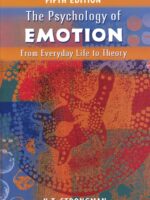
The Psychology of Emotion, 5th Edition – K.T. Strongman
$12.99Get the 5th edition of The Psychology of Emotion by K.T. Strongman — a comprehensive guide to emotion theories with everyday examples. Order your digital copy today.
$33.00-
General and Social Psychology by Robert H. Thouless – 2nd Edition
$19.99Secure your copy of the General and Social Psychology textbook by Robert H. Thouless, a classic for students of economics and social sciences.
$40.00 -
American Government 101: Everything You Need to Know About U.S. Politics
$14.99Master US politics with American Government 101 – the concise, engaging guide to elections, the Constitution, and how government works. Order now!
$44.00 -
Ethical Dilemmas and Decisions in Criminal Justice, 10th Edition
$22.99Master ethical decision-making in criminal justice with this comprehensive guide to real-world dilemmas in policing, courts, and corrections.
$64.00 -
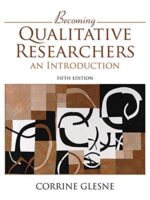
Becoming Qualitative Researchers: An Introduction (5th Edition) – Pearson eText
$12.00Master the fundamentals of qualitative research with this concise 5th edition guide—ideal for beginners. Get your copy and start your research journey today.
$20.00 -
Groups: Process and Practice 10th Edition – Group Counseling Text
$33.99Master group counseling with Corey & Corey’s 10th Edition – the definitive guide blending theory, ethics, and practical skills for students and professionals.
$107.00 -
Theories of Development: Concepts and Applications (6th Edition)
$12.99Get the 6th edition of Crain’s classic text covering 24 developmental theorists. Ideal for psychology students. Order your digital copy today!
$32.00 -
America the Anxious: How Our Pursuit of Happiness Is Creating a Nation of Nervous Wrecks
$23.99British journalist Ruth Whippman’s sharp, funny investigation into America’s happiness industry—and why relentlessly chasing happiness can make us more anxious.
$53.00