save
$64.01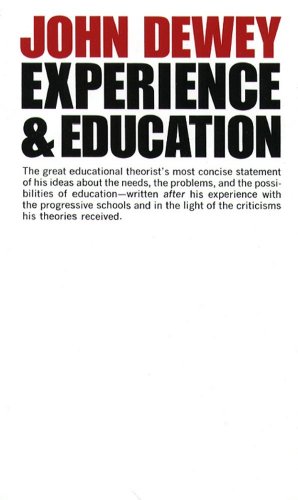
Experience and Education by John Dewey — Essential Educational Theory
Buy Experience and Education by John Dewey — the definitive concise statement on educational philosophy that bridges tradition and progressivism, essential for educators and students.
$29.99$94.00
The Gap This Book Fills
Education today is caught between two extremes: rigid, traditional methods that prioritize rote memorization over genuine understanding, and progressive, unstructured approaches that risk leaving learners without direction or foundational knowledge. Experience and Education tackles this dilemma head-on, offering a philosophical framework that bridges these opposing camps. John Dewey argues that the central challenge of education is not choosing between tradition and progressivism but designing experiences that are both meaningful and educative — a problem that remains as urgent in the 21st century as it was in 1938.
For educators, administrators, and policymakers struggling with curriculum design, student engagement, and assessment reform, Dewey’s concise analysis provides a timeless lens for evaluating any educational practice. This book does not prescribe specific techniques; instead, it equips readers with the critical thinking tools to judge whether any given experience truly educates or merely fills time.
About Experience and Education by John Dewey — Essential Educational Theory
Experience and Education is a philosophical treatise on the nature of learning, written by the preeminent American educational theorist John Dewey. Published in 1938 by Touchstone, this slim volume distills Dewey’s mature thinking on the relationship between experience and education into what many scholars consider his most accessible and powerful statement on the subject.
The book systematically dismantles the false dichotomy between “traditional” and “progressive” education, arguing that both approaches fail when they lack a coherent theory of experience. Dewey introduces two key principles — continuity and interaction — that together form the “experiential continuum.” Continuity means that every experience both draws from past experiences and influences future ones; interaction recognizes that experience arises from the transaction between an individual and their environment. When these principles guide educational design, learning becomes genuinely transformative.
Dewey does not offer a step-by-step curriculum but instead provides a rigorous philosophical foundation for evaluating educational practices. The text addresses the role of the teacher, the nature of freedom, the purpose of discipline, and the criteria for selecting worthwhile experiences. Its enduring relevance lies in its refusal to offer easy answers while equipping readers to ask better questions about what makes education truly educational.
Who Should Read This Book?
Experience and Education is essential reading for anyone who shapes learning environments — from classroom teachers to university professors, from curriculum designers to school administrators. Dewey’s ideas are foundational to modern educational theory, and this book provides the clearest entry point into his philosophy.
This text is particularly valuable for:
- Education students and scholars seeking a primary source that defines the experiential learning tradition
- K-12 teachers looking for a philosophical grounding to inform their instructional choices
- Graduate students in philosophy of education who need a concise, rigorous treatment of Dewey’s core ideas
- School leaders and policymakers evaluating curriculum frameworks or pedagogical reforms
- Progressive educators who want to move beyond slogans toward a defensible theory of practice
- Anyone skeptical of both traditional and trendy educational approaches and seeking a balanced, critical perspective
While the book assumes some familiarity with educational debates, Dewey’s prose is remarkably direct. Readers new to educational philosophy will find it challenging but rewarding, while seasoned scholars will appreciate the depth compressed into its brief chapters.
Inside: What You Will Master
Reading Experience and Education will fundamentally change how you think about teaching and learning. Here are the most important insights you will gain:
- The criteria for educative versus mis-educative experiences — not all experiences teach; some actually arrest or distort growth, and Dewey provides the tools to distinguish between them
- How the principle of continuity connects past, present, and future learning — every experience leaves a residue that shapes subsequent experiences, making the sequence of learning as important as any single lesson
- Why the interaction between the learner and their environment determines educational quality — neither the child nor the curriculum alone defines learning; it is the transaction between them that matters
- The proper role of the teacher in a democratic classroom — Dewey rejects both authoritarian instruction and laissez-faire facilitation, arguing for the teacher as a thoughtful designer of learning conditions
- How freedom and discipline coexist in genuine education — true freedom is not the absence of constraint but the intelligent control of one’s actions in pursuit of worthwhile ends
These principles are not abstract theories; they offer a practical framework for evaluating every educational decision, from lesson planning to school policy.
Why This Book Stands Out
No other text achieves what Dewey accomplishes in this slender volume. Experience and Education stands alone as the most concise, rigorous, and balanced statement of a philosophy that respects both the learner’s agency and the teacher’s expertise.
Compared to contemporary educational manifestos, Dewey’s book offers several distinct advantages. First, it avoids the polarizing rhetoric that characterizes much of today’s educational debate. Dewey does not caricature traditional education as oppressive nor progressive education as undisciplined; instead, he identifies the genuine strengths and weaknesses of both. Second, the book’s brevity — fewer than 100 pages — makes it accessible without sacrificing depth. Readers can absorb Dewey’s entire argument in a few hours and return to it repeatedly for insight.
Unlike later works on experiential learning (such as David Kolb’s model), Dewey’s original formulation remains grounded in a broader philosophical framework that connects education to democracy, inquiry, and human growth. Where other texts prescribe techniques, Dewey provides principles — making his work adaptable to any context, from early childhood classrooms to corporate training programs. This is why Experience and Education has remained in print for over eight decades and continues to appear on syllabi across disciplines.
Behind the Book
John Dewey (1859–1952) is widely regarded as the most influential American philosopher of education. A professor at the University of Chicago and later at Columbia University, Dewey produced a body of work that shaped not only educational theory but also psychology, philosophy, and political thought. His ideas underpin progressive education movements worldwide and continue to inform contemporary research on experiential learning, inquiry-based instruction, and democratic schooling.
Experience and Education represents Dewey’s mature thought, written after decades of engagement with educational practice. Unlike his earlier, more technical works, this book was deliberately crafted for a broad audience of educators — a fact that accounts for its clarity and enduring appeal. The publisher, Touchstone (an imprint of Simon & Schuster), has kept this edition continuously available since its original release, a testament to its lasting value.
This particular edition (ISBN 9781416587279) is the standard reference used in university courses and professional development programs. It includes Dewey’s complete original text without abridgment or commentary, allowing readers to engage directly with his arguments.
Our Verdict
Unequivocally, yes. Experience and Education is not merely worth reading — it is essential for anyone who takes education seriously. The book’s ideas have shaped how we understand learning for generations, and its insights remain fresh and challenging today.
What makes this book exceptional is its combination of brevity and depth. In fewer than 100 pages, Dewey provides a complete philosophical framework that readers can apply immediately to their own practice. Whether you are a student encountering Dewey for the first time or a veteran educator returning to his work, each reading reveals new layers of meaning. The principles of continuity and interaction alone are worth the price of the book — they offer a diagnostic tool for evaluating any educational experience, from a single lesson to an entire curriculum.
For the price of a digital copy, you gain access to one of the most cited and discussed texts in educational philosophy. This is not a book you read once and shelve; it is a resource you will return to throughout your career as you confront new challenges and questions about what it means to educate.
Download Experience and Education by John Dewey — Essential Educational Theory Now
If you are an educator, student, or lifelong learner seeking a deeper understanding of what makes education truly educational, Experience and Education by John Dewey is the foundational text you need. This Touchstone edition offers the complete, unabridged work — the same edition studied in universities and cited in scholarly work worldwide.
Add to cart today and join the generations of educators who have found in Dewey’s words a clear, principled framework for thinking about teaching and learning. Whether you are preparing for a graduate seminar, designing a curriculum, or simply questioning the purpose of education, this book will reward you with insights that last a lifetime.
Related products

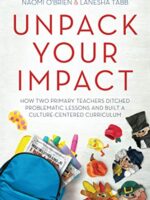
Unpack Your Impact: How Two Primary Teachers Ditched Problematic Lessons and Built a Culture-Centered Curriculum
$13.99Transform your primary social studies curriculum with this practical guide to building a culture-centered, inclusive classroom. Get Unpack Your Impact now.
$35.00-
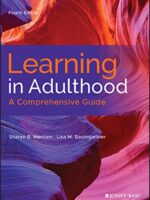
Learning in Adulthood: A Comprehensive Guide (4th Edition)
$21.99Get the definitive guide to adult learning theory and practice. Order the 4th edition of Learning in Adulthood today and advance your understanding.
$52.00 -
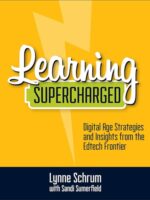
Learning Supercharged: Digital Age Strategies and Insights from the EdTech Frontier (First Edition)
$9.99Transform your classroom with innovative edtech strategies from Learning Supercharged. Buy the first edition now for actionable insights and real-world stories from educators.
$26.00 -
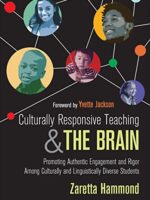
Culturally Responsive Teaching & The Brain: Engagement & Rigor
$11.99Transform your teaching with brain-based culturally responsive strategies. This book provides a framework for authentic engagement and rigor for diverse learners. Get ebook now.
$30.00 -
Action Research: A Guide for the Teacher Researcher 6th Edition
$16.99Action Research: A Guide for the Teacher Researcher 6th Edition gives K–12 educators a step-by-step framework to drive classroom improvement with proven methods.
$51.00 -
The Power of Place: Authentic Learning Through Place-Based Education
$8.00Transform your classroom with authentic place-based learning. This ASCD guide shows how to boost student agency and equity through community-connected education.
$13.00 -
Mentoring Teachers: Navigating the Real-World Tensions
$9.99Master the five real-world tensions of mentoring with this essential guide for teachers and mentors. Get your copy today!
$25.00 -
Adult Learning: Linking Theory and Practice (1st Edition)
$20.99Get the essential guide to adult learning theory and practice from Merriam & Bierema. Perfect for master’s students and practitioners. Order your copy today!
$65.00