save
$20.01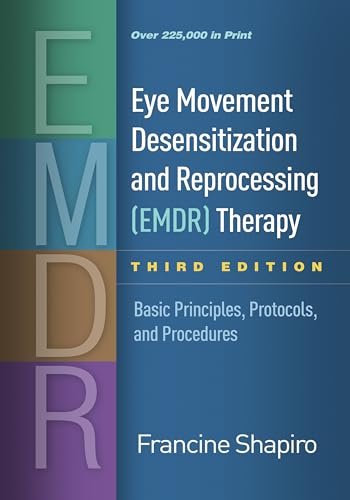
EMDR Therapy Third Edition: Basic Principles, Protocols, and Procedures by Francine Shapiro
Master EMDR therapy with this definitive third edition by Francine Shapiro. Learn the complete eight-phase protocol for treating PTSD and trauma effectively.
$23.99$44.00
The Problem This Book Solves
For millions of individuals suffering from trauma and post-traumatic stress disorder (PTSD), finding an effective, evidence-based treatment is critical. Francine Shapiro’s Eye Movement Desensitization and Reprocessing (EMDR) Therapy: Basic Principles, Protocols, and Procedures addresses this urgent need by providing a comprehensive, step-by-step guide to a powerful therapeutic approach that has transformed the field of trauma treatment.
Without a structured, research-backed protocol, mental health practitioners risk inconsistent outcomes and prolonged patient suffering. This third edition delivers the definitive framework for mastering EMDR therapy, ensuring clinicians can confidently treat trauma with proven results.
What Is Eye Movement Desensitization and Reprocessing (EMDR) Therapy? A Complete Overview
EMDR therapy is an integrative psychotherapy approach developed by Francine Shapiro that has been extensively researched and proven effective for treating PTSD and related conditions. It involves a structured eight-phase protocol that uses bilateral stimulation, such as eye movements, to help patients reprocess traumatic memories and reduce their emotional impact.
This third edition, published in 2018 by The Guilford Press, updates the foundational text with the latest clinical research, refined protocols, and expanded applications. The book covers the adaptive information processing (AIP) model that underpins EMDR, offering a clear rationale for why bilateral stimulation facilitates healing.
The text serves as both an introductory guide for novices and an advanced reference for experienced clinicians, providing detailed case examples, scripts, and practical strategies for overcoming common clinical challenges.
Who Should Read Eye Movement Desensitization and Reprocessing (EMDR) Therapy?
This book is essential reading for a wide range of mental health professionals, including psychologists, psychiatrists, social workers, counselors, and marriage and family therapists. Whether you are a student just beginning your clinical training or a seasoned practitioner looking to expand your therapeutic toolkit, this text offers invaluable insights.
Specifically, this book is ideal for:
- Trauma specialists seeking a validated, evidence-based protocol for PTSD treatment
- Graduate students in clinical psychology, counseling, and social work programs
- Licensed therapists pursuing EMDR certification or advanced training
- Researchers investigating trauma, memory, and psychotherapeutic mechanisms
- Supervisors and educators teaching EMDR therapy to the next generation of clinicians
8 Key Things You Will Learn
This comprehensive guide equips you with the knowledge and skills to implement EMDR therapy effectively. Here are the key takeaways:
- The Adaptive Information Processing (AIP) model — the theoretical foundation explaining how unresolved memories drive pathology
- The complete eight-phase treatment protocol from history-taking to reevaluation
- Procedures for bilateral stimulation including eye movements, taps, and tones
- Techniques for managing abreactions and client distress during processing
- Strategies for working with complex trauma, dissociation, and special populations
- Integration of EMDR with other therapeutic approaches such as cognitive-behavioral and psychodynamic therapy
- How to develop a comprehensive treatment plan and case conceptualization
- Ethical considerations and best practices for maintaining client safety and therapeutic integrity
Targeting Specific Clinical Challenges
Beyond the core protocol, the book offers nuanced guidance for difficult clinical presentations. You will learn how to adapt EMDR for clients with dissociative disorders, acute stress reactions, and comorbid anxiety or depression. Detailed case vignettes illustrate how to navigate stuck points and enhance treatment efficacy.
Why Eye Movement Desensitization and Reprocessing (EMDR) Therapy Outperforms Every Alternative
While several trauma-focused treatments exist, EMDR therapy offers distinct advantages that set it apart. Unlike exposure-based therapies that require prolonged recounting of traumatic events, EMDR allows clients to process memories without extensive verbal detail, which can be less distressing and more efficient.
Compared to cognitive processing therapy (CPT) and prolonged exposure (PE), EMDR has demonstrated comparable efficacy in randomized controlled trials, but with fewer sessions needed and lower dropout rates in many studies. International guidelines from the World Health Organization (WHO) and the American Psychological Association (APA) recognize EMDR as a recommended treatment for PTSD.
This third edition benefits from decades of empirical validation, incorporating the latest research findings that refine and expand the original protocols. The integration of the AIP model provides a coherent explanatory framework that other therapies lack, making it easier for clinicians to tailor interventions to individual client needs.
Author Authority & Publisher Credibility
Francine Shapiro, PhD, is the originator and developer of EMDR therapy, a clinical psychologist, and a Senior Research Fellow at the Mental Research Institute in Palo Alto, California. She has spent over three decades researching, refining, and training clinicians worldwide in EMDR methodology. Her work is cited in thousands of peer-reviewed studies and has directly influenced international treatment guidelines.
The Guilford Press is a leading independent publisher of professional and academic resources in psychology and mental health. With a reputation for rigorous editorial standards and authoritative content, Guilford Press ensures that this edition meets the highest scholarly and clinical benchmarks.
This third edition updates and expands upon previous editions with new chapters, enhanced protocols, and the latest empirical evidence — making it the most current and comprehensive resource available on EMDR therapy.
Is Eye Movement Desensitization and Reprocessing (EMDR) Therapy Worth It? Our Verdict
Absolutely. For any mental health professional committed to providing state-of-the-art trauma treatment, this book is not just a purchase — it is an essential investment in your clinical competence. The depth of information, practical guidance, and theoretical clarity make it an irreplaceable resource.
While many online courses and workshops offer fragmented training, this single volume provides the complete, authoritative foundation. Clinicians who master this text will be equipped to help clients heal from trauma with greater confidence and effectiveness.
Compared to alternative resources, including conference workshops and digital modules, the comprehensive coverage and reference value of this book deliver exceptional long-term value. It serves as a permanent clinical reference you will consult throughout your career.
Get Eye Movement Desensitization and Reprocessing (EMDR) Therapy — Master the Gold Standard in Trauma Treatment
You are a dedicated mental health professional or student who wants to deliver the most effective, evidence-based trauma care possible. This third edition — the definitive work by the founder of EMDR therapy — gives you the complete protocol, theoretical understanding, and practical strategies to transform your practice.
With the field of trauma therapy advancing rapidly, this current 2018 edition ensures you are learning from the most up-to-date research and clinical insights. Don’t rely on outdated techniques or fragmented information.
Add to cart today and gain the expertise that will elevate your clinical outcomes and your career.
Related products

Farquharson’s Textbook of Operative General Surgery 11th Ed
$21.99Master operative surgery with the Eleventh Edition of Farquharson’s essential textbook for surgical trainees, featuring 490 color illustrations and expert guidance.
$36.00-
HESI Admission Assessment Exam Review 4th Edition: Complete Study Guide for Nursing Entrance Exams
$18.99Master the HESI Admission Assessment Exam with Elsevier’s official 4th Edition study guide. Covers math, science, reading, grammar & vocabulary with practice tests.
$38.00 -
Handbook of Forensic Drug Analysis – Comprehensive Chemical Reference
$17.99Get the essential Handbook of Forensic Drug Analysis, the definitive chemical reference for identifying and analyzing illicit substances in forensic labs.
$33.00 -
Glandular Physiology and Therapy: AMA Symposium Ebook
$29.99Gain rare insight into early endocrinology with this authoritative AMA symposium. Essential for medical historians and hormone therapy researchers. Buy the ebook today.
$60.00 -
Anthony’s Textbook of Anatomy & Physiology 18th Edition – Mosby
$49.99Master human anatomy and physiology with this clear, comprehensive 18th Edition from Mosby. Perfect for nursing and allied health students.
$153.00 -
Vascular Access: Principles and Practice 5th Edition – Comprehensive Textbook
$13.99Master all aspects of vascular access for hemodialysis, chemotherapy, nutrition, and critical care with this practical 5th edition textbook by Samuel Eric Wilson. Get the definitive how-to guide now.
$24.00 -
Vascular Surgical Emergencies: Well-Prepared for Duty
$22.99Master 50 vascular surgical emergencies with proven diagnostic and therapeutic protocols. The 2026 Springer guide from Susanne Regus — essential for every vascular surgeon.
$40.00 -
Feigin & Cherry’s Textbook of Pediatric Infectious Diseases, 9th Edition
$31.99Get the definitive 9th edition of Feigin and Cherry’s Textbook of Pediatric Infectious Diseases – the premier two-volume reference for pediatric ID professionals. Order now for instant digital access!
$61.00