save
$19.01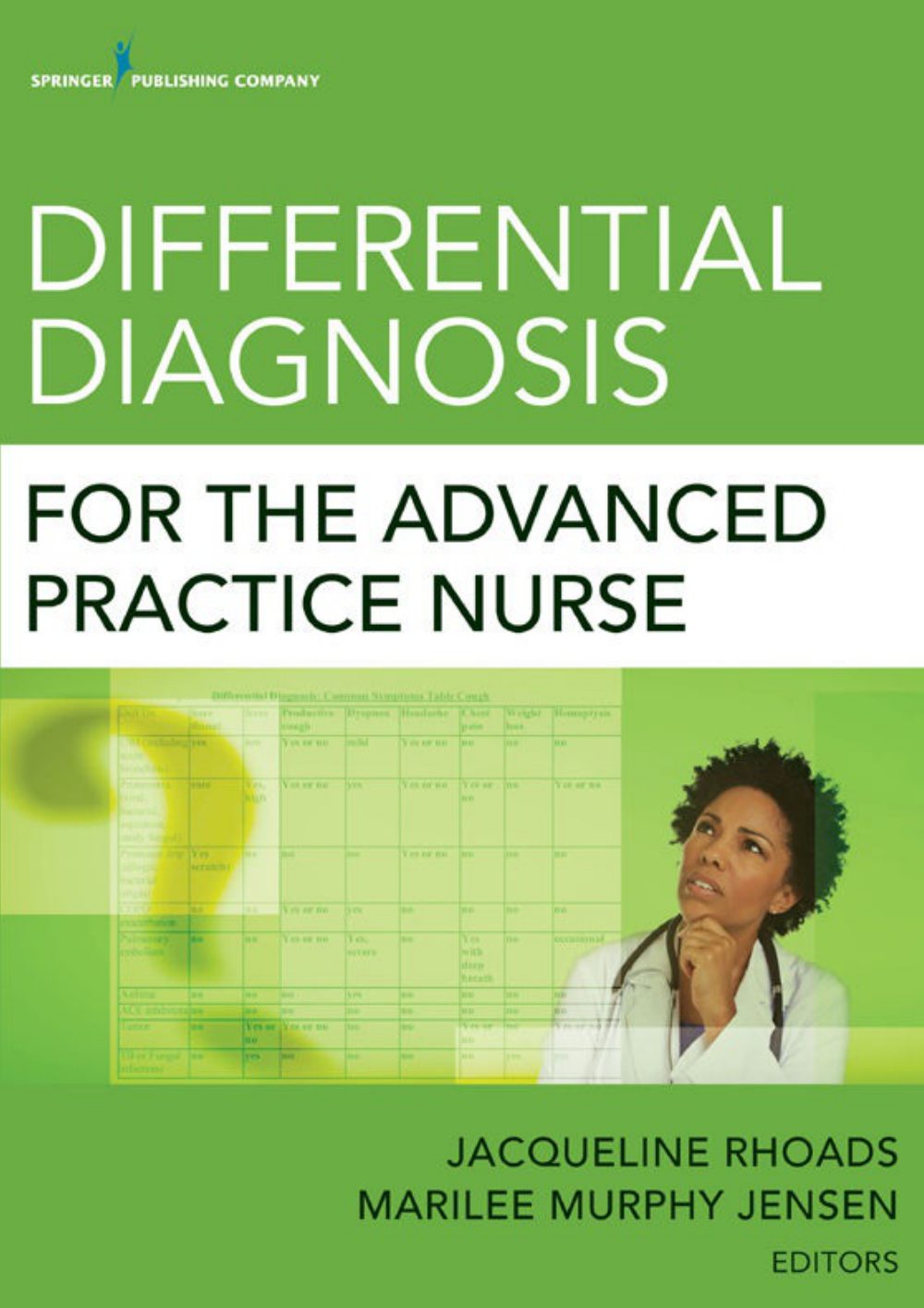
Differential Diagnosis for the Advanced Practice Nurse – Rhoads & Jensen
Master differential diagnosis for the APRN with this step-by-step guide to 38 common symptoms, featuring case studies and a proven clinical reasoning framework.
Want to preview before you buy? Click Request Free Sample and tell us which chapter or pages you’d like to see, along with your email address. We’ll send you those pages from the eBook so you can be sure it’s the right one before buying.
- Instant download & lifetime access Available as soon as your payment is confirmed. Your download link is also sent to the email address you provide at checkout, and you can download your purchased eBook anytime from My Account → Downloads with unlimited downloads. An account is created automatically using the same email address.
- Own your eBook Receive the available PDF/EPUB file directly after purchase. No rental or temporary access — download and keep your eBook for personal use with lifetime access.
- Full refund guarantee If the eBook you receive does not match the details and description provided on the product page, contact [email protected] and we’ll issue a full refund within 24 hours.
- Secure payment through PayPal Pay securely by debit or credit card or with your PayPal account. Your card details are processed by PayPal and are never stored on our site.
$20.99$40.00
The Gap This Book Fills
Advanced practice nurses (APRNs) face the daily challenge of distinguishing between conditions that present with similar symptoms. A patient with chest pain could have anything from costochondritis to a life-threatening myocardial infarction. Without a systematic framework for differential diagnosis, critical diagnoses can be missed or delayed, leading to adverse outcomes. This book directly addresses that problem by providing a clear, step-by-step methodology for building and narrowing differentials from common patient complaints.
What Is Differential Diagnosis for the Advanced Practice Nurse – Rhoads & Jensen? A Complete Overview
Differential Diagnosis for the Advanced Practice Nurse is a clinical guide authored by Jacqueline Rhoads and Marilee Murphy Jensen, published by Springer Publishing Company in 2015. The book offers a practical, step-by-step approach to formulating differential diagnoses for 38 of the most commonly presented symptoms in primary and acute care settings. Each chapter focuses on a specific symptom, such as chest pain, headache, or abdominal pain, and walks the reader through the clinical reasoning process from history taking to physical exam findings to final differential list. The text is designed for APRN students, new practitioners, and even experienced clinicians seeking a quick-reference refresher.
The book emphasizes a patient-centered, evidence-based approach. It integrates case studies throughout to illustrate how differential diagnosis works in real clinical scenarios, helping readers bridge the gap between theoretical knowledge and practical application.
Is This Book Right for You?
This book is specifically written for APRNs — including nurse practitioners (NPs), clinical nurse specialists (CNSs), certified registered nurse anesthetists (CRNAs), and certified nurse-midwives (CNMs) — who need to develop or sharpen their differential diagnosis skills. It is particularly valuable for:
- APRN students in graduate-level clinical courses who are learning the diagnostic process for the first time
- New graduate APRNs entering practice who need a reliable framework to build confidence
- Experienced APRNs who want a quick-reference guide to refresh their approach to common symptoms
- Faculty teaching differential diagnosis courses who need a structured, case-based textbook
- Clinical preceptors who mentor APRN students and need a consistent methodology to teach
What You Will Learn
By working through this book, you will develop a systematic, evidence-based approach to differential diagnosis. Here are the core skills you will gain:
- A structured thinking process — Learn to move from symptom presentation to a prioritized differential list using a consistent step-by-step method
- How to take a focused history — Identify the key historical clues that differentiate one condition from another for each symptom
- Physical exam findings that matter — Know exactly which exam maneuvers and findings are most relevant for confirming or ruling out specific diagnoses
- Red flag recognition — Recognize the signs and symptoms that indicate a life-threatening or urgent condition requiring immediate referral or action
- Integration of diagnostic testing — Understand when and how to use lab tests, imaging, and other studies to refine your differential
- Application through case studies — Practice your skills with real-world clinical scenarios that build clinical reasoning and confidence
What Sets It Apart
Many textbooks on differential diagnosis are written for physicians and are too dense or overly broad for APRN practice. Others are simple symptom checklists that lack the clinical reasoning framework APRNs need. This book fills a specific niche: it is tailored for the APRN scope of practice, focusing on the symptoms most commonly encountered in primary and acute care settings where APRNs practice independently or collaboratively.
Unlike general medical texts, this book provides a consistent, easy-to-follow structure for each symptom — history, physical exam, differentials, red flags — that mirrors the APRN clinical workflow. The inclusion of 38 frequently seen symptoms means you get breadth without being overwhelmed. The case studies ground the process in real decision-making, which is far more effective than rote memorization of lists.
Competing titles often lack the practical, step-by-step orientation that APRN students and new practitioners need. This book excels in that regard, making it the top choice for those entering the field.
About the Author
Jacqueline Rhoads is a well-known nursing educator and author with extensive experience in advanced practice nursing education. Her work focuses on preparing APRNs for clinical practice through practical, accessible resources. Marilee Murphy Jensen brings additional clinical and teaching expertise, co-authoring this text to ensure it reflects real-world APRN challenges.
The book is published by Springer Publishing Company, a respected academic publisher known for high-quality nursing, healthcare, and medical texts. Springer’s peer review and editorial standards ensure the content is evidence-based and clinically sound. The 2015 edition remains a trusted resource, widely used in APRN programs across the United States.
Is It Worth It?
For any APRN student or new practitioner who wants to build a solid foundation in clinical reasoning and differential diagnosis, this book is an excellent investment. Its focused approach — covering 38 essential symptoms with a consistent step-by-step process — makes it far more practical than a general medical differential diagnosis textbook. The case studies are a standout feature, allowing you to actively engage with the material rather than passively reading lists.
The 2015 edition from Springer Publishing Company is still highly relevant for foundational training. While newer editions may include updated guidelines, the core clinical reasoning process taught here remains timeless. If you are looking for a clear, concise, APRN-specific guide to differential diagnosis, this book delivers.
Add Differential Diagnosis for the Advanced Practice Nurse – Rhoads & Jensen to Your Library
Your ability to accurately diagnose patients is the cornerstone of advanced practice nursing. This book gives you the structured approach you need to build that skill with confidence, whether you are a student preparing for clinicals or a new NP entering practice. Order your copy of Differential Diagnosis for the Advanced Practice Nurse today and start developing the clinical reasoning that sets expert clinicians apart. Published by Springer Publishing Company, this trusted resource is your first step toward diagnostic excellence.
Related products

Neuroanatomy: An Illustrated Colour Text 6th Edition
$19.99Master neuroanatomy with this visual, concise Sixth Edition by Crossman & Neary. Includes enhanced eBook with bonus figures and self-assessment.
$35.00-
Handbook of MRI Scanning: Step-by-Step Protocols for Diagnostic Imaging
$19.00Master MRI scanning with this practical handbook by Burghart and Finn. Step-by-step protocols for high-quality diagnostic images. Order your copy today!
$43.00 -
Davis’s Comprehensive Handbook of Laboratory & Diagnostic Tests, 8th Edition
$18.00Master every lab and diagnostic test with nursing implications you can trust. The 8th edition of Davis’s Comprehensive Handbook is your pocket-sized guide to accurate interpretation and safe patient care.
$33.00 -
Handbook of Forensic Drug Analysis – Comprehensive Chemical Reference
$13.99Get the essential Handbook of Forensic Drug Analysis, the definitive chemical reference for identifying and analyzing illicit substances in forensic labs.
$25.00 -
Essentials of Neuro-Psychiatry: A Classic Textbook of Nervous and Mental Disorders (1945)
$29.99Own a piece of medical history with this 1945 neuropsychiatry classic from Lea & Febiger. Essential for collectors and scholars. Add to cart today.
$60.00 -
55 Cases in Neurology: Case Histories and Patient Perspectives by Mark McCarron
$22.99Boost your neurological diagnostic skills with 55 real-world cases and patient perspectives from a 20-year veteran neurologist — the essential casebook for junior doctors and trainees.
$41.00 -
Advanced Practice Nursing in the Care of Older Adults – 2nd Edition
$34.99Evidence-based guide for APRNs covering healthy aging, comprehensive geriatric assessment, and symptom management in older adults. 2nd Edition.
$74.00 -
HESI Admission Assessment Exam Review 4th Edition: Complete Study Guide for Nursing Entrance Exams
$13.99Master the HESI Admission Assessment Exam with Elsevier’s official 4th Edition study guide. Covers math, science, reading, grammar & vocabulary with practice tests.
$27.00