save
$19.01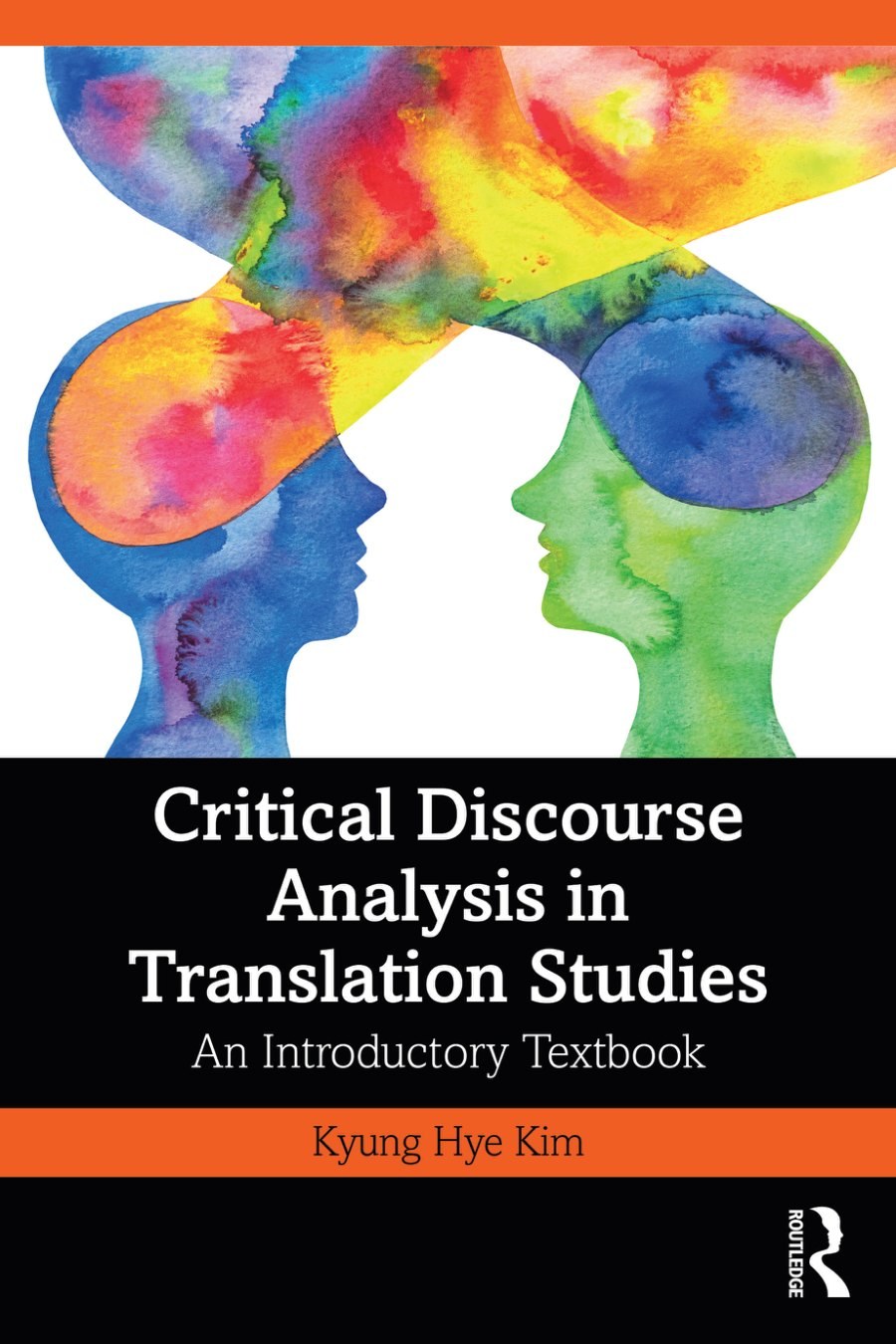
Critical Discourse Analysis in Translation Studies: An Introductory Textbook
Master Critical Discourse Analysis for translation studies with this first-of-its-kind textbook. Learn to apply Halliday, Fairclough, and van Dijk frameworks to translated texts. Order your copy today.
Want to preview before you buy? Click Request Free Sample and tell us which chapter or pages you’d like to see, along with your email address. We’ll send you those pages from the eBook so you can be sure it’s the right one before buying.
- Instant download & lifetime access Available as soon as your payment is confirmed. Your download link is also sent to the email address you provide at checkout, and you can download your purchased eBook anytime from My Account → Downloads with unlimited downloads. An account is created automatically using the same email address.
- Own your eBook Receive the available PDF/EPUB file directly after purchase. No rental or temporary access — download and keep your eBook for personal use with lifetime access.
- Full refund guarantee If the eBook you receive does not match the details and description provided on the product page, contact [email protected] and we’ll issue a full refund within 24 hours.
- Secure payment through PayPal Pay securely by debit or credit card or with your PayPal account. Your card details are processed by PayPal and are never stored on our site.
$14.99$34.00
The Challenge It Addresses
Translation and interpreting students and researchers often struggle to move beyond surface-level linguistic analysis. They need a systematic, theoretically grounded framework to uncover the ideological, social, and political dimensions embedded in translated texts. Without a clear methodology, critical analysis remains impressionistic and lacks academic rigor. This textbook directly addresses that gap by providing the first dedicated, step-by-step guide to applying Critical Discourse Analysis (CDA) within translation studies.
For anyone working with translated or interpreted content, the challenge is not just understanding what a text says, but how it says it—and why. The problem is compounded by the sheer variety of CDA approaches, from Halliday’s systemic functional linguistics to Fairclough’s dialectical model and van Dijk’s ideological square. Navigating these frameworks without a structured introduction is daunting. This book eliminates that confusion by offering a coherent, applied pathway through the major CDA traditions, specifically tailored for the translation context.
Critical Discourse Analysis in Translation Studies: An Introductory Textbook at a Glance
Critical Discourse Analysis in Translation Studies: An Introductory Textbook is the first textbook to provide a systematic treatment of how CDA may be applied to the analysis of translated and interpreted texts. Authored by Kyung Hye Kim and published by Routledge in 2025, this foundational work bridges two previously separate disciplines, offering a unified analytical toolkit for scholars and practitioners. It moves beyond abstract theory to demonstrate practical application across traditional and digital media, using authentic examples in multiple languages.
The book is structured to build competence progressively. It begins by laying out the core principles of CDA, then introduces the major analytical frameworks—including the M.A.K. Hallidayan analytical framework, Norman Fairclough’s dialectical relationship model, and Teun van Dijk’s ideological square. Each framework is explained with clarity and then demonstrated through worked examples drawn from real translation and interpreting scenarios. The textbook concludes with numerous exercises using authentic texts, empowering readers to apply a CDA framework independently in their own research or professional work.
What Makes This Textbook Unique in the Field?
Unlike general CDA handbooks or translation theory volumes, this text occupies a specific niche: it is the only introductory textbook that systematically teaches CDA as a method for translation analysis. It does not assume prior knowledge of CDA, making it accessible for students new to the field, while still offering depth sufficient for postgraduate researchers. The focus on practical application, with exercises and authentic examples, ensures that theoretical concepts are immediately operationalized.
Is This Book Right for You?
This textbook is essential reading for a specific audience of students, researchers, and professionals who need to combine discourse analysis with translation practice. It is designed for those who want to move beyond descriptive translation studies and engage with the critical, ideological dimensions of their work. The primary readers include:
- Graduate students in translation and interpreting studies who need a methodological framework for their thesis or dissertation research involving CDA.
- Undergraduate students in translation, linguistics, or communication studies taking advanced courses in discourse analysis or translation theory.
- Academic researchers in translation studies seeking to incorporate critical discourse analysis into their research methodology for analyzing translated texts.
- Practicing translators and interpreters who wish to deepen their understanding of the ideological and power dynamics at play in the texts they handle.
- Language teachers and curriculum developers designing courses that integrate critical linguistics with translation pedagogy.
- Scholars in media studies, political science, and sociology who analyze translated news, political speeches, or institutional documents.
What You Will Learn
This book delivers a structured learning path that builds from foundational concepts to advanced analytical application. By working through the chapters and exercises, readers will acquire a robust set of skills directly applicable to their own research and professional practice. The key learning outcomes include:
- The core principles and history of Critical Discourse Analysis, including its origins in critical linguistics and its evolution through the work of Fairclough, van Dijk, and Wodak.
- How to apply the M.A.K. Hallidayan analytical framework to translated texts, focusing on transitivity, modality, theme-rheme structure, and lexical cohesion as tools for uncovering ideology.
- The dialectical relationship model of Norman Fairclough, including how to analyze the interplay between textual, discursive, and social practices in translated discourse.
- Teun van Dijk’s ideological square and its application to interpreting how translators and interpreters manage in-group/out-group representations, positive self-presentation, and negative other-presentation.
- Methods for analyzing translated texts in both traditional and digital media, including news translation, political interpreting, and online discourse, with authentic examples in different languages.
- How to design and conduct your own CDA-driven translation study, from formulating research questions to selecting data, applying analytical frameworks, and presenting findings with academic rigor.
Why Choose This Edition
While several excellent textbooks exist on either CDA or translation theory, none combine both fields with the same systematic, applied focus. General CDA texts like Fairclough’s “Discourse and Social Change” or van Dijk’s “Discourse and Power” are foundational but do not address the specific challenges of analyzing translated or interpreted texts. Conversely, standard translation theory volumes such as Munday’s “Introducing Translation Studies” or Baker’s “In Other Words” provide broad coverage but lack the depth in critical discourse methodology that this book offers.
This textbook fills a critical gap. It does not assume readers are already fluent in CDA, nor does it treat translation as a mere afterthought. Instead, it builds a bridge between the two disciplines, offering worked examples that demonstrate exactly how CDA frameworks illuminate the ideological dimensions of translated texts. The inclusion of exercises using authentic materials—news articles, political speeches, diplomatic interpreting—gives readers hands-on experience that is absent from purely theoretical treatments. For students and researchers who need a practical, methodologically rigorous approach to analyzing power and ideology in translation, this is the only dedicated textbook available.
About the Author
Kyung Hye Kim is a recognized scholar in translation studies with a specific expertise in critical discourse analysis and media translation. Her research has consistently focused on the intersection of language, ideology, and translation, making her uniquely qualified to author this introductory textbook. She brings both theoretical depth and practical pedagogical experience to the work, ensuring that complex concepts are explained with clarity and supported by relevant examples.
Routledge, the publisher of this textbook, is one of the most prestigious academic publishers in the humanities and social sciences. With a catalog that includes seminal works in translation studies, linguistics, and discourse analysis, Routledge’s editorial standards ensure rigorous peer review and high-quality production. The fact that this textbook is published by Routledge signals its academic credibility and its suitability for use in university courses worldwide. The 2025 publication date ensures that the content reflects current debates and contemporary examples in both CDA and translation studies.
Is It Worth It?
For any student, researcher, or professional who needs to analyze translated texts critically, this textbook is not just worth it—it is indispensable. It solves a real problem: the absence of a single, systematic guide that teaches you how to apply CDA to translation. The book’s structure, from foundational concepts to advanced application, makes it suitable for both self-study and classroom use. The exercises and authentic examples ensure that learning is active and immediately transferable to your own work.
Compared to piecing together knowledge from separate CDA and translation textbooks, this volume saves time and provides coherence. It is competitively priced for an academic textbook and offers exceptional value given its unique content. If your work involves analyzing how power, ideology, and social context shape translated texts, this book will become your primary reference. The investment is minimal compared to the methodological clarity and research competence it will give you.
Get Your Copy Today
Whether you are a graduate student preparing your dissertation, a translation studies researcher seeking a robust methodology, or a professional translator wanting to deepen your critical analysis skills, this textbook is the tool you need. It provides the only systematic, applied introduction to CDA for translation studies currently available. The 2025 edition from Routledge ensures you are working with the most current framework and examples in the field.
Add this essential textbook to your cart now. Equip yourself with the analytical framework that will elevate your translation research and give you the methodological confidence to tackle complex ideological questions in translated texts. Your work will be stronger, your analysis more rigorous, and your academic contributions more impactful from the moment you start applying the methods taught in this book.
Related products

Classroom Instruction That Works, 2nd Ed. (Research-Based Strategies)
$14.99Get proven research-based strategies to boost student achievement with the updated 2nd edition from ASCD, featuring nine high-impact instructional tools.
$29.00-
Learning Supercharged: Digital Age Strategies and Insights from the EdTech Frontier (First Edition)
$8.99Transform your classroom with innovative edtech strategies from Learning Supercharged. Buy the first edition now for actionable insights and real-world stories from educators.
$17.00 -
The Power of Place: Authentic Learning Through Place-Based Education
$11.99Transform your classroom with authentic place-based learning. This ASCD guide shows how to boost student agency and equity through community-connected education.
$19.00 -
Mindsets in the Classroom Updated Edition: Build a Growth Mindset Learning Community
$12.99Transform your classroom with growth mindset strategies from Mary Cay Ricci’s updated edition. Order now to foster student resilience and achievement.
$27.00 -
How to Prepare for the Ohio Graduation Test in Mathematics — Barron’s OGT Prep Guide
$21.00Pass the Ohio Graduation Test in Mathematics with Barron’s comprehensive guide — 800+ problems, 3 full-length tests, and expert strategies from Tom Reardon.
$64.00 -
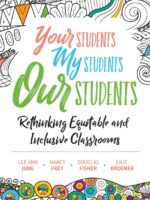
Your Students, My Students, Our Students: Rethinking Equitable and Inclusive Classrooms
$19.99Discover five essential disruptions to transform special education practice and create truly inclusive classrooms where every student is our student.
$40.00 -
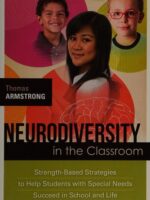
Neurodiversity in the Classroom: Strength-Based Strategies
$10.99Transform your teaching with strength-based strategies for students with special needs. Practical tools to build on student strengths, not deficits.
$22.00 
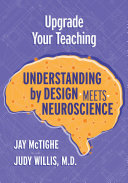
Upgrade Your Teaching: Understanding by Design Meets Neuroscience
$10.99Upgrade Your Teaching merges Understanding by Design with neuroscience to help K–12 educators design brain-friendly lessons that boost retention and engagement. Get your ASCD digital copy now.
$22.00