save
$19.01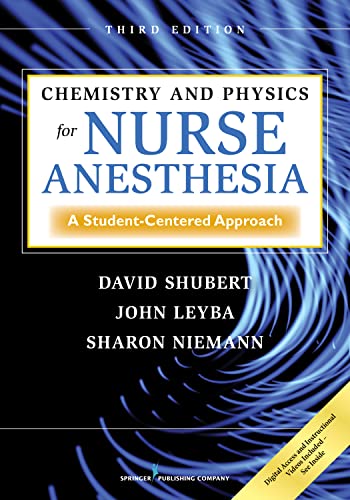
Chemistry and Physics for Nurse Anesthesia: A Student-Centered Approach (Third Edition)
Master chemistry and physics for nurse anesthesia with this clinically focused, student-centered third edition — the definitive guide for SRNAs and CRNAs.
$27.99$47.00
The Challenge It Addresses
Nurse anesthesia students face a unique challenge: mastering the foundational chemistry and physics principles that underpin safe, effective anesthetic practice — often without a background in the physical sciences. Standard textbooks assume prior knowledge or separate the two disciplines, leaving students to bridge the gap on their own. This disconnect creates frustration, study inefficiency, and — most critically — gaps in clinical understanding that can affect patient care.
Chemistry and Physics for Nurse Anesthesia, Third Edition directly addresses this problem by integrating both sciences into a single, clinically focused curriculum. It eliminates the guesswork, providing a clear, step-by-step path from basic concepts to advanced clinical applications.
What Is Chemistry and Physics for Nurse Anesthesia: A Student-Centered Approach (Third Edition)? A Complete Overview
Chemistry and Physics for Nurse Anesthesia: A Student-Centered Approach is a comprehensive textbook designed specifically for student registered nurse anesthetists (SRNAs). Written by David Shubert, PhD, John Leyba, PhD, and Sharon Niemann, DNAP, CRNA, this third edition published by Springer Publishing Company in 2017 delivers a rigorous yet accessible exploration of the physical and chemical principles that form the scientific foundation of anesthesia.
The book is organized around a student-centered pedagogy, meaning every concept is introduced with the learner’s perspective in mind. Rather than simply presenting formulas and theories, it contextualizes each topic within real clinical scenarios — from gas laws affecting ventilator management to acid-base chemistry guiding fluid resuscitation. This approach ensures that theoretical knowledge translates directly into practical competence.
Is This Book Right for You?
This textbook is essential for anyone enrolled in a nurse anesthesia program, but its value extends to a broader audience:
- Student Registered Nurse Anesthetists (SRNAs) — The primary audience, needing a unified, clinically relevant review of chemistry and physics for certification exams and clinical practice.
- CRNA Educators and Program Directors — As a structured curriculum resource or supplementary text for courses in chemistry, physics, and applied physiology.
- Practicing CRNAs Seeking Refresher — For professionals returning to the fundamentals or preparing for recertification.
- Anesthesiology Assistants and Medical Students — Anyone requiring a clear, applied understanding of the physical sciences in anesthesia.
- Pre-Health and Nursing Students — Those considering a career in nurse anesthesia who want a realistic preview of the scientific demands of the field.
What You Will Learn
This book is structured to build competence across the entire spectrum of relevant science. Here are five critical areas you will master:
- Gas Laws and Respiratory Physiology — Understand Boyle’s, Charles’s, and Dalton’s laws as they apply to oxygen delivery, uptake, and elimination during anesthesia.
- Acid-Base Chemistry and Fluid Balance — Learn to interpret blood gas results, manage metabolic and respiratory acidosis/alkalosis, and apply buffer systems in clinical decision-making.
- Pharmacokinetics and Pharmacodynamics — Grasp how chemical properties of anesthetic agents affect absorption, distribution, metabolism, and excretion — and how to predict drug interactions.
- Electrical Safety and Monitoring Equipment — Master the physics behind ECG, pulse oximetry, capnography, and other essential monitoring technologies, including troubleshooting and safety protocols.
- Thermodynamics and Heat Transfer — Apply principles of heat and energy to patient warming, vaporizer function, and prevention of hypothermia in the perioperative setting.
Why Choose This Edition
Unlike generic chemistry or physics textbooks, this book is purpose-built for the nurse anesthesia curriculum. Many competing resources either treat the two sciences in separate volumes or lack the depth of clinical integration that SRNAs require.
For example, standard general chemistry texts cover the ideal gas law but rarely connect it to the mechanics of a ventilator or the behavior of nitrous oxide in a closed circuit. Similarly, physics textbooks may explain electrical circuits but skip the practical implications for grounding and defibrillator safety in the OR. This book makes those connections explicit.
The third edition also benefits from the combined expertise of three authors: a chemist (Shubert), a physicist (Leyba), and a practicing CRNA educator (Niemann). This trifecta ensures scientific accuracy, pedagogical clarity, and clinical relevance — a combination that single-author texts simply cannot match.
Author & Publisher Credentials
The credibility of this resource is anchored in the distinguished backgrounds of its authors and publisher. David Shubert, PhD, brings deep expertise in chemistry education, having taught the subject for decades. John Leyba, PhD, contributes rigorous physics knowledge, ensuring that quantitative principles are correctly and clearly explained. Sharon Niemann, DNAP, CRNA, offers the indispensable perspective of a practicing nurse anesthetist and educator, grounding every concept in real clinical practice.
Springer Publishing Company is a well-respected name in academic and professional healthcare publishing, known for producing authoritative, peer-reviewed texts used in programs across the United States. This third edition, published in 2017, represents a mature and refined version of a text that has been tested and improved through multiple iterations.
Is It Worth It?
For any student or professional serious about mastering the science of anesthesia, this book is not just worth it — it is a necessity. The student-centered approach saves hours of frustration by presenting material in the order and context that learners need. The integration of chemistry and physics into a single volume eliminates the need to juggle multiple texts and reconcile conflicting terminology.
The clinical application scenarios and detailed problem-solving exercises build the kind of applied knowledge that exam questions test and clinical practice demands. While the investment in a specialized textbook may seem significant, the return — in terms of exam performance, clinical confidence, and patient safety — is immeasurable.
Download Chemistry and Physics for Nurse Anesthesia: A Student-Centered Approach (Third Edition) Now
Whether you are preparing for the NCE, advancing your clinical skills, or teaching the next generation of CRNAs, this book delivers the integrated, clinically relevant foundation you need. Order your digital copy today and gain immediate access to the most student-centered chemistry and physics resource available for nurse anesthesia. With the trusted authority of Springer Publishing Company and the combined expertise of Shubert, Leyba, and Niemann, this is the definitive guide for mastering the science of anesthesia.
Related products

Vascular Surgical Emergencies: Well-Prepared for Duty
$22.99Master 50 vascular surgical emergencies with proven diagnostic and therapeutic protocols. The 2026 Springer guide from Susanne Regus — essential for every vascular surgeon.
$40.00-
Handbook of Forensic Drug Analysis – Comprehensive Chemical Reference
$17.99Get the essential Handbook of Forensic Drug Analysis, the definitive chemical reference for identifying and analyzing illicit substances in forensic labs.
$33.00 -
Farquharson’s Textbook of Operative General Surgery 11th Ed
$21.99Master operative surgery with the Eleventh Edition of Farquharson’s essential textbook for surgical trainees, featuring 490 color illustrations and expert guidance.
$36.00 -
General Thoracic Surgery, 7th Edition
$20.99Get the 7th edition General Thoracic Surgery eBook – the comprehensive two-volume guide to all open and endoscopic thoracic surgical procedures.
$37.00 -
Neuroanatomy: An Illustrated Colour Text 6th Edition
$13.99Master neuroanatomy with this visual, concise Sixth Edition by Crossman & Neary. Includes enhanced eBook with bonus figures and self-assessment.
$25.00 -
Anthony’s Textbook of Anatomy & Physiology 18th Edition – Mosby
$49.99Master human anatomy and physiology with this clear, comprehensive 18th Edition from Mosby. Perfect for nursing and allied health students.
$153.00 -
Feigin & Cherry’s Textbook of Pediatric Infectious Diseases, 9th Edition
$31.99Get the definitive 9th edition of Feigin and Cherry’s Textbook of Pediatric Infectious Diseases – the premier two-volume reference for pediatric ID professionals. Order now for instant digital access!
$61.00 -
HESI Admission Assessment Exam Review (Third Edition) – Study Guide
$29.99Prepare for the HESI Admission Assessment Exam with over 450 practice questions and comprehensive content review from Elsevier’s trusted Third Edition.
$66.00