save
$24.01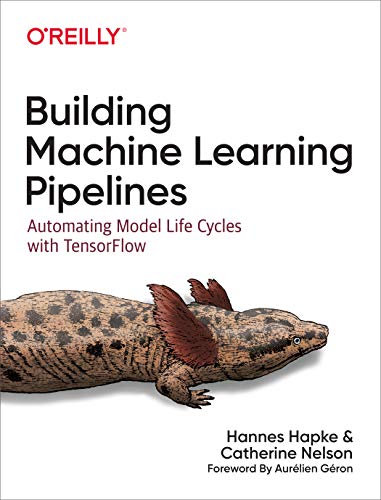
Building Machine Learning Pipelines – Automate ML with TensorFlow
Automate your ML model life cycle with TensorFlow. Build production-grade pipelines from data ingestion to deployment. Buy now.
Want to preview before you buy? Click Request Free Sample and tell us which chapter or pages you’d like to see, along with your email address. We’ll send you those pages from the eBook so you can be sure it’s the right one before buying.
- Instant download & lifetime access Available as soon as your payment is confirmed. Your download link is also sent to the email address you provide at checkout, and you can download your purchased eBook anytime from My Account → Downloads with unlimited downloads. An account is created automatically using the same email address.
- Own your eBook Receive the available PDF/EPUB file directly after purchase. No rental or temporary access — download and keep your eBook for personal use with lifetime access.
- Full refund guarantee If the eBook you receive does not match the details and description provided on the product page, contact [email protected] and we’ll issue a full refund within 24 hours.
- Secure payment through PayPal Pay securely by debit or credit card or with your PayPal account. Your card details are processed by PayPal and are never stored on our site.
$30.99$55.00
The Problem This Book Solves
Modern machine learning projects often fail not because of model quality, but because of the manual, brittle processes that surround them. Building Machine Learning Pipelines directly addresses the lack of standardized automation for training, deploying, and monitoring models. Without a robust pipeline, teams waste time on repetitive tasks, struggle to reproduce experiments, and face costly production failures. This book provides a systematic approach to automating the entire ML life cycle using the TensorFlow ecosystem, turning ad-hoc workflows into reliable, scalable pipelines.
Whether you are a data scientist, machine learning engineer, or software developer, you have likely experienced the pain of model drift, manual retraining, and deployment bottlenecks. The authors, Hannes Hapke and Catherine Nelson, both experienced practitioners at Google, bring real-world solutions to these persistent challenges. This first edition from O’Reilly Media is the definitive guide to building end-to-end automated pipelines.
Inside Building Machine Learning Pipelines – Automate ML with TensorFlow: A Full Overview
Building Machine Learning Pipelines is a practical, hands-on guide that walks you through the design, implementation, and operation of automated ML pipelines. The book focuses on the TensorFlow ecosystem, including TensorFlow Extended (TFX), Apache Beam, and Kubeflow, to create repeatable, production-grade pipelines. It covers the complete life cycle—from data ingestion and validation to model training, evaluation, deployment, and monitoring.
The book is structured to take you from foundational concepts to advanced production patterns. Each chapter introduces a new stage of the pipeline, with code examples and best practices. By the end, you will be able to build a pipeline that automatically re-trains models, validates them, and deploys them to serving infrastructure. This is not a theoretical treatise; it is a battle-tested methodology for ML engineering.
Who Is This Book For?
This book is written for intermediate to advanced practitioners who already know the basics of machine learning and want to move from ad-hoc scripts to professional pipelines. It is ideal for:
- Data scientists who want to productionize their models without relying on a separate engineering team
- Machine learning engineers responsible for building and maintaining infrastructure for model training and serving
- Software engineers transitioning into ML who need a structured approach to pipeline automation
- DevOps / MLOps engineers who want to apply CI/CD principles to machine learning
- Technical leads evaluating tools and frameworks for their team’s ML platform
Readers should have experience with Python, basic TensorFlow, and familiarity with machine learning concepts. The book does not assume prior knowledge of TFX or Apache Beam, making it accessible even if you are new to pipeline orchestration.
What You Will Learn
By working through this book, you will gain practical skills that directly impact your ability to deliver reliable ML systems. Here are the most important takeaways:
- Design an end-to-end ML pipeline that automates data ingestion, validation, transformation, training, and deployment
- Use TensorFlow Extended (TFX) to build components for each stage of the pipeline
- Implement data validation to detect schema changes and anomalies before they break downstream models
- Create feature engineering pipelines with Apache Beam for scalable data processing
- Automate model training and hyperparameter tuning using TFX Trainer and Keras
- Deploy models to production with TensorFlow Serving and set up continuous evaluation
- Monitor model performance in production to detect drift and trigger retraining
Why This Book Stands Out
Several books cover machine learning engineering, but this one stands out for its focus on the complete TensorFlow ecosystem and its practical, code-first approach. Unlike generic MLOps guides that stay at the conceptual level, Hapke and Nelson provide concrete examples using TFX, Apache Beam, and Kubeflow that you can adapt to your own projects. The book also benefits from the authors’ deep expertise at Google, giving readers insights into patterns used in production at scale.
Competing titles often focus on a single tool or framework (e.g., just Kubeflow or just MLflow), but this book covers the entire pipeline with a unified stack. It also emphasizes data validation and pipeline orchestration—two areas that are frequently overlooked but critical for production reliability. The inclusion of monitoring and retraining strategies makes it a complete reference for the model life cycle, not just the build phase.
About the Author
Hannes Hapke is a Senior Developer Advocate at Google, where he focuses on TensorFlow and ML infrastructure. He has extensive experience building production ML systems and is a core contributor to the TFX project. Catherine Nelson is a Software Engineer at Google working on TFX, bringing deep technical knowledge of the platform’s internals. Together, they have the firsthand expertise to teach effective pipeline automation.
Published by O’Reilly Media, a trusted name in technical education, this first edition (2020) represents the current best practices in the TensorFlow ecosystem. O’Reilly’s rigorous editorial process ensures that the content is accurate, well-structured, and up-to-date with the latest versions of the tools covered.
Is It Worth It?
Absolutely. If you are serious about moving from notebooks to production-grade ML, this book is an essential investment. It saves you months of trial and error by providing a clear, tested blueprint for pipeline automation. The code examples are directly applicable, and the architectural patterns scale from small teams to enterprise deployments.
We particularly recommend it for teams adopting TensorFlow and looking to standardize their ML workflow. The book’s focus on automation and reproducibility directly addresses the pain points that cause most ML projects to stall. Compared to piecing together blog posts and documentation, this single volume gives you a coherent, battle-tested methodology.
Add Building Machine Learning Pipelines – Automate ML with TensorFlow to Your Library
Stop fighting with manual model deployments and brittle scripts. Building Machine Learning Pipelines gives you the knowledge and code to build automated, reliable pipelines that scale with your projects. Whether you are a data scientist, ML engineer, or technical lead, this book will accelerate your journey to production ML.
This first edition from O’Reilly Media is the definitive guide to automating the model life cycle with TensorFlow. Add your copy today and start building pipelines that free you to focus on model innovation, not infrastructure.
Related products

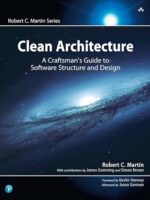
Clean Architecture: A Craftsman’s Guide to Software Structure and Design
$15.99Get the digital edition of Clean Architecture by Robert C. Martin and master proven principles for building robust, scalable software systems. Buy now.
$29.00-
Natural Language Processing with Spark NLP: Build Scalable NLP Applications
$27.00Master Spark NLP to build scalable text processing pipelines. Learn from the definitive O’Reilly guide.
$59.00 -
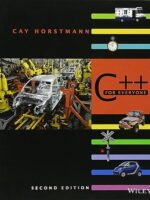
C++ for Everyone 2nd Edition – Cay Horstmann eBook
$12.99Master C++ programming fast with Cay Horstmann’s focused, beginner-friendly guide. No prior experience needed—start coding today.
$26.00 -
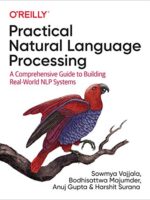
Practical Natural Language Processing: Build Real-World NLP Systems
$26.00Build, iterate, and deploy real-world NLP systems with this practical guide from O’Reilly — the definitive resource for production NLP.
$54.00 -
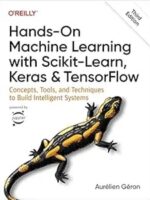
Hands-On Machine Learning with Scikit-Learn, Keras, and TensorFlow (3rd Edition)
$19.00Master machine learning and deep learning with Scikit-Learn, Keras, and TensorFlow in this hands-on, project-driven third edition from O’Reilly. Build real systems now.
$45.00 -
The C++ Programming Language, Fourth Edition
$26.99The definitive C++ reference by creator Bjarne Stroustrup, Fourth Edition. Master the language and standard library. Order now.
$64.00 -
AI 2041: Ten Visions for Our Future – First Edition eBook
$3.99AI 2041 combines ten gripping short stories with expert analysis to reveal how AI will reshape work, society, and daily life by 2041. Buy the first edition ebook now.
$11.00 -
Statistics Using R: An Integrative Approach (First Edition)
$31.99Buy Statistics Using R: An Integrative Approach (First Edition) by Weinberg. Includes online R tutorial, code scripts, and solutions for real-world data analysis.
$79.00