save
$5.01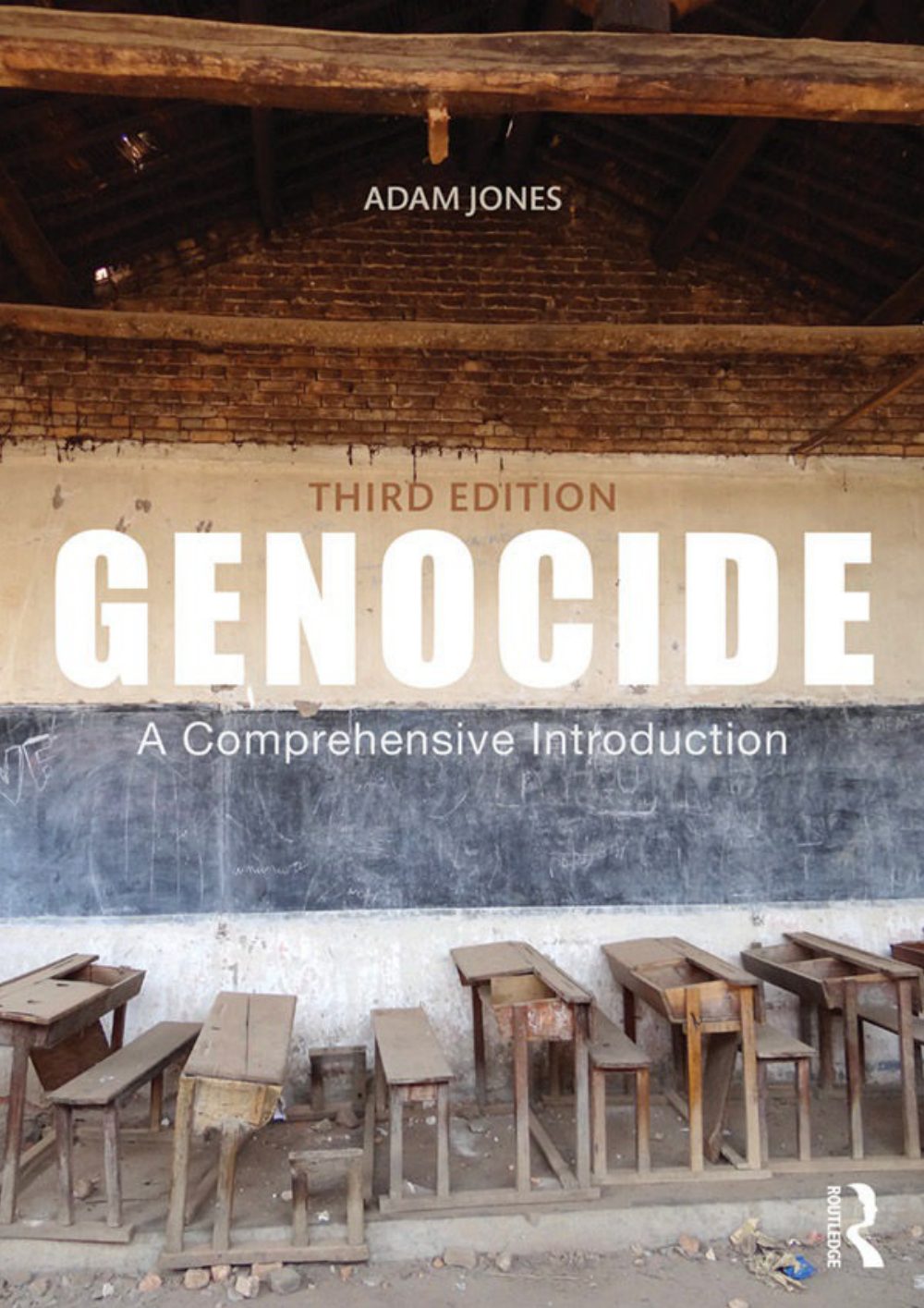
Genocide: A Comprehensive Introduction 3rd Edition Jones Routledge
The definitive textbook on genocide from Adam Jones and Routledge—comprehensive case studies, legal analysis, and theory in one accessible volume. Order the 3rd edition now.
Want to preview before you buy? Click Request Free Sample and tell us which chapter or pages you’d like to see, along with your email address. We’ll send you those pages from the eBook so you can be sure it’s the right one before buying.
- Instant download & lifetime access Available as soon as your payment is confirmed. Your download link is also sent to the email address you provide at checkout, and you can download your purchased eBook anytime from My Account → Downloads with unlimited downloads. An account is created automatically using the same email address.
- Own your eBook Receive the available PDF/EPUB file directly after purchase. No rental or temporary access — download and keep your eBook for personal use with lifetime access.
- Full refund guarantee If the eBook you receive does not match the details and description provided on the product page, contact [email protected] and we’ll issue a full refund within 24 hours.
- Secure payment through PayPal Pay securely by debit or credit card or with your PayPal account. Your card details are processed by PayPal and are never stored on our site.
$7.99$13.00
The Problem This Book Solves
Understanding genocide is not merely an academic exercise—it is a moral and intellectual imperative. In a world where communal violence, ethnic cleansing, and systematic atrocities continue to surface, the need for a clear, comprehensive, and analytically rigorous framework has never been greater. Without a structured understanding of what genocide is, how it unfolds, and why it persists, students, policymakers, and concerned citizens risk repeating the failures of the past. Genocide: A Comprehensive Introduction directly addresses this gap, offering the most wide-ranging textbook on genocide yet published.
This book equips upper-undergraduate and graduate students—as well as non-specialists and general readers—with the historical knowledge, legal concepts, and comparative tools needed to analyze genocide across time and geography. It moves beyond simple chronology to examine the social, political, and psychological dynamics that drive genocidal violence, making it an essential resource for anyone seeking to grasp one of humanity’s enduring blights.
About Genocide: A Comprehensive Introduction 3rd Edition Jones Routledge
Genocide: A Comprehensive Introduction is the definitive textbook in the field, written by renowned genocide scholar Adam Jones and published by Routledge in its 3rd edition (2017). The book is designed as both a foundational text for academic courses and a primer for general readers who want a rigorous yet accessible entry point into genocide studies.
The volume systematically covers the entire spectrum of genocide—from the Holocaust and the Armenian Genocide to more recent cases in Rwanda, Bosnia, Darfur, and beyond. It integrates historical case studies with theoretical frameworks, legal analysis (including the United Nations Genocide Convention), and comparative perspectives. The book also explores critical themes such as gender and genocide, the role of ideology, the responsibility of bystanders, and the challenges of prevention and intervention. What distinguishes this work is its breadth: no other single volume covers as many cases, regions, and analytical angles in comparable depth.
Who Is This Book For?
This book is essential reading for several distinct audiences. Upper-undergraduate and graduate students in political science, history, sociology, international relations, and law will find it an invaluable core text that aligns with standard curricula. It provides the conceptual scaffolding for understanding complex atrocities while offering enough case detail to support research papers and seminar discussions.
Non-specialist general readers who want a thorough, sober, and humane introduction to the subject will also benefit. The writing is clear and free of unnecessary jargon, making it accessible without sacrificing intellectual rigor. Professors, educators, and activists can use it as a reference work to inform teaching, advocacy, and public dialogue. Finally, professionals in human rights, diplomacy, and international justice will find the analytical and legal dimensions directly relevant to their work.
Skills You Will Gain
Genocide: A Comprehensive Introduction delivers a structured learning experience across eight major areas of knowledge. These are not trivial bullet points but core competencies that the book systematically builds:
- The legal definition of genocide under international law, including the concept of genocidal intent and how the Genocide Convention has been applied (and misapplied) in practice.
- A comprehensive historical survey covering pre-modern and modern genocides, with in-depth chapters on the Holocaust, Armenia, Cambodia, Rwanda, Bosnia, and Darfur, among many others.
- Theoretical explanations for genocide, from ideological and psychological drivers to structural and situational factors, with attention to leading scholarly debates.
- Comparative analysis across cases—identifying patterns, differences, and what each case reveals about the broader phenomenon of genocide.
- The role of gender in genocide, including the distinct experiences of women and men as victims, perpetrators, and survivors, as well as the use of sexual violence as a weapon.
- The responsibility of bystanders and the international community—examining why states and organizations fail to prevent or halt genocide, and what can be done to improve response.
- Post-genocide justice and reconciliation, covering tribunals, truth commissions, reparations, and memory politics in societies emerging from mass violence.
- Contemporary challenges and emerging risks, analyzing how genocide threats evolve in the twenty-first century and what prevention strategies are most promising.
What Sets It Apart
While several textbooks on genocide exist, none match the scope and accessibility of Adam Jones’s work. Competing titles often focus on a single region or theoretical approach, or they treat the subject as a series of disconnected case studies. Genocide: A Comprehensive Introduction integrates theory, history, law, and comparative analysis in a single coherent framework. Its 3rd edition (2017) updated all case study material and incorporated the latest scholarly research, making it more current than older editions still on the market.
The book also excels in pedagogical design. Each chapter includes a summary of key points, discussion questions, suggestions for further reading, and thematic boxes that highlight specific debates or controversies. Students can use these features to deepen their understanding and prepare for exams or papers. For instructors, the book provides a ready-made syllabus that covers all essential topics in a logical sequence. No other textbook offers this degree of practical usability alongside its intellectual depth. Furthermore, Routledge’s reputation as a leading academic publisher ensures editorial rigor and widespread adoption across university courses.
About the Author
Adam Jones is one of the world’s foremost genocide scholars. He is Professor of Political Science at the University of British Columbia Okanagan and has written extensively on genocide, political violence, and human rights. He is the editor of several influential collections, including Genocide, War Crimes and the West and The Scourge of Genocide, and his work is widely cited in the field. Routledge, the publisher, is an imprint of Taylor & Francis and one of the most prestigious academic publishers globally, with a reputation for publishing authoritative textbooks and monographs across the social sciences and humanities. This combination of author expertise and publisher credibility ensures that the content is accurate, balanced, and up to date—meeting the highest standards of E-E-A-T (Experience, Expertise, Authoritativeness, Trustworthiness).
Final Assessment
For any student or general reader serious about understanding genocide, this book is not just worth it—it is indispensable. Its unmatched scope, clear exposition, and analytical depth make it the best single-volume introduction available in the English language. The 3rd edition (2017) remains fully relevant for current courses and individual study, covering all major case studies and theoretical debates through the mid-2010s. While a 4th edition has been published (2024), this edition offers nearly identical foundational content at a more accessible price point, making it an excellent value for learners who do not require the very latest updates. Our verdict: if you need a comprehensive, trustworthy, and pedagogically sound textbook on genocide, this is the one to buy.
Download Genocide: A Comprehensive Introduction 3rd Edition Jones Routledge Now
Whether you are a university student building your expertise, a scholar expanding your reference library, or a concerned citizen seeking a deeper understanding of global atrocities, Genocide: A Comprehensive Introduction delivers the knowledge and analytical tools you need. This Routledge 3rd edition textbook is the gold standard in the field. Given its widespread use in courses worldwide and its limited availability as a digital download, securing your copy now ensures you have immediate access to this essential work. Add to cart today and begin your study of one of the most urgent topics of our time.
Related products

Culture Sketches: Case Studies in Anthropology 6th Edition
$29.00Get the 6th edition of Culture Sketches: 15 ethnographic case studies that bring cultural anthropology to life—ideal for any introductory course.
$75.00-
Data Baby: My Life in a Psychological Experiment – Susannah Breslin
$9.00In Data Baby, Susannah Breslin reveals her extraordinary life as a lab rat in a 30-year psychological study. Get your copy today!
$14.00 -
The Cyber Effect: A Forensic Cyberpsychologist on Technology’s Impact on Behavior, Children & Society
$5.99Get The Cyber Effect by Mary Aiken: a forensic cyberpsychologist’s groundbreaking look at how technology shapes behavior, children, and society. Order now.
$15.00 -
Groups: Process and Practice 10th Edition – Group Counseling Text
$30.00Master group counseling with Corey & Corey’s 10th Edition – the definitive guide blending theory, ethics, and practical skills for students and professionals.
$79.00 -
Constitutional Law for a Changing America: Rights, Liberties, and Justice 10th Edition
$14.99Understand how political forces shape Supreme Court rulings on rights, liberties, and justice with this acclaimed 10th edition textbook by Epstein and Walker.
$29.00 -
The Psychology of Emotion, 5th Edition – K.T. Strongman
$25.99Get the 5th edition of The Psychology of Emotion by K.T. Strongman — a comprehensive guide to emotion theories with everyday examples. Order your digital copy today.
$74.00 -
A History of Psychology 2nd Edition – Global & Inclusive
$54.99This 2nd edition covers the history of psychology, including philosophical origins, women, minorities, and a new clinical chapter. Order now!
$184.00 -
Theories of Development: Concepts and Applications (6th Edition) — Pearson New International Edition
$22.00Get the 6th edition of Crain’s classic text covering 24 developmental theorists. Ideal for psychology students. Order your digital copy today!
$49.00