save
$24.01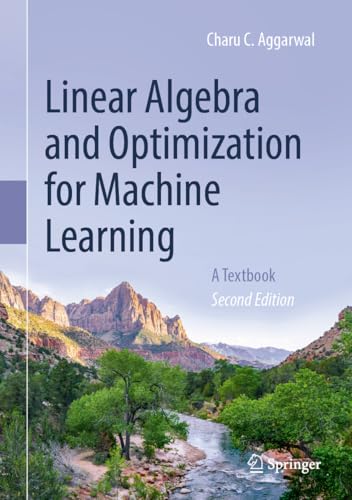
Linear Algebra and Optimization for Machine Learning: A Textbook 2nd Edition
Master the mathematics of ML with this unified, example-rich second edition. Buy now.
Want to preview before you buy? Click Request Free Sample and tell us which chapter or pages you’d like to see, along with your email address. We’ll send you those pages from the eBook so you can be sure it’s the right one before buying.
- Instant download & lifetime access Available as soon as your payment is confirmed. Your download link is also sent to the email address you provide at checkout, and you can download your purchased eBook anytime from My Account → Downloads with unlimited downloads. An account is created automatically using the same email address.
- Own your eBook Receive the available PDF/EPUB file directly after purchase. No rental or temporary access — download and keep your eBook for personal use with lifetime access.
- Full refund guarantee If the eBook you receive does not match the details and description provided on the product page, contact [email protected] and we’ll issue a full refund within 24 hours.
- Secure payment through PayPal Pay securely by debit or credit card or with your PayPal account. Your card details are processed by PayPal and are never stored on our site.
$24.99$49.00
The Challenge It Addresses
Machine learning is built on two foundational pillars: linear algebra and optimization. Yet most textbooks treat these subjects in isolation, leaving students and practitioners to bridge the gap themselves. Without a unified understanding, you risk building models that are inefficient, inaccurate, or simply fail to converge. This second edition directly addresses that disconnect, providing a cohesive framework that connects mathematical theory directly to machine learning applications.
Linear Algebra and Optimization for Machine Learning: A Textbook 2nd Edition at a Glance
Linear Algebra and Optimization for Machine Learning: A Textbook (Second Edition) by Charu C. Aggarwal is a comprehensive, application-driven guide published by Springer Nature Switzerland AG. This 2026 edition systematically covers the essential mathematical tools required to understand, design, and implement modern machine learning algorithms. The book uniquely integrates linear algebra and optimization into a single, coherent narrative, emphasizing how these disciplines interact in real-world ML systems.
The text progresses from foundational concepts—such as matrix decompositions, eigenvalues, and convex sets—to advanced topics including non-convex optimization, stochastic gradient methods, and regularization techniques. Every concept is illustrated with machine learning examples, making abstract mathematics tangible and immediately useful.
Is This Book Right for You?
This textbook is designed for a broad audience of learners and professionals who need to deepen their mathematical understanding of machine learning:
- Graduate and advanced undergraduate students in computer science, data science, electrical engineering, and applied mathematics
- Machine learning engineers and data scientists who want to strengthen their theoretical foundations
- Researchers seeking a clear, unified reference for linear algebra and optimization in ML contexts
- Professionals transitioning into AI/ML roles from quantitative fields such as physics, statistics, or operations research
- Self-taught practitioners who have gaps in their mathematical background and need a structured, example-rich resource
Readers should have basic familiarity with calculus and probability. The book is suitable both as a classroom textbook and for independent study.
Inside: What You Will Master
- Matrix decompositions and their role in dimensionality reduction—including SVD, PCA, and matrix factorization for recommendation systems
- Convex and non-convex optimization fundamentals—from gradient descent to advanced techniques like Newton’s method and quasi-Newton approaches
- How linear algebra powers neural network training—backpropagation, weight matrices, and activation functions explained through matrix operations
- Regularization and sparsity methods—L1/L2 regularization, elastic net, and their geometric interpretations
- Stochastic and mini-batch optimization—theoretical convergence guarantees and practical tuning strategies
- Duality, constraints, and support vector machines—a linear algebra perspective on margin maximization and kernel methods
- Modern optimization landscapes—momentum, Adam, and adaptive learning rate methods with convergence analysis
Why This Book Stands Out
Most competing textbooks either focus narrowly on linear algebra (like Strang’s Linear Algebra) or treat optimization as a separate subject (Boyd’s Convex Optimization). This second edition uniquely integrates both domains, showing how they work together in machine learning. The result is a more efficient learning path—you don’t need to buy two books and mentally stitch them together.
This edition also stands out for its extensive worked examples and solved exercises. The author has significantly expanded the problem sets based on feedback from the first edition, providing more opportunities for hands-on practice. The examples are drawn directly from machine learning contexts—such as collaborative filtering, image compression, and logistic regression—so you immediately see the relevance of each mathematical concept.
Furthermore, the book’s structure follows a logical progression from theory to application, with each chapter building on the previous one. This coherence is rare in mathematical textbooks and makes the material far more accessible.
About the Author
Charu C. Aggarwal is a renowned researcher and author in the field of data science and machine learning. He is a Distinguished Research Staff Member at the IBM T.J. Watson Research Center and holds over 80 patents. His previous textbooks—including Data Mining, Neural Networks and Deep Learning, and Machine Learning for Text—are widely adopted in graduate programs worldwide. Aggarwal’s expertise ensures the content is both theoretically rigorous and practically relevant.
Springer Nature Switzerland AG is one of the world’s most respected academic publishers, known for its rigorous peer-review process and high editorial standards. A Springer textbook carries significant weight in academic and professional circles, making this a trusted resource for serious learners.
The Bottom Line
Absolutely. This is not a superficial overview—it is a deep, mathematically rigorous treatment that will genuinely transform how you understand and apply machine learning. The second edition’s enhancements, particularly the expanded worked examples and solved exercises, make it even more valuable than the already well-regarded first edition.
For students preparing for a career in AI/ML, this textbook provides the mathematical maturity that top graduate programs and employers demand. For professionals, it fills critical gaps that online courses and tutorials often skip. The unified treatment of linear algebra and optimization saves you time and mental energy, letting you focus on what matters: building better models.
If you are serious about mastering the mathematics of machine learning, this is the single best investment you can make.
Start Reading Linear Algebra and Optimization for Machine Learning: A Textbook 2nd Edition Today
Whether you are a student preparing for a research career, a data scientist aiming to level up, or an engineer building production ML systems, this second edition gives you the mathematical foundation you need. The expanded examples and exercises make complex concepts click faster. Add to cart now and gain the confidence to tackle any machine learning problem from first principles. Published by Springer Nature Switzerland AG in 2026, this is the definitive guide to the mathematics that powers modern AI.
Related products

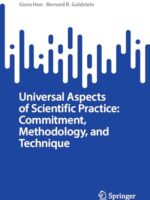
Universal Aspects of Scientific Practice: Commitment, Methodology, and Technique
$22.99Buy Universal Aspects of Scientific Practice: Commitment, Methodology, and Technique (Springer 2023) — a groundbreaking analysis of what scientists actually do, from two leading scholars.
$50.00-
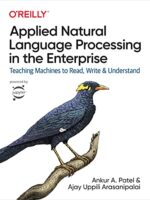
Applied Natural Language Processing in the Enterprise
$26.99Master NLP with BERT and GPT-3 using Python in this hands-on guide for enterprise practitioners. Get your copy now.
$56.00 -
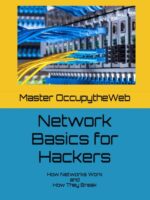
Network Basics for Hackers: How Networks Work and How to Break Them
$8.00Master network exploitation with Occupytheweb’s practical guide to protocols, packet analysis, and attack techniques — your foundation for real-world hacking.
$13.00 -
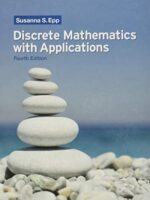
Discrete Mathematics with Applications 4th Edition Epp
$20.99Master discrete mathematics with Susanna Epp’s clear, application-driven Fourth Edition — the essential textbook for computer science and engineering students.
$59.00 -
C++ for Everyone 2nd Edition – Cay Horstmann eBook
$12.99Master C++ programming fast with Cay Horstmann’s focused, beginner-friendly guide. No prior experience needed—start coding today.
$26.00 -
Programming Bitcoin: Learn How to Program Bitcoin from Scratch
$19.99Master Bitcoin internals by coding a complete library from scratch with Jimmy Song’s hands-on guide for Python developers.
$39.00 -
Getting Started Becoming a Master Hacker: The Ultimate Hands-On Hacking Guide
$8.00Master offensive hacking with step-by-step tutorials from Occupytheweb. Recon, exploitation, web attacks, and more — buy your copy now.
$13.00 -
Mastering the Lightning Network: A Second Layer Blockchain Protocol for Instant Bitcoin Payments
$18.00Master the Lightning Network: the definitive guide to instant Bitcoin payments. Co-authored by LN creators, this O’Reilly book covers everything from payment channels to advanced routing.
$30.00