save
$29.01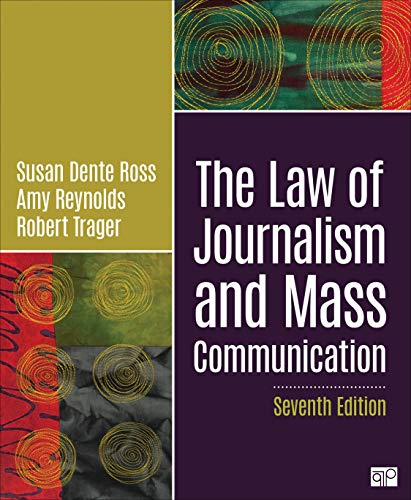
The Law of Journalism and Mass Communication 7th Edition
Master media law with the fully updated Seventh Edition. Essential for students and professionals — get your copy now.
Want to preview before you buy? Click Request Free Sample and tell us which chapter or pages you’d like to see, along with your email address. We’ll send you those pages from the eBook so you can be sure it’s the right one before buying.
- Instant download & lifetime access Available as soon as your payment is confirmed. Your download link is also sent to the email address you provide at checkout, and you can download your purchased eBook anytime from My Account → Downloads with unlimited downloads. An account is created automatically using the same email address.
- Own your eBook Receive the available PDF/EPUB file directly after purchase. No rental or temporary access — download and keep your eBook for personal use with lifetime access.
- Full refund guarantee If the eBook you receive does not match the details and description provided on the product page, contact [email protected] and we’ll issue a full refund within 24 hours.
- Secure payment through PayPal Pay securely by debit or credit card or with your PayPal account. Your card details are processed by PayPal and are never stored on our site.
$15.99$45.00
Why This Book Matters
Navigating the complex intersection of media, law, and ethics is one of the greatest challenges facing modern journalists and communicators. From defamation and privacy rights to copyright and freedom of information, the legal landscape shifts constantly. Without a solid grounding in media law, professionals risk costly mistakes, ethical breaches, and legal liability. The Law of Journalism and Mass Communication delivers the authoritative, up-to-date framework you need to understand and apply the rules that govern the media industry.
About The Law of Journalism and Mass Communication 7th Edition
The Law of Journalism and Mass Communication, Seventh Edition (2020) is a comprehensive textbook authored by Susan Dente Ross, Amy Reynolds, and Robert Trager and published by CQ Press. It provides a lively, accessible, and thorough introduction to media law designed specifically for students and aspiring professional communicators. The book covers every major area of media law, including the First Amendment, libel, privacy, copyright, advertising regulation, and broadcast rules, using real-world examples and landmark cases to bring legal principles to life.
This edition has been fully updated to reflect recent Supreme Court decisions, changes in digital media regulation, and emerging issues around social media, online speech, and data privacy. It is widely adopted in journalism, mass communication, and media studies programs across the United States.
Who Should Read This Book?
This book is essential for anyone who creates, distributes, or manages content in a professional capacity. It is specifically designed for:
- Journalism and mass communication students enrolled in undergraduate or graduate media law courses
- Working journalists and editors who need a reliable legal reference to avoid libel, invasion of privacy, or copyright infringement
- Public relations and advertising professionals who must navigate regulatory and ethical boundaries in campaigns and messaging
- Media lawyers and paralegals seeking a clear, structured overview of U.S. media law
- Social media managers and digital content creators dealing with issues of free speech, defamation, and intellectual property online
Skills You Will Gain
This textbook equips you with actionable legal knowledge across six critical domains:
- First Amendment Foundations — Understand the core principles of free speech and press, including the history and evolving interpretation of the First Amendment
- Defamation Law — Learn the elements of libel and slander, actual malice standards, and defenses available to media defendants
- Privacy Rights — Master the four privacy torts (intrusion, public disclosure, false light, and appropriation) and how they apply to modern reporting
- Copyright and Intellectual Property — Navigate fair use, copyright infringement, and protection of creative works in the digital age
- Regulation of Advertising and Commercial Speech — Identify legal boundaries for marketing, including FTC guidelines and rules for deceptive advertising
- Broadcast, Cable, and Internet Regulation — Grasp the legal framework governing electronic media, including indecency rules, spectrum allocation, and net neutrality
Why This Book Stands Out
While other media law textbooks can be dry, dense, or outdated, this Seventh Edition stands apart for several reasons. First, the authors — Ross, Reynolds, and Trager — are recognized scholars and educators with decades of combined experience in media law and communication. Their writing style is engaging and student-friendly, using contemporary case studies and hypotheticals that make abstract legal concepts concrete.
Second, the book is comprehensive yet structured. Each chapter opens with clear learning objectives, includes margin definitions of key terms, and closes with review questions and exercises. This pedagogical design helps readers retain information and apply it in real-world scenarios.
Third, the 2020 edition incorporates the most recent legal developments, including Supreme Court rulings on social media, privacy, and defamation that older editions lack. Competing texts often lag behind by several years, leaving readers with incomplete or outdated information.
Author & Publisher Credentials
The credibility of The Law of Journalism and Mass Communication rests on the expertise of its authors and the reputation of its publisher. Susan Dente Ross is a professor of English at Washington State University and a former journalist with deep knowledge of media law and diversity issues. Amy Reynolds is a professor and dean of the College of Communication and Information at Kent State University, bringing administrative and scholarly perspective. Robert Trager (now deceased) was a professor emeritus at the University of Colorado Boulder and a leading figure in media law education for decades.
CQ Press, an imprint of SAGE Publishing, is a trusted name in academic publishing, known for producing authoritative textbooks and reference works in political science, communication, and journalism. The combination of distinguished authors and a reputable academic publisher ensures that the content is accurate, balanced, and rigorously reviewed.
Final Assessment
For students and professionals who need a reliable, current, and readable guide to media law, this book is an outstanding investment. It covers the breadth of the field without sacrificing depth, and its pedagogical features make it suitable for both classroom use and self-study. The Seventh Edition’s inclusion of recent legal developments ensures that you are learning the law as it stands today, not as it was five or ten years ago.
If you are preparing for a career in journalism, public relations, advertising, or any communication field that touches on legal issues, this textbook is not just helpful — it is essential. The cost of legal ignorance in media work far exceeds the price of this book.
Get Your Copy Today
Whether you are a student tackling your first media law course or a professional seeking to update your legal knowledge, this Seventh Edition delivers everything you need. With clear explanations, up-to-date cases, and practical examples, it is the most effective tool available for understanding the legal environment of modern communication. Add to cart now and gain the legal literacy that sets successful communicators apart. Published by CQ Press in 2020, this is the edition trusted by universities nationwide.
Related products

Communication Between Cultures 9th Edition – Cengage Learning Ebook
$27.99Master intercultural communication with the Ninth Edition of Communication Between Cultures by Samovar, Porter, McDaniel & Roy—theory, strategies, and real-world applications from Cengage Learning.
$74.00-
Adobe Illustrator: A Complete Course and Compendium of Features (Jason Hoppe)
$19.99Learn Adobe Illustrator from the ground up with Jason Hoppe’s A Complete Course and Compendium of Features — hands-on, well-tested lessons paired with a full reference to every core tool and feature. Master vector design at your own pace.
$40.00 -
Nonprofit Management: Principles and Practice (5th Edition)
$17.00Master nonprofit leadership with this comprehensive 5th edition—updated research, real-world cases, and actionable frameworks for students and professionals.
$29.00 -
Communication: Principles for a Lifetime 8th Edition Beebe (Global Edition)
$32.99Master the five principles of effective communication with this comprehensive 8th edition eTextbook from Beebe, Beebe, and Ivy — perfect for students and professionals.
$82.00 -
Constitutional Law for a Changing America: Rights, Liberties, and Justice 10th Edition
$14.99Understand how political forces shape Supreme Court rulings on rights, liberties, and justice with this acclaimed 10th edition textbook by Epstein and Walker.
$29.00 -
Unlearning Liberty: Campus Censorship, End of American Debate
$7.00Buy Unlearning Liberty by Greg Lukianoff and uncover how campus censorship threatens free speech and the future of American debate—get your copy now.
$15.00 
A Pocket Guide to Public Speaking 6th Edition – O’Hair
$19.99Master public speaking with this concise 6th edition guide. Proven techniques for speech prep, delivery, and confidence. Get your copy today!
$35.00-
Essential Communication 2nd Edition — Adler, Rodman, du Pré | Oxford
$7.99Master interpersonal, group, and public communication with the Oxford-pressed 2nd edition — buy Essential Communication now for proven career-ready skills.
$15.00