save
$7.00
Studying Political Communication and Media in East Asia — Schneider
Get the definitive textbook on political communication and media in East Asia — region-specific theory, interactive exercises, and a flexible research toolbox.
Want to preview before you buy? Click Request Free Sample and tell us which chapter or pages you’d like to see, along with your email address. We’ll send you those pages from the eBook so you can be sure it’s the right one before buying.
- Instant download & lifetime access Available as soon as your payment is confirmed. Your download link is also sent to the email address you provide at checkout, and you can download your purchased eBook anytime from My Account → Downloads with unlimited downloads. An account is created automatically using the same email address.
- Own your eBook Receive the available PDF/EPUB file directly after purchase. No rental or temporary access — download and keep your eBook for personal use with lifetime access.
- Full refund guarantee If the eBook you receive does not match the details and description provided on the product page, contact [email protected] and we’ll issue a full refund within 24 hours.
- Secure payment through PayPal Pay securely by debit or credit card or with your PayPal account. Your card details are processed by PayPal and are never stored on our site.
$10.00$17.00
The Problem This Book Solves
Political communication research has long centered on Western democracies, leaving scholars and students of East Asia without contextually grounded resources. Standard textbooks apply theories developed for American or European media systems to fundamentally different political environments — resulting in flawed analyses and missed insights. This book directly addresses that gap.
Studying Political Communication and Media in East Asia provides the first dedicated textbook that equips learners with analytical tools designed for — and tested against — the media landscapes of Japan, Korea, China, and beyond. It doesn’t merely transplant Western frameworks; it builds new ones from the ground up, rooted in local languages, cultures, and political realities.
Inside Studying Political Communication and Media in East Asia — Schneider: A Full Overview
This 2025 textbook from Amsterdam University Press, authored by Florian Schneider, offers a flexible toolbox of methods and theories for studying how politics, communication, and media intersect in East Asia. Unlike conventional texts, it takes the region’s specific cultural contexts seriously — from the role of Confucian communication norms to the influence of state media structures in China and the unique dynamics of Korea’s digital civic sphere.
The book is deliberately playful in its approach, using interactive exercises, case studies, and reflection prompts to build genuine analytical skills. It positions the researcher’s own positionality as a critical factor in knowledge production, challenging students to examine their assumptions before studying political communication in unfamiliar contexts.
Who Will Benefit Most
This book is designed for three primary audiences:
- Undergraduate and graduate students in political science, communication studies, journalism, and East Asian studies programs seeking region-specific theoretical grounding.
- Early-career researchers preparing to conduct fieldwork or comparative studies in East Asian media environments.
- Instructors teaching courses on political communication, comparative media systems, or area studies who need primary source material with ready-to-use exercises and discussion guides.
It is also valuable for professional journalists and policy analysts who interact with East Asian media systems and require deeper contextual understanding beyond surface-level reporting.
What You Will Learn
- Foundations of political communication theory adapted specifically for East Asian contexts, including how media systems differ from Western models.
- Comparative analysis methods for studying political messaging across Japan, Korea, China, Taiwan, and other regional states.
- The role of digital media in East Asian political movements, from Korea’s candlelight protests to Taiwan’s social media-driven civic engagement.
- State-media relations in authoritarian and hybrid regimes, including China’s propaganda system and Singapore’s media regulation.
- Language and cultural nuance in political communication — how translation, metaphor, and rhetorical tradition shape meaning.
- Researcher positionality and its impact on data collection, interpretation, and ethical practice in cross-cultural settings.
- Practical research design using real-world case studies, interview protocols, and content analysis frameworks tailored to East Asian contexts.
How It Compares
Existing textbooks on political communication either ignore East Asia entirely or treat it as a footnote in global comparisons. Works like Comparing Political Communication (Esser & Pfetsch) focus overwhelmingly on Western cases, while area studies texts often lack rigorous communication theory. This book bridges both worlds.
What sets it apart:
- Region-specific grounding — every example, exercise, and case study draws from authentic East Asian contexts, not Western analogies.
- Playful pedagogy — interactive elements keep learners engaged while building transferable research skills.
- Positionality framework — a rare methodological emphasis on how the researcher’s identity shapes political communication research, particularly important for non-Asian scholars studying Asia.
- Open access availability through OAPEN (Library.Oapen.org) reduces cost barriers, making it accessible to students across developing economies in the region.
Author & Publisher Credentials
Florian Schneider is a recognized expert in East Asian political communication, with extensive publication record on China’s digital governance and media systems. His academic home at Leiden University positions him within one of Europe’s premier centers for Asian studies, giving the work institutional weight.
Amsterdam University Press is an established academic publisher with a strong catalog in media studies and Asian studies. The press’s peer-review process ensures scholarly rigor, while its open-access initiatives through OAPEN and UPLOpen maximize global reach — a practical advantage for students and researchers in resource-constrained settings.
The 2025 publication date confirms this is a current, up-to-date resource reflecting recent developments in East Asian media environments.
Final Assessment
Yes, unequivocally — for its target audience. This is not a general political communication text; it is a specialized resource that fills a genuine gap in the literature. For students and scholars focused on East Asia, it replaces the need to cobble together disparate journal articles and Western-centric textbooks.
The pedagogical design is its strongest asset: the exercises are not afterthoughts but core learning mechanisms. The emphasis on positionality is particularly valuable in an era where scholars increasingly recognize how their cultural assumptions shape research outcomes. Combined with the open-access version, this textbook offers exceptional value for its price.
Weaknesses? It assumes some prior familiarity with political science or communication theory — not suitable as a complete introduction to either field. And its playful style may feel unconventional to readers expecting traditional textbook prose. But for its intended use case, these are features, not bugs.
Download Studying Political Communication and Media in East Asia — Schneider Now
Whether you are a graduate student preparing for fieldwork in Tokyo, a professor designing a comparative media course, or a researcher examining Korea’s digital public sphere — this textbook gives you the tools you need, built specifically for the contexts you study.
Secure your copy of the 2025 edition from Amsterdam University Press. Add to cart now and gain access to the most regionally grounded, methodologically innovative textbook on political communication and media in East Asia available today.
Related products

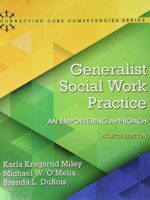
Generalist Social Work Practice: An Empowering Approach (8th Edition) – Pearson
$27.99Master empowerment-focused social work with this widely adopted 8th edition. Build client strengths, navigate multi-level systems, and pass your licensure exam with confidence.
$75.00-
Behavioral Genetics 7th Edition – Knopik, Neiderhiser, deFries, Plomin
$20.00Master heredity, DNA, and genetic methods with Behavioral Genetics, 7th Edition—the authoritative textbook by Knopik, Neiderhiser, deFries, and Plomin from Worth Publishers.
$41.00 -
Constitutional Law for a Changing America: Rights, Liberties, and Justice 10th Edition
$14.99Understand how political forces shape Supreme Court rulings on rights, liberties, and justice with this acclaimed 10th edition textbook by Epstein and Walker.
$29.00 -
Groups: Process and Practice 10th Edition – Group Counseling Text
$30.00Master group counseling with Corey & Corey’s 10th Edition – the definitive guide blending theory, ethics, and practical skills for students and professionals.
$79.00 -
General and Social Psychology by Robert H. Thouless – 2nd Edition
$19.99Secure your copy of the General and Social Psychology textbook by Robert H. Thouless, a classic for students of economics and social sciences.
$40.00 -
Unlearning Liberty: Campus Censorship, End of American Debate
$7.00Buy Unlearning Liberty by Greg Lukianoff and uncover how campus censorship threatens free speech and the future of American debate—get your copy now.
$15.00 -
American Government 101: Everything You Need to Know About U.S. Politics
$3.00Master US politics with American Government 101 – the concise, engaging guide to elections, the Constitution, and how government works. Order now!
$9.00 -
Applied Sport Psychology 7e: Personal Growth to Peak
$29.99Achieve peak performance with Applied Sport Psychology 7e. Master proven psychological techniques for personal growth. Get your digital copy today.
$59.00