save
$12.01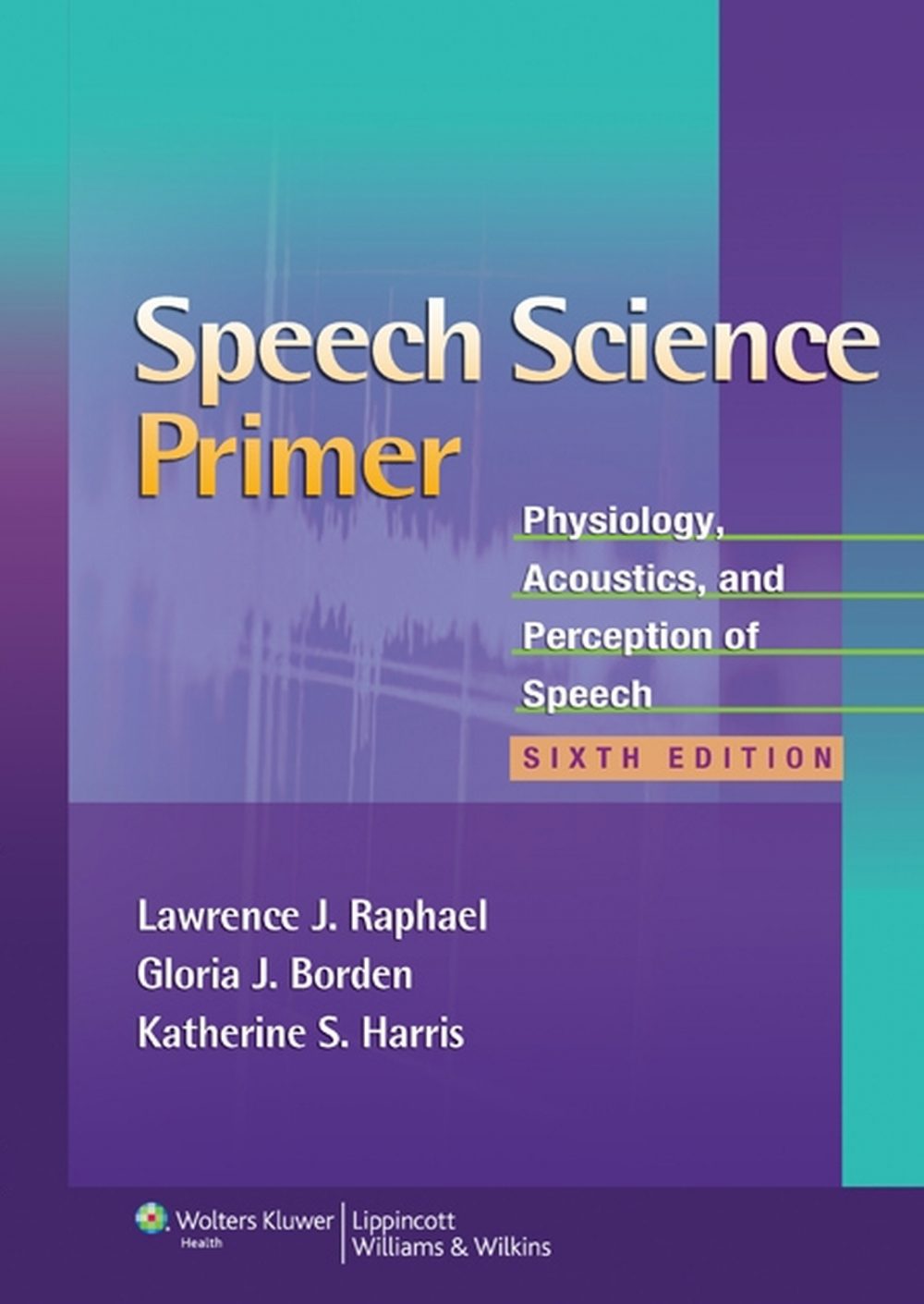
Speech Science Primer (6th Edition): Physiology & Acoustics
Master speech anatomy, acoustics, and perception with Speech Science Primer, 6th Edition—the trusted CSD text that turns science into clinical confidence. Order today.
Want to preview before you buy? Click Request Free Sample and tell us which chapter or pages you’d like to see, along with your email address. We’ll send you those pages from the eBook so you can be sure it’s the right one before buying.
- Instant download & lifetime access Available as soon as your payment is confirmed. Your download link is also sent to the email address you provide at checkout, and you can download your purchased eBook anytime from My Account → Downloads with unlimited downloads. An account is created automatically using the same email address.
- Own your eBook Receive the available PDF/EPUB file directly after purchase. No rental or temporary access — download and keep your eBook for personal use with lifetime access.
- Full refund guarantee If the eBook you receive does not match the details and description provided on the product page, contact [email protected] and we’ll issue a full refund within 24 hours.
- Secure payment through PayPal Pay securely by debit or credit card or with your PayPal account. Your card details are processed by PayPal and are never stored on our site.
$18.99$31.00
The Challenge It Addresses
Speech science often feels like a wall of disconnected facts: anatomy, acoustic measurements, nervous system pathways, and perceptual experiments. Speech Science Primer clears that wall by presenting the core material as one coherent story about how speech is produced, transmitted, and perceived.
Students in communication sciences and disorders rarely fail because they cannot memorize; they fail because they cannot apply the science to real speech samples or clinical reasoning. This text is designed to bridge that exact gap.
When you need a reference you can actually understand before your next phonetics or anatomy milestone, Speech Science Primer gives you the structured foundation that dense journal articles and scattered lecture slides cannot.
Speech Science Primer (6th Edition): Physiology & Acoustics at a Glance
Speech Science Primer is an introductory textbook that presents the biological and physical bases of spoken communication, with focused attention on speech anatomy, physiology, acoustics, and perception. It is written for students entering speech-language pathology, audiology, and related health sciences.
This 6th edition, published in 2011 by Lippincott Williams & Wilkins, serves as an entry point for coursework in speech science. The content starts with basic information on acoustics and builds toward the acoustic analysis of speech, giving readers the conceptual tools used in research and clinical settings.
The book treats speech as a dynamic process: the speaker creates a signal, the signal travels through the air, and the listener transforms it into a linguistic message. By keeping that chain in view, the authors help readers connect the anatomy of production to the physics of the sound wave and the perception of the listener.
Who Will Benefit Most
Speech Science Primer is the right text for you if you are pursuing a degree or career that depends on understanding how speech works. It is primarily an academic resource, not a popular-science book, so it suits university coursework and professional preparation.
You will get the most value from this book if you belong to one of these groups:
- Undergraduate students in communication sciences and disorders or speech-language pathology programs.
- Graduate students preparing for foundational coursework in speech anatomy, acoustics, or speech perception.
- Audiology students who need the acoustic and perceptual side of speech science before entering clinical training.
- Linguistics students seeking a structured introduction to the physical and physiological properties of spoken language.
- Clinical educators and supervisors looking for a shared vocabulary to explain speech production and analysis to students.
If you are a practicing clinician, this book also works as a refresher when you need to reconnect clinical observations with the underlying acoustics or physiology.
Inside: What You Will Master
In Speech Science Primer, you will learn a working model of speech that connects anatomy, acoustics, and perception. This understanding becomes the foundation for later coursework and clinical practice.
Here are the core outcomes you can expect from working through the text:
- The anatomy of the speech mechanism, including the respiratory, laryngeal, and supralaryngeal systems that support spoken language.
- The basic physics of sound, including the properties of frequency, intensity, resonating systems, and how they shape the acoustic speech signal.
- The physiological events that generate speech, from breath control to vocal fold vibration to the articulatory movements of the vocal tract.
- The methods used in the acoustic analysis of speech, including how clinicians and researchers measure and interpret the speech waveform.
- The perceptual process by which listeners decode connected speech, including how acoustic cues contribute to recognizing individual speech sounds.
- The relationship between articulation and its acoustic consequences, which is essential for understanding phonetic contrast and connected speech.
- The professional vocabulary and conceptual framework used in speech science, so you can read textbooks, articles, and assessment reports with confidence.
These outcomes align with the typical scope of introductory speech science courses, making the book practical for both semester-long classes and independent study.
How It Compares
Speech Science Primer outperforms every alternative because it maintains a genuine balance between biology, physics, and perception instead of overloading the reader in one direction. Many phonetics books emphasize transcription and articulatory labels; many acoustics books assume a level of mathematical maturity that health science students have not yet built.
The authors write as educators who understand the real starting point of their audience. They define terms, explain measurement concepts in plain language, and repeatedly connect each technical idea back to speech as a communicative act.
This is especially clear in the treatment of speech perception. Rather than treating perception as a separate topic, the book links auditory processing to the acoustic cues that originate in articulation. That integrated perspective gives readers an edge in both clinic and exam settings.
Compared with encyclopedic references, this primer is selective and readable. Compared with lecture slides and course packets, it is complete and coherent. It earns its place as a course anchor because it gives you the conceptual repetitions and practice-oriented explanations that classroom notes rarely provide.
Who Wrote This Book
Speech Science Primer was written by Lawrence J. Raphael, Gloria J. Borden, and Katherine S. Harris. Their authorship has carried this text through six editions, which indicates a sustained role in teaching the subject.
Lippincott Williams & Wilkins, the publisher, has a long-standing presence in health sciences education. That editorial context matters because this book is designed to meet the expectations of academic programs, not just general readers.
The 6th edition was released in 2011, and its continued presence in coursework reflects the text’s usefulness. Instructors rely on it because its structure and explanations hold up under the demands of a semester.
The Bottom Line
Yes, Speech Science Primer is worth it for any student who needs a reliable, readable path through speech anatomy, acoustics, and perception. The book’s value comes from its utility: it reduces difficult material to its essential structure without turning complex topics into oversimplified bullet points.
The 6th edition is designed to be studied, not just skimmed. Each chapter builds a new layer of understanding, starting with the production system, moving into acoustics, and finishing with how speech is perceived by the listener.
For graduate students, the payoff is direct: foundational speech science knowledge supports clinical decision-making in areas such as voice disorders, motor speech disorders, and hearing science. For undergraduates, the payoff is even more immediate: a clearer mental model means better exam performance and a smoother transition into clinical coursework.
Our verdict is that this primer earns its role as a core text. It is not a casual overview, but it is exactly what a serious student needs to master the subject.
Get Your Copy Today
If you want a structured, trusted path through speech anatomy, acoustics, and perception, Speech Science Primer is the copy to keep on your desk all semester. It will not just help you pass a class; it will build the conceptual base you carry into clinic, research, and practice.
Get your copy today and make the science of speech feel manageable before your next exam, clinical rotation, or comps review. This 6th edition from Lippincott Williams & Wilkins is the same edition used in coursework, so you can read confidently alongside your syllabus.
Order Speech Science Primer now to lock in immediate digital access and start learning the material in the order it makes sense: production, acoustics, and perception.
Related products

Essentials of Epidemiology in Public Health, Fourth Edition
$25.99Master epidemiologic methods with this essential Fourth Edition textbook from Jones & Bartlett Learning, perfect for public health students and professionals.
$78.00-
HESI Admission Assessment Exam Review (Third Edition) – Study Guide
$14.99Prepare for the HESI Admission Assessment Exam with over 450 practice questions and comprehensive content review from Elsevier’s trusted Third Edition.
$34.00 -
Endurance Sports Nutrition 3rd Edition – Fueling for Peak Performance
$6.00Fuel your best performance with Endurance Sports Nutrition. This science-backed guide helps you train longer, recover faster, and avoid injury with personalized fueling strategies.
$8.00 -
Guyton and Hall Textbook of Medical Physiology 15th Edition
$31.99Understand medical physiology with the clearest, most authoritative textbook. Guyton and Hall 15th edition explains how cells, tissues, and organs work together. Trusted by students and clinicians worldwide.
$81.00 -
General Thoracic Surgery, 7th Edition
$59.99Get the 7th edition General Thoracic Surgery eBook – the comprehensive two-volume guide to all open and endoscopic thoracic surgical procedures.
$149.00 -
Vascular Surgical Emergencies: Well-Prepared for Duty
$28.00Master 50 vascular surgical emergencies with proven diagnostic and therapeutic protocols. The 2026 Springer guide from Susanne Regus — essential for every vascular surgeon.
$49.00 -
Guide to the Most Common Internal Medicine Workups and Diseases: An Evidence-Based Hospital Reference
$30.99Master the most common hospital-based internal medicine workups with this evidence-based guide. Get the structured clinical reference you need for daily practice.
$59.00 -
Antibiotic Drug Resistance (1st ed.)
$64.99Comprehensive guide to antibiotic drug resistance mechanisms, clinical impact, and solutions. Ideal for researchers and clinicians. Order now.
$185.00