save
$17.01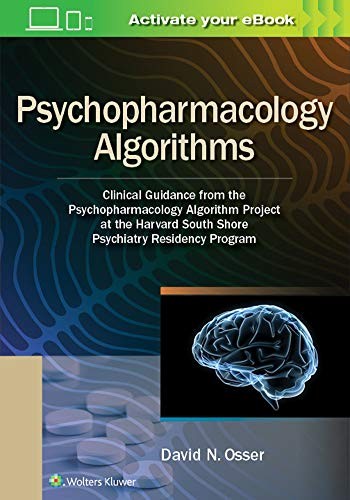
Psychopharmacology Algorithms: Harvard Psychiatry Clinical Guidance
Get Psychopharmacology Algorithms: evidence-based medication algorithms from Harvard psychiatrists for effective psychiatric treatment. Order now.
Want to preview before you buy? Click Request Free Sample and tell us which chapter or pages you’d like to see, along with your email address. We’ll send you those pages from the eBook so you can be sure it’s the right one before buying.
- Instant download & lifetime access Available as soon as your payment is confirmed. Your download link is also sent to the email address you provide at checkout, and you can download your purchased eBook anytime from My Account → Downloads with unlimited downloads. An account is created automatically using the same email address.
- Own your eBook Receive the available PDF/EPUB file directly after purchase. No rental or temporary access — download and keep your eBook for personal use with lifetime access.
- Full refund guarantee If the eBook you receive does not match the details and description provided on the product page, contact [email protected] and we’ll issue a full refund within 24 hours.
- Secure payment through PayPal Pay securely by debit or credit card or with your PayPal account. Your card details are processed by PayPal and are never stored on our site.
$21.99$39.00
The Gap This Book Fills
Psychiatric medication management is fraught with complexity. Clinicians must navigate overlapping symptom profiles, comorbid conditions, and a rapidly expanding pharmacopeia — all while balancing efficacy, tolerability, and patient-specific factors. Without a structured, evidence-based framework, treatment decisions can become inconsistent, suboptimal, or even harmful. Psychopharmacology Algorithms directly addresses this challenge by providing peer-reviewed, step-by-step decision pathways developed by the Psychopharmacology Algorithm Project at the Harvard South Shore Psychiatry Residency Program. This book translates the latest research into actionable clinical tools, reducing guesswork and improving patient outcomes.
The algorithms are designed to be used at the point of care, offering clear recommendations for medication selection, dosing, and sequencing. They cover a wide range of psychiatric conditions, including major depressive disorder, bipolar disorder, schizophrenia, anxiety disorders, ADHD, and agitation. Each algorithm is based on a systematic review of the evidence and incorporates expert consensus where data are limited. This ensures that clinicians have access to the most current and reliable guidance available.
Psychopharmacology Algorithms: Harvard Psychiatry Clinical Guidance at a Glance
Psychopharmacology Algorithms is a collection of peer-reviewed algorithms covering the medication treatment of major psychiatric conditions. Compiled by David N. Osser and colleagues from the Harvard South Shore Psychiatry Residency Program, this 2021 publication offers updated clinical guidance drawn from the Psychopharmacology Algorithm Project. The book includes introductory material that contextualizes the algorithms within current practice standards, making it a practical reference for busy clinicians.
The algorithms are organized by condition, with each chapter presenting a stepwise approach to medication selection and management. They include considerations for special populations, such as patients with comorbid medical illnesses, substance use disorders, or pregnancy. The algorithms also address common clinical challenges, such as treatment resistance, partial response, and adverse effects. By following these pathways, clinicians can reduce variability in care and improve outcomes for their patients.
Who Will Benefit Most
This book is specifically tailored for healthcare professionals who prescribe or manage psychiatric medications. The primary audience includes:
- Practicing psychiatrists seeking evidence-based decision support
- Psychiatry residents and fellows in training
- Psychiatric nurse practitioners and physician assistants
- Clinical pharmacists specializing in psychopharmacology
- Primary care providers managing psychiatric conditions
- Medical students on psychiatry rotations
- Researchers interested in algorithmic approaches to treatment
Even experienced clinicians will find value in the algorithms, as they provide a structured framework that can be adapted to individual patient needs. The book is also useful for educators who teach psychopharmacology, as it offers a clear, logical approach to medication management that can be easily communicated to trainees.
What You Will Learn
By studying the algorithms in this book, readers will gain practical knowledge in the following areas:
- Step-by-step medication selection for major depressive disorder
- Algorithmic management of bipolar disorder across mood states
- Evidence-based treatment pathways for schizophrenia and psychosis
- Sequencing strategies for treatment-resistant anxiety disorders
- Medication algorithms for attention-deficit/hyperactivity disorder
- Management of agitation in psychiatric and medical settings
- Approaches to comorbid psychiatric and substance use disorders
- Integration of pharmacogenomic data into clinical decision-making
Each algorithm includes specific guidance on first-line agents, augmentation strategies, and when to consider switching medications. The algorithms also highlight key decision points, such as when to use combination therapy or when to refer for more specialized care. This practical focus ensures that clinicians can apply the algorithms immediately in their daily practice.
What Sets It Apart
Unlike traditional textbooks that present exhaustive but static information, Psychopharmacology Algorithms offers a dynamic, algorithm-driven approach that mirrors real-world clinical reasoning. Competing resources such as the APA Practice Guidelines provide broad recommendations but lack the granular, stepwise logic needed for individual patient decisions. Online databases like UpToDate offer depth but can be overwhelming and time-consuming to navigate. This book condenses the expertise of Harvard psychiatrists into concise, portable algorithms that can be referenced in seconds. Furthermore, the algorithms are peer-reviewed and updated, ensuring they reflect the most current evidence — a critical advantage over older editions of standard texts.
Another key differentiator is the direct link to the Psychopharmacology Algorithm Project, which has been developing and refining these algorithms for over two decades. This project has a proven track record of producing clinically useful guidance that is both evidence-based and practical. The algorithms have been validated in clinical settings and are widely used in training programs across the country. No other single resource offers this combination of rigor, relevance, and accessibility.
Behind the Book
David N. Osser, MD, is a renowned psychopharmacologist and Associate Professor of Psychiatry at Harvard Medical School. He leads the Psychopharmacology Algorithm Project at the Harvard South Shore Psychiatry Residency Program, where he has dedicated decades to refining evidence-based treatment algorithms. His work is widely cited in the psychiatric literature, and he is a sought-after speaker on algorithmic approaches to medication management. The book is published by Wolters Kluwer, a global leader in medical information and clinical decision support tools. Wolters Kluwer’s rigorous peer-review process and commitment to evidence-based content ensure that this resource meets the highest standards of clinical accuracy.
The algorithms themselves are peer-reviewed by a panel of experts, ensuring that they reflect the best available evidence and clinical consensus. This peer-review process is a hallmark of the Psychopharmacology Algorithm Project and sets this book apart from many other clinical guides. Additionally, the Harvard affiliation adds a layer of credibility that clinicians can trust.
Our Verdict
For any clinician who regularly prescribes psychiatric medications, Psychopharmacology Algorithms is an indispensable tool. Its algorithm-based format reduces cognitive load and promotes consistent, evidence-based care. The direct link to the Harvard Psychopharmacology Algorithm Project adds a layer of credibility that few competing resources can match. While the book does not include extensive background chapters on psychopharmacology, it excels in its focused mission: providing actionable, step-by-step guidance at the point of care. We consider it a high-value investment for improving clinical decision-making and patient outcomes.
The algorithms are particularly valuable for clinicians who are early in their careers or who are looking to refresh their knowledge. They also serve as an excellent reference for more experienced practitioners who want to ensure they are following best practices. Given the complexity of modern psychopharmacology, having a reliable, evidence-based decision aid is essential. This book delivers on that promise.
Add Psychopharmacology Algorithms: Harvard Psychiatry Clinical Guidance to Your Library
If you are a psychiatrist, resident, psychiatric nurse practitioner, or other clinician managing psychiatric medications, this book will transform your approach to treatment decisions. The peer-reviewed algorithms from Harvard’s Psychopharmacology Algorithm Project give you the confidence to choose the right medication at the right time. Order your copy today and bring the power of algorithmic psychopharmacology into your practice. Published by Wolters Kluwer in 2021, this is the most current edition available.
Related products

Vascular Access: Principles and Practice 5th Edition – Comprehensive Textbook
$48.99Master all aspects of vascular access for hemodialysis, chemotherapy, nutrition, and critical care with this practical 5th edition textbook by Samuel Eric Wilson. Get the definitive how-to guide now.
$141.00-
Guyton and Hall Textbook of Medical Physiology 15th Edition
$31.99Understand medical physiology with the clearest, most authoritative textbook. Guyton and Hall 15th edition explains how cells, tissues, and organs work together. Trusted by students and clinicians worldwide.
$81.00 -
HESI Admission Assessment Exam Review (Third Edition) – Study Guide
$14.99Prepare for the HESI Admission Assessment Exam with over 450 practice questions and comprehensive content review from Elsevier’s trusted Third Edition.
$34.00 -
Feigin & Cherry’s Textbook of Pediatric Infectious Diseases, 9th Edition
$94.99Get the definitive 9th edition of Feigin and Cherry’s Textbook of Pediatric Infectious Diseases – the premier two-volume reference for pediatric ID professionals. Order now for instant digital access!
$271.00 -
Antibiotic Drug Resistance (1st ed.)
$64.99Comprehensive guide to antibiotic drug resistance mechanisms, clinical impact, and solutions. Ideal for researchers and clinicians. Order now.
$185.00 -
Davis’s Comprehensive Handbook of Laboratory & Diagnostic Tests, 8th Edition
$18.00Master every lab and diagnostic test with nursing implications you can trust. The 8th edition of Davis’s Comprehensive Handbook is your pocket-sized guide to accurate interpretation and safe patient care.
$33.00 -
Farquharson’s Textbook of Operative General Surgery 11th Ed
$40.99Master operative surgery with the Eleventh Edition of Farquharson’s essential textbook for surgical trainees, featuring 490 color illustrations and expert guidance.
$91.00 -
Vascular Surgical Emergencies: Well-Prepared for Duty
$28.00Master 50 vascular surgical emergencies with proven diagnostic and therapeutic protocols. The 2026 Springer guide from Susanne Regus — essential for every vascular surgeon.
$49.00