save
$9.01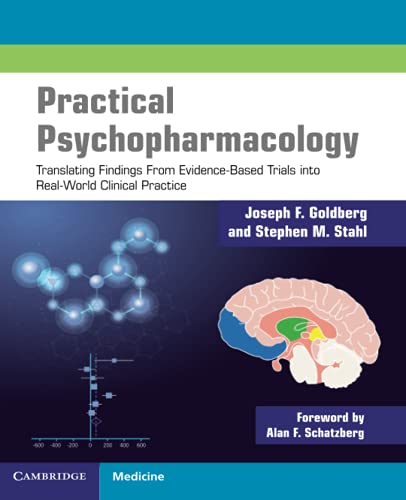
Practical Psychopharmacology: Translating Findings from Evidence-Based Trials into Real-World Clinical Practice
Translate clinical trial evidence into real-world treatment plans with Practical Psychopharmacology — the essential 2021 guide from Goldberg & Stahl (Cambridge University Press).
Want to preview before you buy? Click Request Free Sample and tell us which chapter or pages you’d like to see, along with your email address. We’ll send you those pages from the eBook so you can be sure it’s the right one before buying.
- Instant download & lifetime access Available as soon as your payment is confirmed. Your download link is also sent to the email address you provide at checkout, and you can download your purchased eBook anytime from My Account → Downloads with unlimited downloads. An account is created automatically using the same email address.
- Own your eBook Receive the available PDF/EPUB file directly after purchase. No rental or temporary access — download and keep your eBook for personal use with lifetime access.
- Full refund guarantee If the eBook you receive does not match the details and description provided on the product page, contact [email protected] and we’ll issue a full refund within 24 hours.
- Secure payment through PayPal Pay securely by debit or credit card or with your PayPal account. Your card details are processed by PayPal and are never stored on our site.
$12.99$22.00
The Challenge It Addresses
Every practicing clinician faces a persistent challenge: clinical trial results rarely map neatly onto the complex, comorbid, treatment-resistant patients in your waiting room. Practical Psychopharmacology was written specifically to bridge that gap — translating rigid evidence-based data into actionable, individualized treatment strategies for real-world psychiatric practice.
Whether you are a psychiatrist, psychiatric nurse practitioner, or primary care physician managing mental health, this book provides the decision-making framework you need to move beyond cookie-cutter algorithms and tailor pharmacotherapy to each patient’s unique biology and circumstances.
Inside Practical Psychopharmacology: Translating Findings from Evidence-Based Trials into Real-World Clinical Practice: A Full Overview
Practical Psychopharmacology: Translating Findings from Evidence-Based Trials into Real-World Clinical Practice is a 2021 guide from Cambridge University Press, authored by Joseph F. Goldberg, M.D., M.S., and Stephen M. Stahl, M.D., Ph.D., D.Sc.(Hon). It is not a traditional textbook of drug mechanisms; it is a clinical decision-making manual that teaches you how to interpret and apply research findings in the messy, unpredictable environment of daily practice.
The book covers major psychiatric disorders — including depression, bipolar disorder, schizophrenia, and anxiety disorders — and offers systematic approaches to treatment selection, combination therapy, switching strategies, and managing partial response or nonresponse. It integrates evidence-based medicine with clinical experience, giving you both the data and the heuristic tools to apply it.
Who Is This Book For?
This book is designed for clinicians who prescribe psychotropic medications and want to elevate their practice from formulaic prescribing to sophisticated, patient-centered pharmacotherapy. It is especially valuable for:
- Psychiatrists in clinical practice seeking a practical, evidence-based framework
- Psychiatric residents and fellows building their decision-making skills
- Nurse practitioners and physician assistants specializing in mental health
- Primary care physicians managing psychiatric comorbidities
- Clinical pharmacists and researchers who need a bridge between trials and practice
If you have ever struggled to apply a randomized controlled trial to a patient with three comorbidities and a history of treatment failure, this book was written for you.
Key Takeaways
- How to critically appraise clinical trial evidence and determine its applicability to your specific patient population
- Strategies for treatment selection when multiple evidence-based options exist but no clear winner emerges from the data
- How to design rational combination and augmentation regimens based on pharmacodynamic and pharmacokinetic principles
- Approaches to managing partial response, nonresponse, and intolerance across the major psychiatric disorders
- How to sequence and switch medications to minimize relapse risk and side-effect burden
- Methods for incorporating patient preference, comorbidity, and prior treatment history into a personalized treatment plan
Why This Book Stands Out
Most psychopharmacology texts fall into one of two camps: dense mechanistic reference works that ignore clinical context, or simplistic algorithm guides that ignore individual variation. Practical Psychopharmacology occupies a rare middle ground — it is both evidence-rich and clinically grounded.
Unlike the Stahl’s Essential Psychopharmacology series (also co-authored by Dr. Stahl), which focuses on neurobiology and drug mechanisms, this volume is explicitly about decision-making under uncertainty. It does not just tell you what the studies say; it shows you how to think about them when the studies do not perfectly match your patient. Competitor books often stop at summarizing trial results; this one teaches you how to weigh conflicting evidence, handle off-label situations, and make defensible choices when guidelines are silent.
Furthermore, the dual-author perspective — combining Goldberg’s clinical trial expertise with Stahl’s psychopharmacology authority — ensures a balanced, rigorous, yet practical approach that no single-author text can match.
Author & Publisher Credentials
Joseph F. Goldberg, M.D., M.S., is Clinical Professor of Psychiatry at the Icahn School of Medicine at Mount Sinai in New York. He has published extensively on the methodology of clinical trials in psychopharmacology and brings a critical, research-literate eye to the evidence base.
Stephen M. Stahl, M.D., Ph.D., D.Sc.(Hon), is perhaps the most widely recognized name in psychopharmacology education. Author of the seminal Stahl’s Essential Psychopharmacology series, Dr. Stahl has shaped how generations of clinicians understand the neurobiological basis of drug action. His involvement ensures that every recommendation in this book is grounded in deep mechanistic understanding.
The book is published by Cambridge University Press, one of the world’s oldest and most respected academic publishers, guaranteeing rigorous peer review and editorial quality.
Final Assessment
For any clinician who prescribes psychiatric medications and wants to move beyond rote algorithm-following to genuine, evidence-informed, individualized care, Practical Psychopharmacology is not just worth it — it is essential. The 2021 publication date ensures that the evidence and examples reflect the most current thinking in the field, including recent developments in treatment-resistant depression, bipolar maintenance therapy, and schizophrenia management.
This is not a book you read once and shelve. It is a clinical companion you will return to whenever you face a tough treatment decision. The combination of critical trial appraisal, practical heuristics, and disorder-specific guidance makes it a uniquely valuable resource for both early-career and seasoned clinicians.
Get Your Copy Today
If you are ready to close the gap between what the studies show and what your patients need, this is the guide that will get you there. Order your copy of Practical Psychopharmacology from Cambridge University Press today and start translating evidence into better outcomes — one patient at a time. With its 2021 edition, you are investing in the most current, clinically applicable psychopharmacology resource available.
Related products

HESI Admission Assessment Exam Review (Third Edition) – Study Guide
$14.99Prepare for the HESI Admission Assessment Exam with over 450 practice questions and comprehensive content review from Elsevier’s trusted Third Edition.
$34.00-
Guyton and Hall Textbook of Medical Physiology 15th Edition
$31.99Understand medical physiology with the clearest, most authoritative textbook. Guyton and Hall 15th edition explains how cells, tissues, and organs work together. Trusted by students and clinicians worldwide.
$81.00 -
55 Cases in Neurology: Case Histories and Patient Perspectives by Mark McCarron
$22.99Boost your neurological diagnostic skills with 55 real-world cases and patient perspectives from a 20-year veteran neurologist — the essential casebook for junior doctors and trainees.
$41.00 -
Feigin & Cherry’s Textbook of Pediatric Infectious Diseases, 9th Edition
$94.99Get the definitive 9th edition of Feigin and Cherry’s Textbook of Pediatric Infectious Diseases – the premier two-volume reference for pediatric ID professionals. Order now for instant digital access!
$271.00 -
Vascular Surgical Emergencies: Well-Prepared for Duty
$28.00Master 50 vascular surgical emergencies with proven diagnostic and therapeutic protocols. The 2026 Springer guide from Susanne Regus — essential for every vascular surgeon.
$49.00 -
Diseases and Disorders: A Nursing Therapeutics Manual, 6th Edition — Marilyn Sawyer Sommers
$17.00Master 240+ diseases with nursing diagnoses, interventions, and patient teaching — all in one portable, evidence-based manual for students and clinicians.
$31.00 -
Medication Fact Book for Psychiatric Practice, Fifth Edition
$14.99The Medication Fact Book for Psychiatric Practice, Fifth Edition: the essential, portable reference for dosing, costs, and side effects of common psychotropic drugs.
$29.00 -
Child and Adolescent Mental Health Screening, Evidence-Based Assessment, Intervention, and Health Promotion, 3rd Edition
$30.99The essential evidence-based guide for child and adolescent mental health screening, assessment, and intervention—updated third edition with practical tools and KySS framework.
$65.00