save
$16.01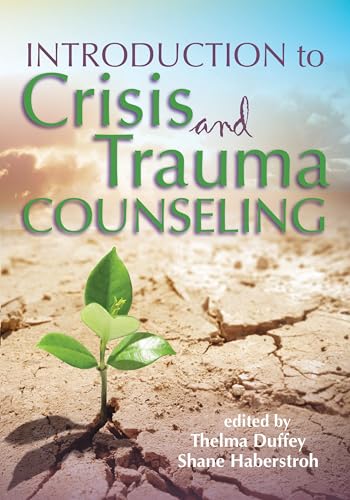
Introduction to Crisis and Trauma Counseling
Master crisis and trauma counseling with this ACA-published text integrating evidence-based models and relational-cultural theory to transform your clinical practice.
Want to preview before you buy? Click Request Free Sample and tell us which chapter or pages you’d like to see, along with your email address. We’ll send you those pages from the eBook so you can be sure it’s the right one before buying.
- Instant download & lifetime access Available as soon as your payment is confirmed. Your download link is also sent to the email address you provide at checkout, and you can download your purchased eBook anytime from My Account → Downloads with unlimited downloads. An account is created automatically using the same email address.
- Own your eBook Receive the available PDF/EPUB file directly after purchase. No rental or temporary access — download and keep your eBook for personal use with lifetime access.
- Full refund guarantee If the eBook you receive does not match the details and description provided on the product page, contact [email protected] and we’ll issue a full refund within 24 hours.
- Secure payment through PayPal Pay securely by debit or credit card or with your PayPal account. Your card details are processed by PayPal and are never stored on our site.
$22.99$39.00
The Gap This Book Fills
Crisis and trauma counseling requires more than a checklist of interventions. When clients arrive in the aftermath of violence, loss, or systemic oppression, the counselor’s ability to build a dignified, respectful therapeutic relationship determines clinical outcomes. Yet many training programs emphasize technique over relational depth, leaving practitioners unprepared for the nuanced cultural, contextual, and power dynamics that shape trauma responses. Introduction to Crisis and Trauma Counseling directly addresses this gap by placing relational-cultural theory at the center of evidence-based crisis care.
Introduction to Crisis and Trauma Counseling by Duffey & Haberstroh (2020) at a Glance
Introduction to Crisis and Trauma Counseling is a 2020 textbook edited by Thelma Duffey and Shane Haberstroh and published by the American Counseling Association. It integrates evidence-based theoretical constructs and models with a relational-cultural framework, emphasizing that therapeutic healing depends on the quality of the counselor-client relationship. The book explores progressive views of relational dynamics, attuned to offering dignity and respectful care, while critically examining the role of power, privilege, culture, and context in the healing process.
This volume is structured to provide counselors and mental health professionals with current essential information and practical examples. Unlike older crisis texts that treat relationship as a soft skill, this book positions it as the central mechanism of change. Each chapter builds from the premise that trauma is relational in origin and must be addressed relationally in practice.
Who Is This Book For?
This book is designed for counselors, counseling students, and mental health professionals who work with individuals, families, or communities affected by crisis and trauma. It is particularly valuable for:
- Graduate students in counseling, psychology, social work, and marriage and family therapy programs seeking a relational trauma-informed foundation.
- Licensed professional counselors (LPCs), clinical social workers, and psychologists wanting to integrate relational-cultural theory into their crisis intervention practice.
- School counselors and community mental health workers addressing acute trauma from violence, natural disasters, or systemic inequity.
- Educators and supervisors training the next generation of trauma-responsive clinicians.
- Military and VA counselors working with veterans and active-duty personnel experiencing combat-related trauma.
If your clinical approach currently relies on manualized techniques without grounding in relationship and culture, this book will fundamentally reshape your practice.
Key Takeaways
Through its integrated framework, Introduction to Crisis and Trauma Counseling delivers actionable knowledge across eight critical domains:
- Evidence-based crisis intervention models grounded in current research and best practices.
- Relational-cultural theory as a lens for understanding trauma’s interpersonal and systemic roots.
- Strategies for offering dignity and respectful care to clients from diverse backgrounds.
- How power, privilege, culture, and context shape both the traumatic experience and the therapeutic response.
- Techniques for assessing trauma symptoms and crises in a culturally sensitive manner.
- Self-care and vicarious trauma prevention for counselors working with high-acuity populations.
- Ethical considerations unique to crisis and trauma work, including boundaries and mandatory reporting.
- Application of relational principles to specific populations: survivors of interpersonal violence, refugees, first responders, and LGBTQ+ clients.
Each learning objective is supported by case examples, reflective questions, and practical exercises that bridge theory and clinical reality.
How It Compares
Most crisis counseling textbooks organize content around diagnostic categories or treatment protocols, leaving the therapeutic relationship as an afterthought. Duffey and Haberstroh invert that priority. Competing titles such as Crisis Intervention Strategies (James & Gilliland) or Trauma and Recovery (Herman) offer essential foundations but do not systematically embed relational-cultural theory as a core organizing principle. This book’s unique contribution is its integration of evidence-based models with a framework that explicitly names power, privilege, culture, and context as central to healing.
Moreover, the American Counseling Association imprint ensures that the content aligns with professional counseling competencies and ethical standards. Practitioners who complete this text are not merely adding techniques — they are adopting a paradigm that honors client dignity and relational complexity in every session.
What Competitors Miss
No other crisis text on the market devotes equal attention to the counselor’s own identity, privilege, and need for self-care within a relational framework. This book trains clinicians to examine how their own cultural position affects the therapeutic relationship — a gap that many practitioners only discover in hindsight.
Author & Publisher Credentials
Thelma Duffey, PhD, is a professor of counseling and a past president of the American Counseling Association. Shane Haberstroh, EdD, is a professor of counseling at Northern Arizona University and a licensed professional counselor. Together they bring decades of clinical experience, research, and leadership in the field of trauma-informed care. Their expertise is reflected in every chapter, with contributions from additional subject-matter experts in crisis counseling, multicultural competence, and relational therapy.
The American Counseling Association (ACA) is the world’s largest association representing professional counselors. An ACA-published textbook carries implicit peer review and alignment with the profession’s core values, including social justice, dignity, and respect for diversity. This institutional backing adds a layer of trustworthiness that independently published crisis texts cannot match.
Our Verdict
For any counselor seeking to move beyond surface-level crisis management, this book is essential. It does not simply describe trauma models — it provides a relational foundation that makes all other interventions more effective. The integration of cultural humility, power analysis, and self-care is not a trendy add-on but a clinical necessity in today’s diverse practice environments.
The only limitation is that some readers may wish for deeper coverage of specific trauma modalities (e.g., EMDR, CBT for PTSD). However, the book’s strength lies in its conceptual framework, which can be applied across modalities. It works best as a core text for a crisis counseling course or as a transformative read for seasoned clinicians stuck in mechanistic approaches.
Rating: 9/10 — a must-read for trauma-informed counselors committed to relational excellence.
Start Reading Introduction to Crisis and Trauma Counseling by Duffey & Haberstroh (2020) Today
You are preparing to work with clients who have experienced the deepest wounds. The therapeutic relationship is your most powerful tool — and this book shows you how to wield it with skill, awareness, and dignity. Whether you are a graduate student building your foundation or a seasoned clinician seeking to deepen your relational practice, Introduction to Crisis and Trauma Counseling belongs on your shelf. Order your digital copy today from the American Counseling Association’s trusted publication and begin transforming your crisis intervention approach with evidence-based, culturally attuned relational care.
Related products

Neuroanatomy: An Illustrated Colour Text 6th Edition
$19.99Master neuroanatomy with this visual, concise Sixth Edition by Crossman & Neary. Includes enhanced eBook with bonus figures and self-assessment.
$35.00-
Anthony’s Textbook of Anatomy & Physiology 18th Edition – Mosby
$20.00Master human anatomy and physiology with this clear, comprehensive 18th Edition from Mosby. Perfect for nursing and allied health students.
$62.00 -
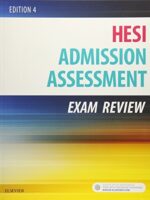
HESI Admission Assessment Exam Review 4th Edition: Complete Study Guide for Nursing Entrance Exams
$13.99Master the HESI Admission Assessment Exam with Elsevier’s official 4th Edition study guide. Covers math, science, reading, grammar & vocabulary with practice tests.
$27.00 -
Guide to the Most Common Internal Medicine Workups and Diseases: An Evidence-Based Hospital Reference
$30.99Master the most common hospital-based internal medicine workups with this evidence-based guide. Get the structured clinical reference you need for daily practice.
$59.00 -
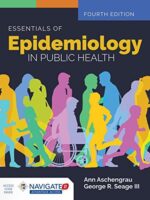
Essentials of Epidemiology in Public Health, Fourth Edition
$25.99Master epidemiologic methods with this essential Fourth Edition textbook from Jones & Bartlett Learning, perfect for public health students and professionals.
$78.00 -
Handbook of MRI Scanning: Step-by-Step Protocols for Diagnostic Imaging
$19.00Master MRI scanning with this practical handbook by Burghart and Finn. Step-by-step protocols for high-quality diagnostic images. Order your copy today!
$43.00 -
Davis’s Comprehensive Handbook of Laboratory & Diagnostic Tests, 8th Edition
$18.00Master every lab and diagnostic test with nursing implications you can trust. The 8th edition of Davis’s Comprehensive Handbook is your pocket-sized guide to accurate interpretation and safe patient care.
$33.00 -
Guyton and Hall Textbook of Medical Physiology 15th Edition
$31.99Understand medical physiology with the clearest, most authoritative textbook. Guyton and Hall 15th edition explains how cells, tissues, and organs work together. Trusted by students and clinicians worldwide.
$81.00