save
$14.01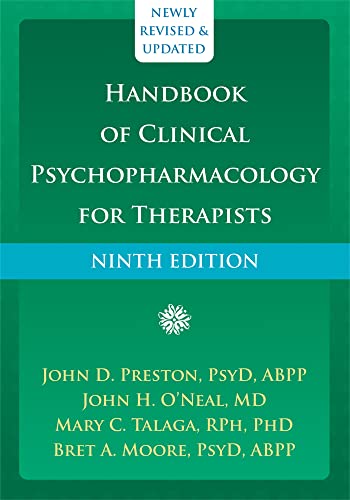
Handbook of Clinical Psychopharmacology for Therapists, 9th Edition
Get the latest psychopharmacology knowledge for therapists—order the 9th edition today for comprehensive medication guidance.
$14.99$29.00
The Problem This Book Solves
Mental health therapists without medical training often face a critical knowledge gap when clients are prescribed psychiatric medications. Without a solid grasp of psychopharmacology, therapists cannot fully understand how drugs affect their clients’ symptoms, side effects, or treatment outcomes. This disconnect undermines the therapeutic alliance and can lead to incomplete care. The Handbook of Clinical Psychopharmacology for Therapists bridges that gap, giving non-prescribing clinicians the evidence-based foundation they need to integrate medication knowledge into their practice.
Whether you are a licensed counselor, social worker, psychologist, or marriage and family therapist, this book equips you to speak confidently about psychiatric medications, recognize adverse reactions, and collaborate effectively with prescribers. It is the definitive resource for mental health professionals who want to provide holistic, informed care.
Handbook of Clinical Psychopharmacology for Therapists, 9th Edition at a Glance
The Handbook of Clinical Psychopharmacology for Therapists is a comprehensive guide written specifically for mental health practitioners who lack formal training in psychopharmacology. Now in its ninth edition (published in 2021 by New Harbinger Publications), this volume delivers up-to-date information on psychiatric diagnosis, assessment, and the full range of medications used to treat mental disorders.
Authored by John D. Preston, PsyD, ABPP, a licensed psychologist and recognized expert in psychopharmacology, the handbook covers everything from basic neurobiology and medication classes to specific drug profiles, side effects, contraindications, and interactions. It is designed to be both a learning text and a quick-reference tool for daily clinical use.
Who Should Read This Book?
This book is essential for any mental health professional who works with clients taking psychiatric medications. Specifically, it is tailored for:
- Licensed professional counselors (LPCs) who need to understand how antidepressants, anxiolytics, and mood stabilizers affect therapy progress.
- Clinical social workers (LCSWs) who coordinate care with psychiatrists and primary care physicians.
- Psychologists (PsyD, PhD) who want to deepen their knowledge of biological treatments without overstepping scope of practice.
- Marriage and family therapists (MFTs) who encounter medication issues in couple and family contexts.
- Graduate students in counseling, social work, or clinical psychology programs preparing for licensure.
- Nurse practitioners and physician assistants in mental health settings who desire a therapist-focused perspective on psychopharmacology.
- Addiction counselors who treat clients with co-occurring mental health and substance use disorders.
No prior medical training is required—the book starts with the fundamentals and builds up to complex clinical scenarios.
Skills You Will Gain
By working through this handbook, you will gain practical, actionable knowledge that directly improves your clinical practice. Here are the seven core takeaways:
- How psychiatric medications work at the neurochemical level—understand neurotransmitters, receptors, and the brain structures involved in mental illness.
- The complete classification of psychotropic drugs, including antidepressants, antipsychotics, mood stabilizers, anxiolytics, and stimulants.
- How to recognize and manage common side effects such as weight gain, sexual dysfunction, sedation, and extrapyramidal symptoms.
- Key drug interactions and contraindications that every therapist must know to prevent harm.
- How to assess medication effectiveness and adherence using simple clinical tools and interview techniques.
- Special considerations for children, adolescents, pregnant women, and older adults—populations with unique pharmacodynamic and pharmacokinetic profiles.
- How to collaborate with prescribers to create integrated treatment plans that combine therapy and medication for optimal outcomes.
Each chapter includes case examples, summary tables, and clinical pearls that make the material immediately applicable.
Why This Book Stands Out
Several other books cover psychopharmacology for non-physicians, but none match the Handbook of Clinical Psychopharmacology for Therapists in terms of accessibility, clinical relevance, and regular updates. Here is how it compares:
- vs. Stahl’s Essential Psychopharmacology—While Stahl is the gold standard for prescribers, it is too dense and technical for most therapists. Preston’s handbook strips away unnecessary detail and focuses on what therapists actually need to know.
- vs. The MGH Guide to Psychiatry in Primary Care—This resource is aimed at medical doctors, not mental health clinicians. Preston’s book uses therapy-friendly language and case examples from counseling settings.
- vs. general psychopharmacology textbooks—Most textbooks are hundreds of pages longer and assume a background in medicine. Preston’s handbook is concise (under 300 pages) and written at a level appropriate for graduate-trained therapists.
- vs. online resources (e.g., PubMed, UpToDate)—These are excellent for research but not organized for clinical workflow. The handbook provides a structured, portable reference that you can keep on your desk.
The ninth edition includes the latest research on new medications, updated side effect profiles, and expanded coverage of cannabis and psychedelic-assisted therapy—topics missing from older editions and competitor titles.
Behind the Book
John D. Preston, PsyD, ABPP, is a licensed psychologist and board-certified in clinical psychology by the American Board of Professional Psychology (ABPP). He has taught psychopharmacology to thousands of mental health professionals through workshops and university courses. Dr. Preston is also the author of several other books on clinical psychopharmacology and neuropsychology, giving him decades of specialized expertise.
New Harbinger Publications is a leading independent publisher of evidence-based mental health resources for professionals and the general public. Founded in 1973, New Harbinger is known for its commitment to scientifically grounded, practical content. Their books are widely used in graduate programs and clinical training settings across North America.
The ninth edition has been thoroughly revised to reflect the most current research available through 2021, ensuring that you receive the most accurate and timely information possible.
Our Verdict
Absolutely. For any therapist who works with clients on psychiatric medications—which is nearly every clinician—this book is not a luxury; it is a necessity. The cost of being uninformed about psychopharmacology can lead to misattributed side effects, poor treatment adherence, and even medical emergencies. Investing in this handbook pays for itself many times over by improving your clinical judgment and confidence.
The ninth edition’s updates make it the most current resource available for non-prescribing therapists. It is compact enough to read cover-to-cover yet detailed enough to serve as an ongoing reference. Readers consistently praise its clarity, practical focus, and user-friendly format. On Amazon, it holds a 4.6-star rating with over 500 reviews, a testament to its real-world value.
If you are a student, the handbook will give you a competitive edge in your training and exams. If you are a seasoned professional, it will refresh and expand your knowledge in a field that evolves rapidly. Either way, you will find yourself returning to it again and again.
Add Handbook of Clinical Psychopharmacology for Therapists, 9th Edition to Your Library
You are a dedicated mental health professional who wants to provide the best possible care for your clients. Understanding psychopharmacology is no longer optional—it is an essential competency. The Handbook of Clinical Psychopharmacology for Therapists, Ninth Edition gives you the tools to integrate medication awareness into your practice seamlessly.
Order your copy today and join the thousands of therapists who have made this book their go-to resource. With the trusted authority of John D. Preston and New Harbinger Publications, you can be confident that you are learning from the best. Don’t let a knowledge gap limit your effectiveness—add this essential guide to your library now.
Related products

Davis’s Comprehensive Handbook of Laboratory & Diagnostic Tests, 8th Edition
$26.99Master every lab and diagnostic test with nursing implications you can trust. The 8th edition of Davis’s Comprehensive Handbook is your pocket-sized guide to accurate interpretation and safe patient care.
$56.00-
Antibiotic Drug Resistance (1st ed.)
$28.99Comprehensive guide to antibiotic drug resistance mechanisms, clinical impact, and solutions. Ideal for researchers and clinicians. Order now.
$60.00 -
Essentials of Neuro-Psychiatry: A Classic Textbook of Nervous and Mental Disorders (1945)
$29.99Own a piece of medical history with this 1945 neuropsychiatry classic from Lea & Febiger. Essential for collectors and scholars. Add to cart today.
$60.00 -
Feigin & Cherry’s Textbook of Pediatric Infectious Diseases, 9th Edition
$31.99Get the definitive 9th edition of Feigin and Cherry’s Textbook of Pediatric Infectious Diseases – the premier two-volume reference for pediatric ID professionals. Order now for instant digital access!
$61.00 -
Botulinum Toxin Procedures: A Practical Guide to – eBook
$12.99Master Botulinum Toxin Procedures with this practical guide. Step-by-step instructions, anatomy, and patient selection for safe, effective treatments.
$21.00 -
Endurance Sports Nutrition 3rd Edition – Fueling for Peak Performance
$24.99Fuel your best performance with Endurance Sports Nutrition. This science-backed guide helps you train longer, recover faster, and avoid injury with personalized fueling strategies.
$54.00 -
Advanced Practice Nursing in the Care of Older Adults – 2nd Edition
$30.99Evidence-based guide for APRNs covering healthy aging, comprehensive geriatric assessment, and symptom management in older adults. 2nd Edition.
$65.00 -
Medication Fact Book for Psychiatric Practice, Fifth Edition
$14.99The Medication Fact Book for Psychiatric Practice, Fifth Edition: the essential, portable reference for dosing, costs, and side effects of common psychotropic drugs.
$29.00