
save
$11.01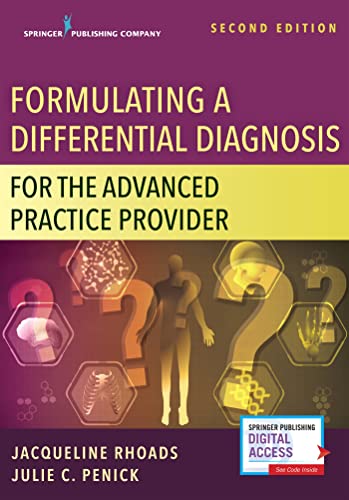
Formulating a Differential Diagnosis for the Advanced Practice Provider 2nd Edition
Master differential diagnosis with this step-by-step guide for nurse practitioners and advanced practice providers. Covers 75 common symptoms in an unfolding case study format.
$13.99$25.00
Why This Book Matters
When an advanced practice provider sits across from a patient presenting with vague or overlapping symptoms, the pressure to identify the correct diagnosis while avoiding costly missteps is immense. Without a structured, evidence-based framework, even experienced clinicians can overlook critical differentials or waste time pursuing dead ends. Formulating a Differential Diagnosis for the Advanced Practice Provider, Second Edition, directly addresses this challenge by delivering a systematic, replicable method for constructing a differential diagnosis—one that reduces diagnostic errors and improves patient outcomes.
What Is Formulating a Differential Diagnosis for the Advanced Practice Provider 2nd Edition? A Complete Overview
This clinically focused textbook serves as both a learning tool for students and a refresher for practicing nurse practitioners, physician assistants, and other advanced practice clinicians. It presents a standardized, step-by-step approach to gathering patient histories, performing focused physical exams, and synthesizing findings into a prioritized list of differentials. The second edition (2018) covers 75 common symptoms organized by body system, each explored through unfolding case studies that mirror real-world clinical reasoning.
The book is authored by Jacqueline Rhoads, PhD, APRN-BC, and Julie C. Penick, PhD, FNP-C, both experienced educators and clinicians, and published by Springer Publishing Company—a trusted name in nursing and advanced practice resources. Its case-based design bridges the gap between classroom theory and bedside decision-making, making it an essential reference for exam preparation and daily practice.
Who Should Read This Book?
This resource is specifically tailored for advanced practice providers who need a reliable, repeatable diagnostic framework. It is most valuable for:
- Family and adult-gerontology nurse practitioner (FNP/AGNP) students and clinicians who encounter a wide spectrum of symptoms
- Physician assistant (PA) students and practicing PAs seeking a concise differential guide
- Clinical nurse specialist (CNS) and nurse educator roles that require diagnostic reasoning expertise
- DNP and MSN students enrolled in advanced health assessment or diagnostic reasoning courses
- Practicing NPs and PAs who want to update their approach to differential diagnosis with current best practices
- Faculty teaching advanced assessment or clinical decision-making courses who need a structured text for case-based learning
Whether you are preparing for board certification or honing your clinical judgment on the job, this book offers the structured methodology you need to feel confident in your diagnostic decisions.
Skills You Will Gain
By working through the case studies and systematic approach in this book, you will develop the following critical skills and knowledge:
- A step-by-step process for moving from patient chief complaint to a prioritized differential list—not just a rote list of possible diagnoses
- How to elicit high-quality patient responses using specific history-taking techniques that uncover key symptom details
- Clinical reasoning strategies to rule in and rule out conditions based on prevalence, risk factors, and symptom patterns
- How to interpret physical exam findings in the context of the differential, avoiding common interpretive errors
- Integration of diagnostic testing (labs, imaging) as a confirmatory step rather than the primary tool
- How to document your differential clearly and defensively in the medical record
- Application across 75 common symptoms—from chest pain and headache to fatigue and abdominal pain—so you are prepared for the most frequent clinical presentations
Why This Book Stands Out
Many resources either list differentials in a table or dump disjointed information without teaching the diagnostic reasoning process. This book stands apart by emphasizing how to think through a differential rather than simply memorizing lists. The unfolding case study format forces you to gather data sequentially, just as you would in a real patient encounter, building your clinical judgment step by step.
Compared to general medical textbooks, this text is laser-focused on the advanced practice provider’s scope. It avoids unnecessary detail about rare conditions and instead prioritizes the most likely and most dangerous diagnoses for each symptom. The second edition updates clinical guidelines and incorporates feedback from users of the first edition, ensuring relevance to today’s practice environment.
Furthermore, the book’s structure directly supports board exam preparation. The 75 symptom chapters mirror the types of questions you will see on the ANCC, AANP, and PANCE examinations, making it a dual-purpose study tool and clinical reference.
About the Author
Jacqueline Rhoads, PhD, APRN-BC, is an experienced nurse practitioner and educator who has taught advanced health assessment for decades. Her research and publications focus on clinical decision-making and primary care. Julie C. Penick, PhD, FNP-C, brings frontline clinical expertise as a family nurse practitioner and academic leader in nursing education. Together, they combine academic rigor with practical wisdom.
Springer Publishing Company is a leading publisher of nursing and healthcare resources, known for rigorous peer review and relevance to advanced practice curricula. Their books are widely adopted in DNP and MSN programs across the United States.
Final Assessment
If you are an advanced practice provider student or clinician who wants to move beyond rote memorization and truly master the art of differential diagnosis, this book is a worthwhile investment. Its case-based, step-by-step approach directly improves your clinical reasoning efficiency. The 75 symptom chapters ensure broad coverage, and the practical tips for history-taking and exam documentation are immediately applicable. For the price of a single textbook, you gain a study companion for boards and a desk reference for years to come. We confidently recommend Formulating a Differential Diagnosis for the Advanced Practice Provider, Second Edition as a core resource for any advanced practice education or practice.
Download Formulating a Differential Diagnosis for the Advanced Practice Provider 2nd Edition Now
Whether you are a nurse practitioner student struggling with differentials, a PA preparing for the PANCE, or an experienced clinician wanting to refresh your diagnostic approach, this second edition offers exactly what you need: a proven, structured method for arriving at accurate diagnoses. Add this essential guide from Springer Publishing to your cart now and start building the clinical confidence that transforms your practice.
Related products

EMDR Therapy Third Edition: Basic Principles, Protocols, and Procedures by Francine Shapiro
$23.99Master EMDR therapy with this definitive third edition by Francine Shapiro. Learn the complete eight-phase protocol for treating PTSD and trauma effectively.
$44.00-
Child and Adolescent Mental Health Screening, Evidence-Based Assessment, Intervention, and Health Promotion, 3rd Edition
$30.99The essential evidence-based guide for child and adolescent mental health screening, assessment, and intervention—updated third edition with practical tools and KySS framework.
$65.00 -
Anthony’s Textbook of Anatomy & Physiology 18th Edition – Mosby
$49.99Master human anatomy and physiology with this clear, comprehensive 18th Edition from Mosby. Perfect for nursing and allied health students.
$153.00 -
Handbook of MRI Scanning: Step-by-Step Protocols for Diagnostic Imaging
$24.99Master MRI scanning with this practical handbook by Burghart and Finn. Step-by-step protocols for high-quality diagnostic images. Order your copy today!
$56.00 -
Farquharson’s Textbook of Operative General Surgery 11th Ed
$21.99Master operative surgery with the Eleventh Edition of Farquharson’s essential textbook for surgical trainees, featuring 490 color illustrations and expert guidance.
$36.00 -
Feigin & Cherry’s Textbook of Pediatric Infectious Diseases, 9th Edition
$31.99Get the definitive 9th edition of Feigin and Cherry’s Textbook of Pediatric Infectious Diseases – the premier two-volume reference for pediatric ID professionals. Order now for instant digital access!
$61.00 -
Botulinum Toxin Procedures: A Practical Guide to – eBook
$12.99Master Botulinum Toxin Procedures with this practical guide. Step-by-step instructions, anatomy, and patient selection for safe, effective treatments.
$21.00 -
Neuroanatomy: An Illustrated Colour Text 6th Edition
$13.99Master neuroanatomy with this visual, concise Sixth Edition by Crossman & Neary. Includes enhanced eBook with bonus figures and self-assessment.
$25.00