save
$34.01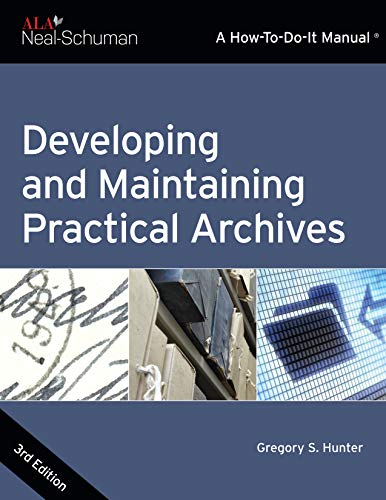
Developing and Maintaining Practical Archives: 3rd Edition
Get Developing and Maintaining Practical Archives, Third Edition—the essential digital archival manual. Buy now.
Want to preview before you buy? Click Request Free Sample and tell us which chapter or pages you’d like to see, along with your email address. We’ll send you those pages from the eBook so you can be sure it’s the right one before buying.
- Instant download & lifetime access Available as soon as your payment is confirmed. Your download link is also sent to the email address you provide at checkout, and you can download your purchased eBook anytime from My Account → Downloads with unlimited downloads. An account is created automatically using the same email address.
- Own your eBook Receive the available PDF/EPUB file directly after purchase. No rental or temporary access — download and keep your eBook for personal use with lifetime access.
- Full refund guarantee If the eBook you receive does not match the details and description provided on the product page, contact [email protected] and we’ll issue a full refund within 24 hours.
- Secure payment through PayPal Pay securely by debit or credit card or with your PayPal account. Your card details are processed by PayPal and are never stored on our site.
$31.99$66.00
The Gap This Book Fills
Archives are not passive storage rooms; they are active evidence systems that document institutional memory and cultural heritage. Yet many librarians, records managers, and early-career archivists inherit collections without a practical roadmap for organizing, preserving, and providing access. Gregory S. Hunter’s Developing and Maintaining Practical Archives directly addresses that gap with a how-to-do-it framework built for daily archival work.
This 2020 Third Edition updates both archival theory and practice at a moment when born-digital records, shrinking budgets, and rising user expectations have made the archivist role more complex. Without a tested manual, even talented professionals struggle to balance preservation, arrangement, description, and reference services. This book solves that problem by transforming archival principles into actionable procedures.
Developing and Maintaining Practical Archives: 3rd Edition at a Glance
Developing and Maintaining Practical Archives: A How-To-Do-It Manual is a comprehensive professional reference for archivists, written by Gregory S. Hunter and published in its Third Edition in 2020 by ALA Neal-Schuman. The manual provides in-depth coverage of both theory and practice, making it essential reading for archivists at all levels of experience and from all institutional backgrounds.
True to its how-to-do-it title, the book walks readers through the entire archival lifecycle. It covers the intellectual foundations of archives and manuscripts, the practical tasks of appraisal and acquisition, the organizational work of arrangement and description, the technical demands of preservation and digital preservation, and the public-facing functions of reference, access, and outreach. Because it addresses both the why and the how, it works as a classroom textbook and a daily desk reference at the same time.
The Third Edition is not merely an updated file; it reflects the growing complexity of modern recordkeeping while retaining the practical focus that made earlier editions useful. Hunter uses precise archival terminology but explains it clearly enough for newcomers, so the manual remains readable for a solo librarian and rigorous enough for a trained archivist.
Who Should Read This Book?
This book is written for archivists at all levels of experience and of all backgrounds, from graduate students to seasoned professionals assuming new responsibilities. It is especially valuable for librarians and records managers who have been asked to oversee historical records without formal archival training.
Consider this manual essential if your daily work includes any of the following responsibilities:
- Establishing a new archives program or reorganizing an existing one
- Appraising, accessioning, and processing manuscripts and institutional records
- Managing electronic records and hybrid collections that include both paper and digital materials
- Preserving photographs, audiovisual media, maps, and other special formats
- Serving researchers through reference services, finding aids, and remote access
Archives administrators and cultural heritage professionals will also benefit from the book’s attention to legal and ethical obligations. If your institution has archives but no archivist, this manual gives you a structured way to protect and share your collections while you build the professional capacity you need.
Inside: What You Will Master
This Third Edition is organized for practical use, with each chapter designed to answer real questions that archivists face on the job. Here are eight key takeaways from the manual:
- The foundational principles of archival theory, including the nature of archives and manuscripts and how they differ from library collections
- A step-by-step approach to conducting an archives survey and starting an archival program with limited resources
- How to appraise records and manuscripts for evidential, informational, and historical value before making acquisition decisions
- Proven methods for accessioning, arranging, and physically housing collections in ways that preserve original order
- Standards-based strategies for description, including the creation of finding aids and access tools that researchers can actually navigate
- Practical preservation techniques for paper, photographs, audiovisual materials, and other analog formats
- Digital preservation concepts and workflows for managing born-digital records and digitized surrogates
- The legal, ethical, and security responsibilities that govern access, privacy, copyright, and long-term accountability
Each of these topics is treated with the detail a practitioner needs, not just the summary a survey text provides. Readers finish with a working vocabulary and a replicable process for handling archival challenges.
Why This Book Stands Out
This manual outperforms narrower professional texts because it covers the entire archival lifecycle with equal depth on theory and practice. A general records management book may skip special collections; a digital preservation guide may ignore traditional arrangement and description. Hunter’s manual connects both worlds without sacrificing either.
Several factors make this the clear professional choice:
- Comprehensive scope: one volume covers program development, collection management, preservation, reference services, and professional responsibilities.
- 2020 Third Edition currency: the update addresses modern records and digital preservation challenges faced by today’s archives.
- Practical structure: the how-to-do-it format provides procedures, examples, and options rather than abstract theory alone.
- Single-author consistency: Gregory S. Hunter’s unified voice makes the content cohesive and easier to apply across departments.
- ALA Neal-Schuman publication: the American Library Association imprint brings credibility and alignment with information professions.
For archivists moving between paper and digital records, this manual bridges formats in a way that single-topic monographs cannot. It is not just about preserving artifacts; it is about building an archives program that remains relevant to its users and accountable to its mission.
Author & Publisher Credentials
Gregory S. Hunter authored this how-to-do-it manual as a single, comprehensive resource, giving the book a consistent professional voice from first chapter to last. Rather than a patchwork of contributed chapters, this is one author’s systematic treatment of archival practice.
ALA Neal-Schuman is the American Library Association’s imprint for practical and scholarly works serving library and information professionals. The publisher’s deep connection to the library community reinforces the manual’s credibility among archivists, records managers, and cultural heritage institutions.
The 2020 Third Edition, ISBN 9780838912775, is the current edition of this essential reference. Its publication by ALA Neal-Schuman gives archival professionals confidence that the content aligns with the standards and ethical expectations of the field.
Final Assessment
Yes—for archivists, librarians, and records managers, this Third Edition earns its place as a core professional reference. The combination of updated content, practical orientation, and professional-grade publishing makes it a reliable investment for anyone who works with archival records.
Readers who compare this manual to shorter online guides will find that the book’s real advantage is depth. It explains not only what to do but also why each step matters, giving professionals the judgment they need when rules do not cover a particular situation. That depth reduces costly mistakes in appraisal, preservation, and access decisions.
The verdict is especially strong for institutional buyers. A single reference that trains new staff, standardizes workflows, and supports collection decisions returns its value quickly. For independent scholars and students, it functions as a comprehensive introduction to professional archival practice.
Get Your Copy Today
The 2020 Third Edition of Developing and Maintaining Practical Archives is more than a textbook; it is a professional operating system for archivists, librarians, and records managers. Whether you are stepping into a new archives role, strengthening an existing program, or updating a reference collection, this digital manual belongs on your shelf.
Add the eBook to your cart now to gain immediate access to Gregory S. Hunter’s comprehensive, ALA Neal-Schuman–published guidance. With the full archival lifecycle covered in one practical resource, you can start improving your archives today.
Format: Digital eBook. Edition: Third Edition, 2020. Publisher: ALA Neal-Schuman. ISBN: 9780838912775.
Related products

Ultimate Guide to CGRC Certification: Prepare with Domain Insights & Test Strategies
$10.99Master every CGRC domain with structured insights, practice questions, and test strategies — pass the ISC2 exam on your first attempt.
$20.00-
Nonprofit Management: Principles and Practice (5th Edition)
$17.00Master nonprofit leadership with this comprehensive 5th edition—updated research, real-world cases, and actionable frameworks for students and professionals.
$29.00 -
Microsoft Power BI Data Analyst Associate Study Guide
$23.00Pass the PL-300 exam with 2025 revisions and build real-world Power BI skills. This comprehensive guide by Paul Turley combines exam prep with best practices for Azure and Microsoft Fabric.
$42.00 -
Citrix XenApp 6 CCA Exam Preparation: Pass the 1Y0-A18 Exam
$10.00Prepare for the 1Y0-A18 exam with this targeted Citrix XenApp 6 CCA study aid. Ideal post-course review to pass your certification.
$24.00 -
The Counselor and the Law: Legal & Ethical Practice, 8th Ed
$8.99Get The Counselor and the Law, 8th Ed. — the ACA guide to legal & ethical counseling. Protect your license, clients, and career. Order today.
$20.00 -
Encyclopedia of Counseling: NCE & CPCE Exam Prep 4th Edition
$30.99Ace the NCE, CPCE, and state counseling exams with the comprehensive 4th edition of Encyclopedia of Counseling – over 2,100 practice questions included.
$61.00 -
Steve Jobs by Walter Isaacson – The Bestselling Biography
$12.00Get Walter Isaacson’s definitive Steve Jobs biography – the #1 bestseller that reveals the mind behind Apple. Order now!
$19.00 -
Airline Transport Pilot Test Prep 2020: FAA ATP Study Guide & Prepware
$6.99Pass your Airline Transport Pilot (ATP) knowledge test with the 2020 edition of the most trusted training resource. Over 900 exam questions included.
$20.00