save
$52.01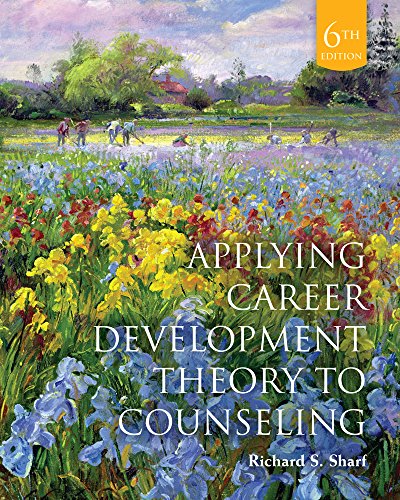
Applying Career Development Theory to Counseling, 6th Edition
Get the 6th edition of Sharf’s Applying Career Development Theory to Counseling and master career counseling techniques with real-world applications.
Want to preview before you buy? Click Request Free Sample and tell us which chapter or pages you’d like to see, along with your email address. We’ll send you those pages from the eBook so you can be sure it’s the right one before buying.
- Instant download & lifetime access Available as soon as your payment is confirmed. Your download link is also sent to the email address you provide at checkout, and you can download your purchased eBook anytime from My Account → Downloads with unlimited downloads. An account is created automatically using the same email address.
- Own your eBook Receive the available PDF/EPUB file directly after purchase. No rental or temporary access — download and keep your eBook for personal use with lifetime access.
- Full refund guarantee If the eBook you receive does not match the details and description provided on the product page, contact [email protected] and we’ll issue a full refund within 24 hours.
- Secure payment through PayPal Pay securely by debit or credit card or with your PayPal account. Your card details are processed by PayPal and are never stored on our site.
$36.99$89.00
The Challenge It Addresses
Career counselors face a persistent challenge: translating abstract career development theories into effective, real-world counseling interventions. Without a structured framework, practitioners risk relying on intuition rather than evidence-based models. Applying Career Development Theory to Counseling, 6th Edition by Richard S. Sharf directly addresses this gap by providing a clear, applied bridge between foundational career theories and the daily practice of counseling.
Applying Career Development Theory to Counseling, 6th Edition at a Glance
This is a comprehensive textbook designed to teach counseling students and professionals how to use major career development theories in client sessions. Published by Brooks/Cole in 2013, the Sixth Edition builds on decades of research and practical application. The book covers Holland’s RIASEC theory, Super’s life-span approach, social cognitive career theory, and many others, each chapter explaining how to assess client needs, select appropriate interventions, and evaluate outcomes.
Rather than merely describing theories, Sharf integrates case examples, assessment tools, and step-by-step application guides. The text is structured to move from theoretical foundations to practical counseling techniques, making it an essential resource for anyone preparing for the NCE or seeking to deepen their career counseling competency.
Who Is This Book For?
This textbook is tailored for three primary audiences: graduate students in counseling or clinical psychology programs who need a thorough grounding in career development; practicing professional counselors who want to refresh or expand their theoretical toolkit; and career development specialists working in university career centers, vocational rehabilitation, or private practice.
It is also valuable for human resource professionals and coaches who integrate career planning into their work. The book assumes no prior expertise in career theory, making it accessible to newcomers while offering depth for experienced practitioners.
Inside: What You Will Master
- Holland’s Theory of Vocational Personalities — How to use RIASEC codes to match clients with suitable careers and educational paths.
- Super’s Life-Span, Life-Space Theory — Applying developmental stages and career maturity concepts to guide clients through transitions.
- Social Cognitive Career Theory — Understanding self-efficacy, outcome expectations, and personal goals in career decision-making.
- Gottfredson’s Theory of Circumscription and Compromise — How gender, prestige, and social context shape career aspirations.
- Krumboltz’s Social Learning Theory — Using learning experiences and chance events to help clients explore opportunities.
- Career Assessment and Interpretation — Practical techniques for administering and debriefing instruments like the Strong Interest Inventory and Self-Directed Search.
- Ethical and Multicultural Considerations — Adapting career counseling for diverse populations and avoiding bias in assessment and intervention.
How It Compares
Unlike many career textbooks that treat theory and practice as separate chapters, Sharf’s book integrates application throughout every section. Each theoretical chapter includes a detailed case study showing exactly how a counselor would use that theory from intake to termination. Competing texts often stop at theoretical explanation, leaving students to figure out implementation on their own.
Another advantage is the depth of coverage across multiple theoretical perspectives. While some books focus narrowly on trait-factor or developmental approaches, this edition systematically presents ten major theories, including emerging models like the psychology of working. The Sixth Edition also updates references to reflect current research, ensuring relevance for today’s counseling contexts.
Furthermore, the assessment chapters are directly linked to theory, helping students understand not just which instrument to use, but why a particular measure fits a specific theoretical orientation. This connection is often missing in general career development texts.
Author & Publisher Credentials
Richard S. Sharf is a respected figure in career counseling education. With a Ph.D. in counseling psychology and decades of teaching experience, Sharf brings both academic rigor and practical insight to the text. His previous editions have been widely adopted in graduate counseling programs across the United States. Brooks/Cole, a division of Cengage Learning, is a trusted academic publisher known for high-quality textbooks in counseling, psychology, and social work. Their editorial standards ensure that the content is peer-reviewed, accurate, and aligned with current CACREP standards.
Final Assessment
Absolutely. For counseling students, this book provides the theoretical foundation needed to pass comprehensive exams and the practical skills to succeed in practicum. For practicing counselors, it serves as a reference manual that can be revisited when encountering unfamiliar client populations or career dilemmas. The Sixth Edition remains relevant despite being a decade old because the core theories it covers are foundational and enduring. At a fraction of the cost of newer editions, this edition offers exceptional value for anyone serious about career counseling competence.
Start Reading Applying Career Development Theory to Counseling, 6th Edition Today
Whether you are a graduate student preparing for the NCE, a seasoned counselor expanding your expertise, or a career development professional seeking a reliable reference, this textbook delivers the applied knowledge you need. Order your digital copy now and start applying career development theory to real counseling situations immediately. With Brooks/Cole’s trusted content and Sharf’s expert guidance, you gain a resource that will serve your practice for years to come. Add to cart today and take the next step in your professional development.
Related products

Nonprofit Management: Principles and Practice (5th Edition)
$17.00Master nonprofit leadership with this comprehensive 5th edition—updated research, real-world cases, and actionable frameworks for students and professionals.
$29.00-
Microsoft Power BI Data Analyst Associate Study Guide
$23.00Pass the PL-300 exam with 2025 revisions and build real-world Power BI skills. This comprehensive guide by Paul Turley combines exam prep with best practices for Azure and Microsoft Fabric.
$42.00 -
Learning Domain-Driven Design: Aligning Software Architecture and Business Strategy
$20.99Master the patterns to align software architecture with business strategy — get the practical DDD guide by Vlad Khononov, O’Reilly Media.
$41.00 -
The Counselor and the Law: Legal & Ethical Practice, 8th Ed
$27.99Get The Counselor and the Law, 8th Ed. — the ACA guide to legal & ethical counseling. Protect your license, clients, and career. Order today.
$62.00 -
AWS Certified SysOps Administrator Study Guide 2nd Edition SOA-C01
$18.99Pass the AWS Certified SysOps Administrator (SOA-C01) exam with this comprehensive Second Edition study guide from Wiley, featuring practice tests and hands-on exercises.
$35.00 -
Words That Change Minds, 3rd Edition
$3.00Master ethical influence with the LAB Profile in Words That Change Minds by Shelle Rose Charvet. The proven system to predict and shape behavior.
$5.00 -
ASP Safety Fundamentals Exam SECRETS Study Guide
$25.99Pass the ASP Safety Fundamentals exam with the comprehensive ASP Safety Fundamentals Exam Secrets Study Guide, featuring focused content, practice questions, and proven test-taking strategies for first-attempt success.
$51.00 -
Ultimate Guide to CGRC Certification: Prepare with Domain Insights & Test Strategies
$10.99Master every CGRC domain with structured insights, practice questions, and test strategies — pass the ISC2 exam on your first attempt.
$20.00