
save
$26.01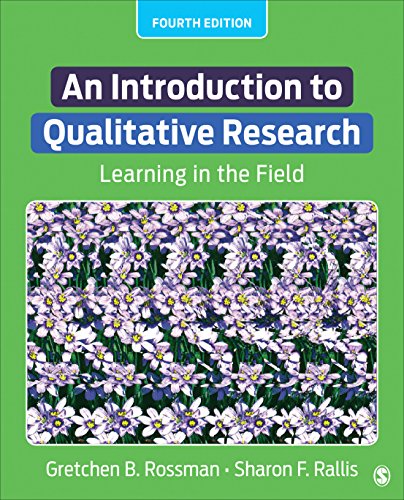
An Introduction to Qualitative Research: Learning in the Field 4th Edition
Master qualitative research with this hands-on guide. Learn by doing with practical exercises, real-world examples, and expert guidance from Rossman and Rallis.
$18.99$45.00
Why This Book Matters
Designing and executing a qualitative research study can feel overwhelming for graduate students and early-career researchers. The sheer volume of methodological choices, from data collection techniques to analysis strategies, often leads to paralysis or poorly structured studies. This book directly addresses that challenge by providing a clear, field-tested framework for learning qualitative research by doing it.
Unlike dense theoretical tomes, An Introduction to Qualitative Research: Learning in the Field, Fourth Edition bridges the gap between abstract concepts and practical application, giving readers the confidence to design, conduct, and write up their own qualitative studies.
An Introduction to Qualitative Research: Learning in the Field 4th Edition at a Glance
This popular introductory text by Gretchen B. Rossman and Sharon F. Rallis is a comprehensive guide to the entire qualitative research process. Published by SAGE Publications, Inc., the Fourth Edition (2016) is designed to help students learn the fundamentals of qualitative inquiry through a hands-on, learning-by-doing approach.
The book covers the full arc of a research project, from developing a research question and selecting a methodology to collecting data, analyzing findings, and writing the final report. It integrates theory with real-world examples and practical exercises, making it an essential resource for any qualitative research course.
Who Will Benefit Most
An Introduction to Qualitative Research: Learning in the Field is specifically written for graduate students in education, social sciences, health sciences, and related fields who are taking their first qualitative research course. It is also an invaluable refresher for doctoral candidates preparing for their dissertation research and for faculty members teaching qualitative methods.
The book is particularly suited for learners who benefit from a structured, step-by-step approach that emphasizes active engagement with the material. If you are looking for a textbook that balances theoretical grounding with practical skill-building, this is the ideal choice.
Skills You Will Gain
This book equips readers with the essential knowledge and skills to conduct rigorous qualitative research. Here are the key learning outcomes:
- Foundations of Qualitative Inquiry: Understand the philosophical underpinnings, paradigms, and ethical considerations that shape qualitative research.
- Designing a Qualitative Study: Learn how to formulate a researchable question, select an appropriate research design (e.g., case study, ethnography, grounded theory), and develop a coherent research proposal.
- Data Collection Methods: Master the core techniques of interviewing, observing, and collecting documents and artifacts, with guidance on gaining access and building rapport.
- Data Analysis and Interpretation: Develop skills in coding, thematic analysis, and interpretation to transform raw data into meaningful findings.
- Ensuring Quality and Rigor: Explore strategies for establishing trustworthiness, credibility, and transferability in qualitative studies.
- Writing and Representing Findings: Gain practical advice on structuring a qualitative research report, presenting findings effectively, and considering audience and voice.
What Sets It Apart
While other qualitative research texts often lean heavily on theory or present methods in isolation, An Introduction to Qualitative Research: Learning in the Field uniquely integrates the entire research process. Its signature strength is the learning-in-the-field approach, which encourages readers to practice each step as they learn it.
Compared to Creswell’s Qualitative Inquiry and Research Design, Rossman and Rallis offer more explicit, hands-on exercises and a stronger focus on the practical challenges of fieldwork. Unlike generic research methods books, this text is specifically tailored to the nuances of qualitative inquiry, providing deeper coverage of topics like reflexivity and researcher positionality. The Fourth Edition updates examples and references to reflect current best practices in the field.
About the Author
Gretchen B. Rossman is Professor Emerita at the University of Massachusetts Amherst, where she taught qualitative research methods for over two decades. Sharon F. Rallis is the Dwight W. Allen Distinguished Professor of Education Policy and Reform at the University of Massachusetts Amherst. Both authors bring decades of experience teaching and conducting qualitative research, lending exceptional credibility to the text.
The book is published by SAGE Publications, Inc., a world-leading independent publisher of academic and professional resources in the social sciences. SAGE is renowned for its rigorous editorial standards and its extensive catalog of research methods texts, making this a trusted source for graduate-level instruction.
The Bottom Line
For any graduate student or researcher serious about learning qualitative methods, this book is an indispensable investment. Its practical, field-based approach accelerates the learning curve and builds genuine competence. The structured exercises and real-world examples make abstract concepts tangible and immediately applicable.
The Fourth Edition remains highly relevant for contemporary research courses, offering a balanced blend of classic foundations and updated practices. Whether you are a student preparing for a capstone project or a professional seeking to strengthen your research skills, this text delivers exceptional value. It is widely adopted in university courses and recommended by instructors for its clarity and effectiveness.
Get Your Copy Today
Don’t let the complexities of qualitative research hold back your academic progress or professional development. With the Fourth Edition of An Introduction to Qualitative Research: Learning in the Field, you gain a trusted roadmap to designing and executing a successful qualitative study. Order your digital copy today and start learning by doing with the guidance of two leading experts in the field. This SAGE publication is your key to mastering qualitative inquiry with confidence.
Related products

Behavioral Genetics 7th Edition – Knopik, Neiderhiser, deFries, Plomin
$11.99Master heredity, DNA, and genetic methods with Behavioral Genetics, 7th Edition—the authoritative textbook by Knopik, Neiderhiser, deFries, and Plomin from Worth Publishers.
$24.00-
Theories of Development: Concepts and Applications (6th Edition)
$12.99Get the 6th edition of Crain’s classic text covering 24 developmental theorists. Ideal for psychology students. Order your digital copy today!
$32.00 -
The Cyber Effect: A Forensic Cyberpsychologist on Technology’s Impact on Behavior, Children & Society
$8.99Get The Cyber Effect by Mary Aiken: a forensic cyberpsychologist’s groundbreaking look at how technology shapes behavior, children, and society. Order now.
$22.00 -
Constitutional Law for a Changing America: Rights, Liberties, and Justice 10th Edition
$25.99Understand how political forces shape Supreme Court rulings on rights, liberties, and justice with this acclaimed 10th edition textbook by Epstein and Walker.
$60.00 -
Generalist Practice with Organizations and Communities, 7th Edition — Empowerment Series Macro Social Work Textbook
$21.99Master macro social work with the leading textbook from the Empowerment Series. Learn to assess, intervene, and lead change in organizations and communities.
$46.00 -
Unlearning Liberty: Campus Censorship, End of American Debate
$11.99Buy Unlearning Liberty by Greg Lukianoff and uncover how campus censorship threatens free speech and the future of American debate—get your copy now.
$25.00 -
Culture Sketches: Case Studies in Anthropology 6th Edition
$21.99Get the 6th edition of Culture Sketches: 15 ethnographic case studies that bring cultural anthropology to life—ideal for any introductory course.
$56.00 -
Affirmative Counseling with LGBTQI+ People: A Comprehensive Guide
$11.99Master affirmative counseling with this comprehensive ACA guide. Build the awareness, knowledge, and skills to serve LGBTQI+ clients competently and ethically. Order now.
$30.00